Open Daily 9:30 am – 6:00 pm
- Fort Rd, Toli Chowki, Hyderabad, Telangana, 500008, India
- Visit


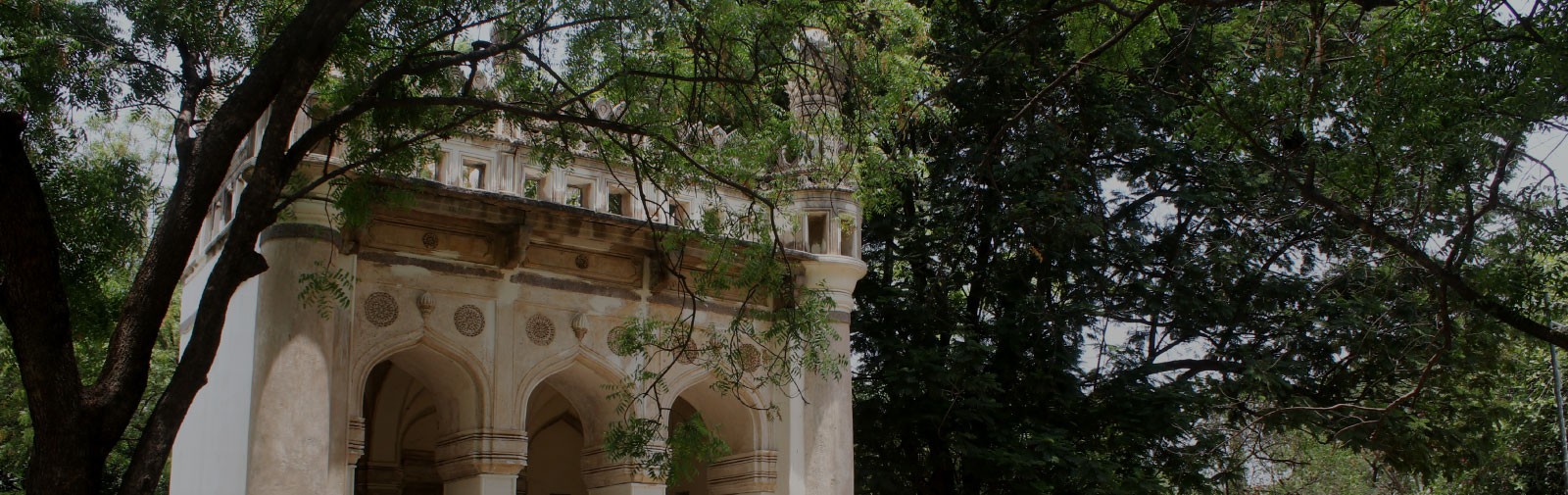
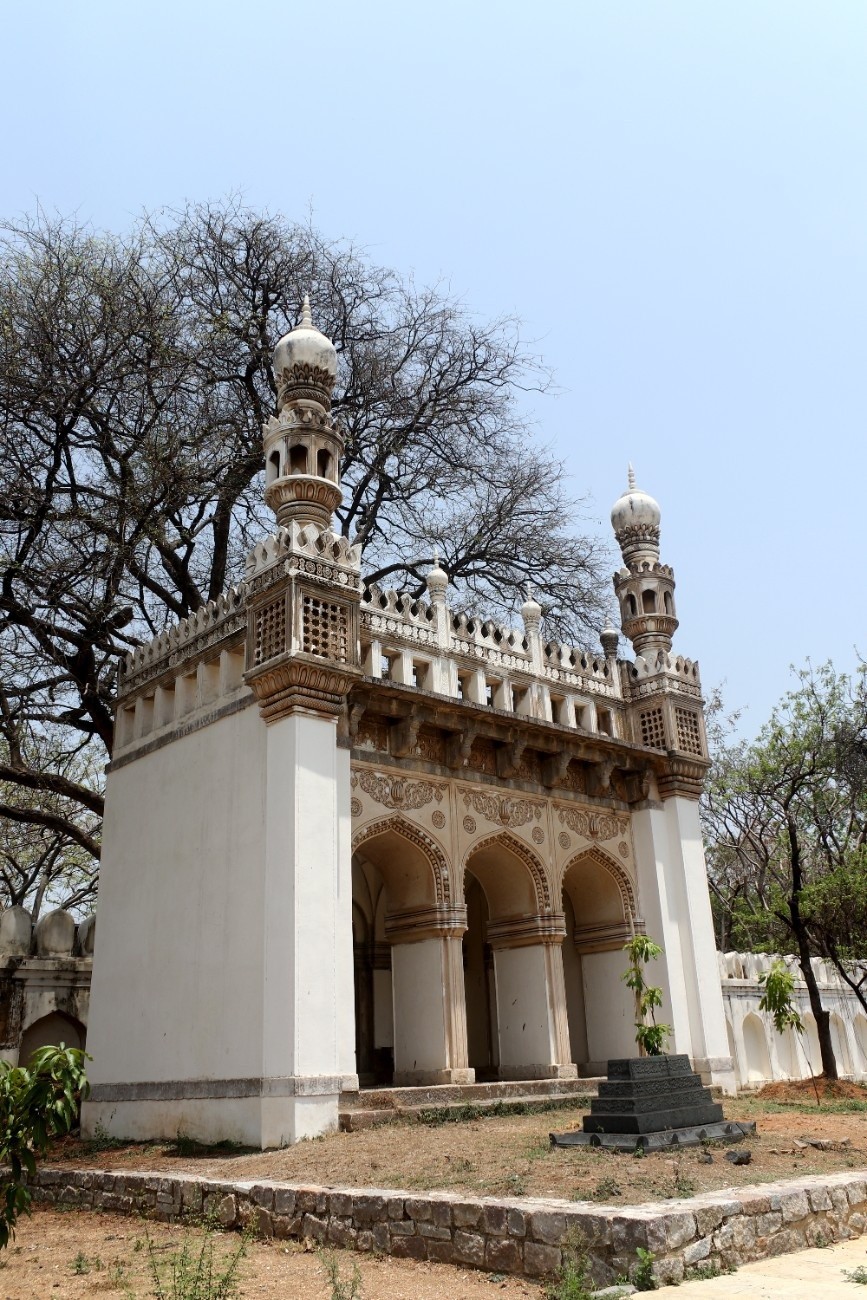
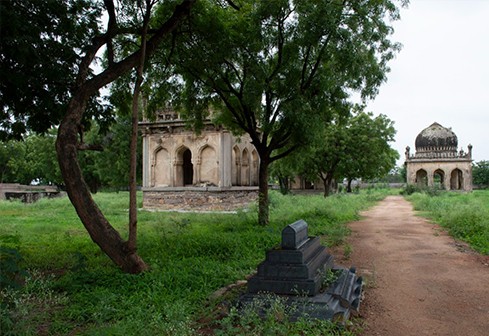
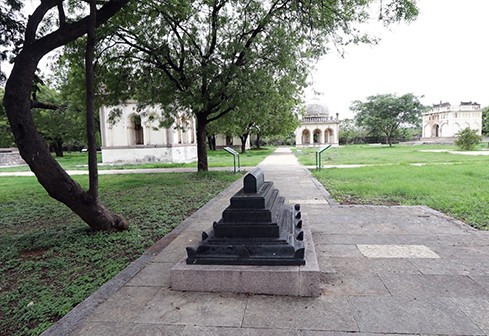
In orthodox Islamic belief, it is preferred to be buried in the open. Thus, within this necropolis, in addition to the 40 domed mausoleums, are found 133 graves located in the open – for many of which funerary mosques were built adjacent to the burial for the families to pray for and honour the person buried.
The funerary mosques have a similar design, being rectangular structures with arcaded eastern walls. Inside, they are typically divided into three bays, each with a shallow/flat dome adorned with arched niches and lime stucco motifs. The facade of these mosques are characterized by ornate parapets, multi-tiered corner parapet minarets. These minarets are occasionally topped by smaller domes with stucco decorations at the shaft.
Though not meant for congregational prayer, some of these have begun to be used by congregations in the past decade – thus altering the historic character of the structures.
Within the gardens, and the large granite platforms of the mausoleums, as well as in the courtyards of funerary mosques, are found 133 graves – some of the most exquisite ones standing outside the mausoleums. Each of these gravestones, the earliest of which are in granite and others mostly crafted from black basalt, are of great architectural value and historical significance.
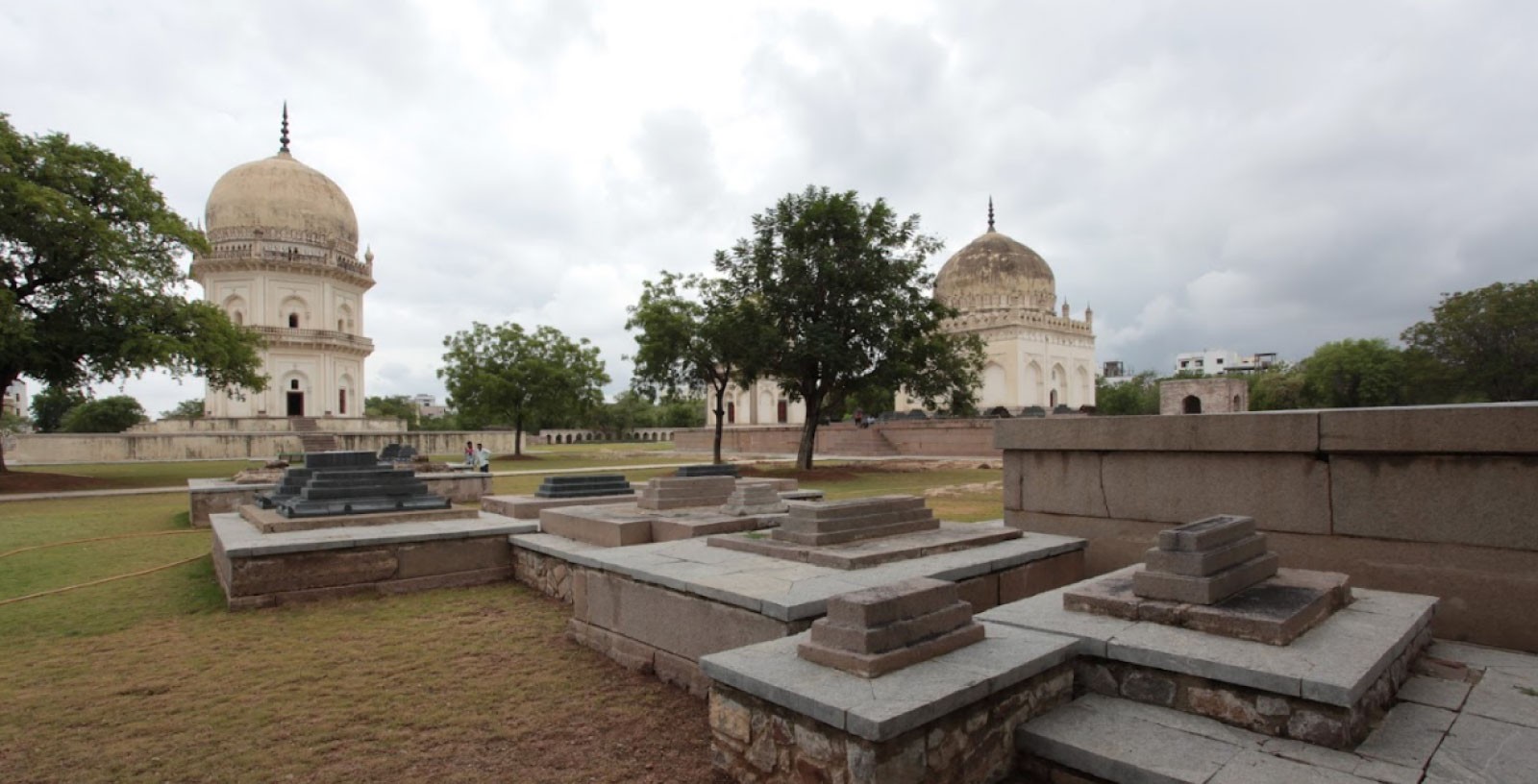

Qutb Shahi Heritage Park is the repository of some of the finest stone epigraphy craftsmanship in black basalt and local granite stone in India. Cenotaphs/graves across the necropolis showcase exquisite examples of Indo-Persian craftsmanship, and scripts such as Thuluth, Naskh, Nastaliq, and Kufic can be seen on the marked graves here.
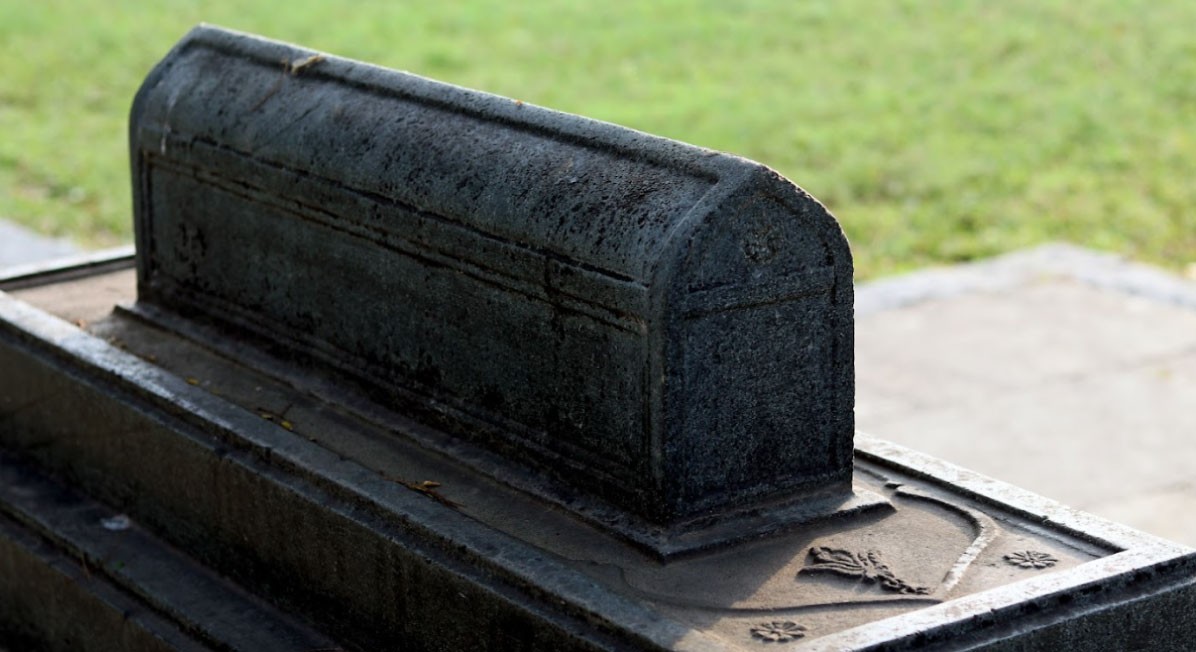
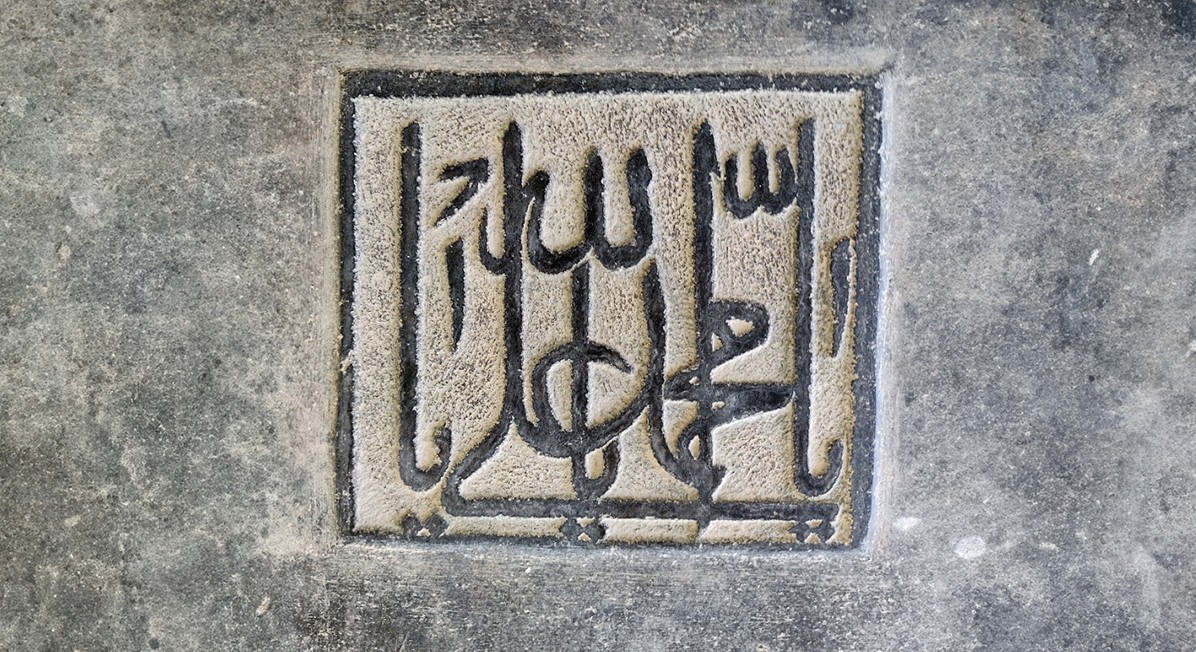
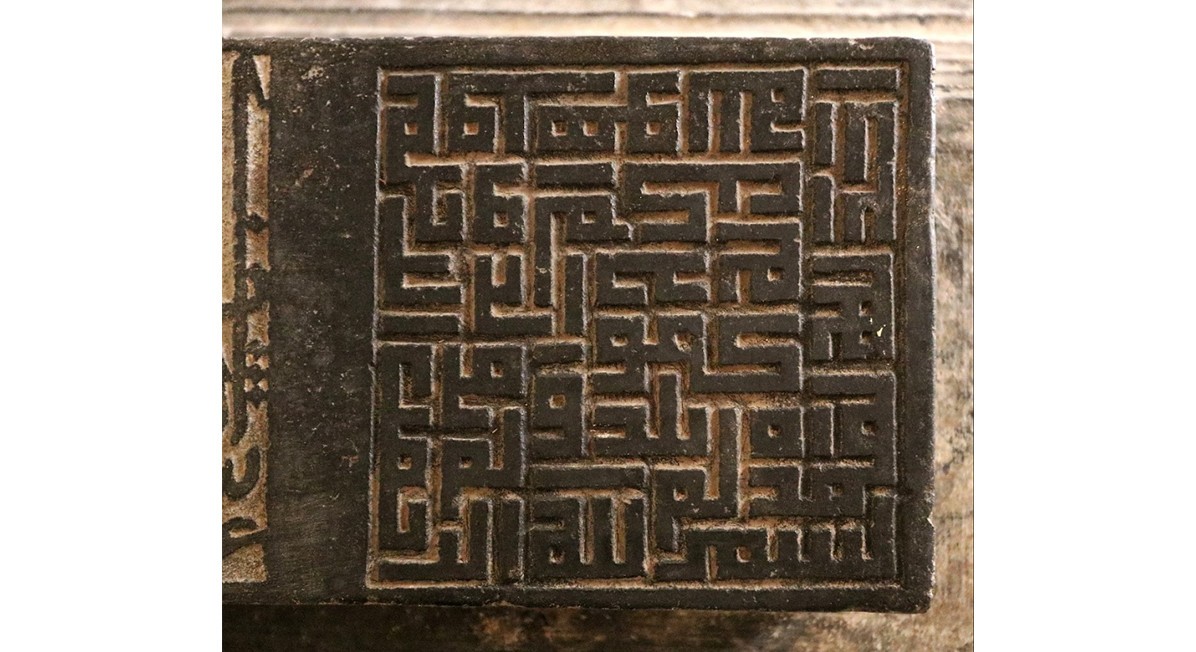
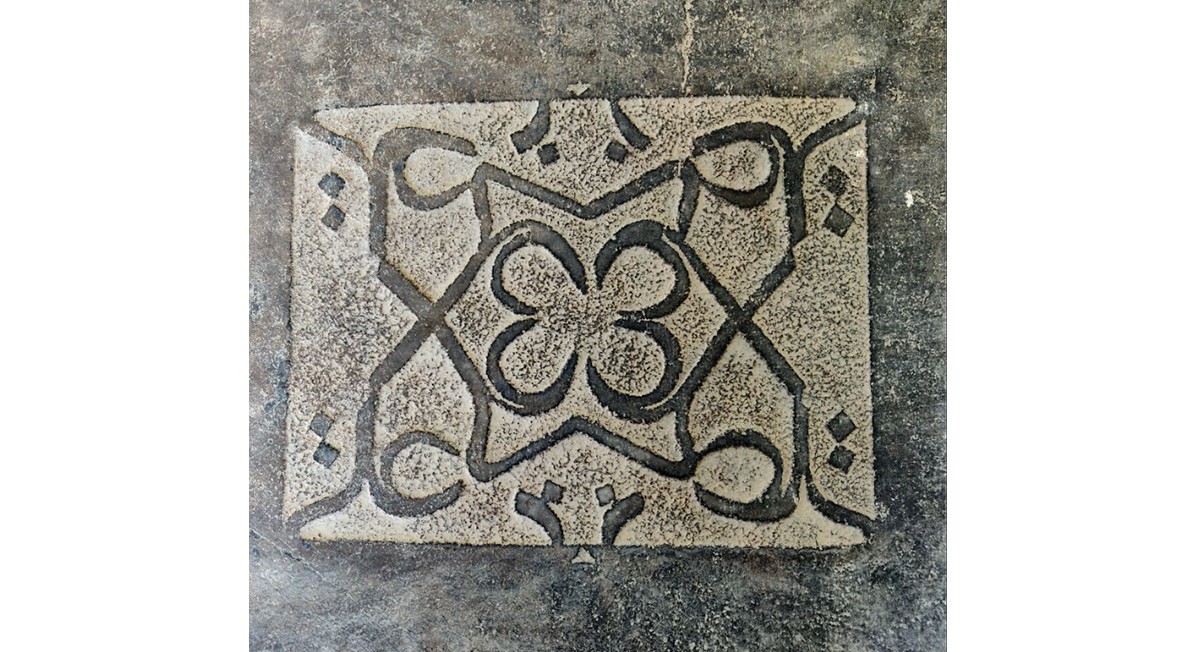
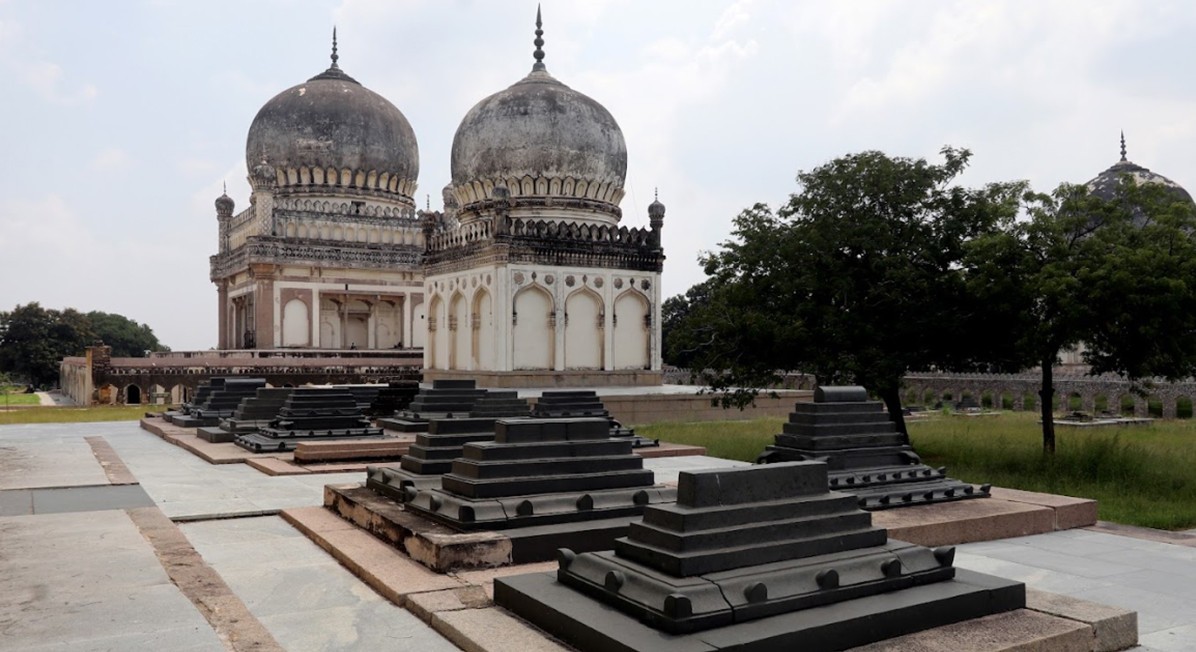
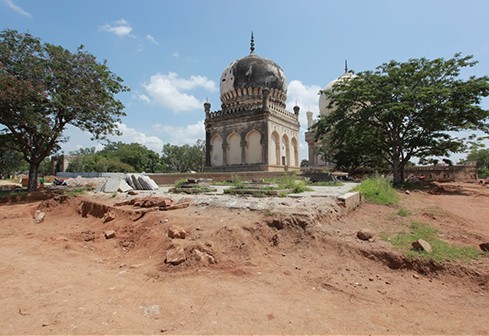
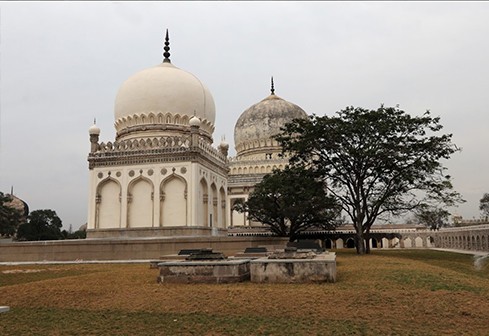
Restoring ground levels within the core archaeological zone require clearance of earth and revealed several graves – each of which, together with their platforms and plinths, have also been restored.
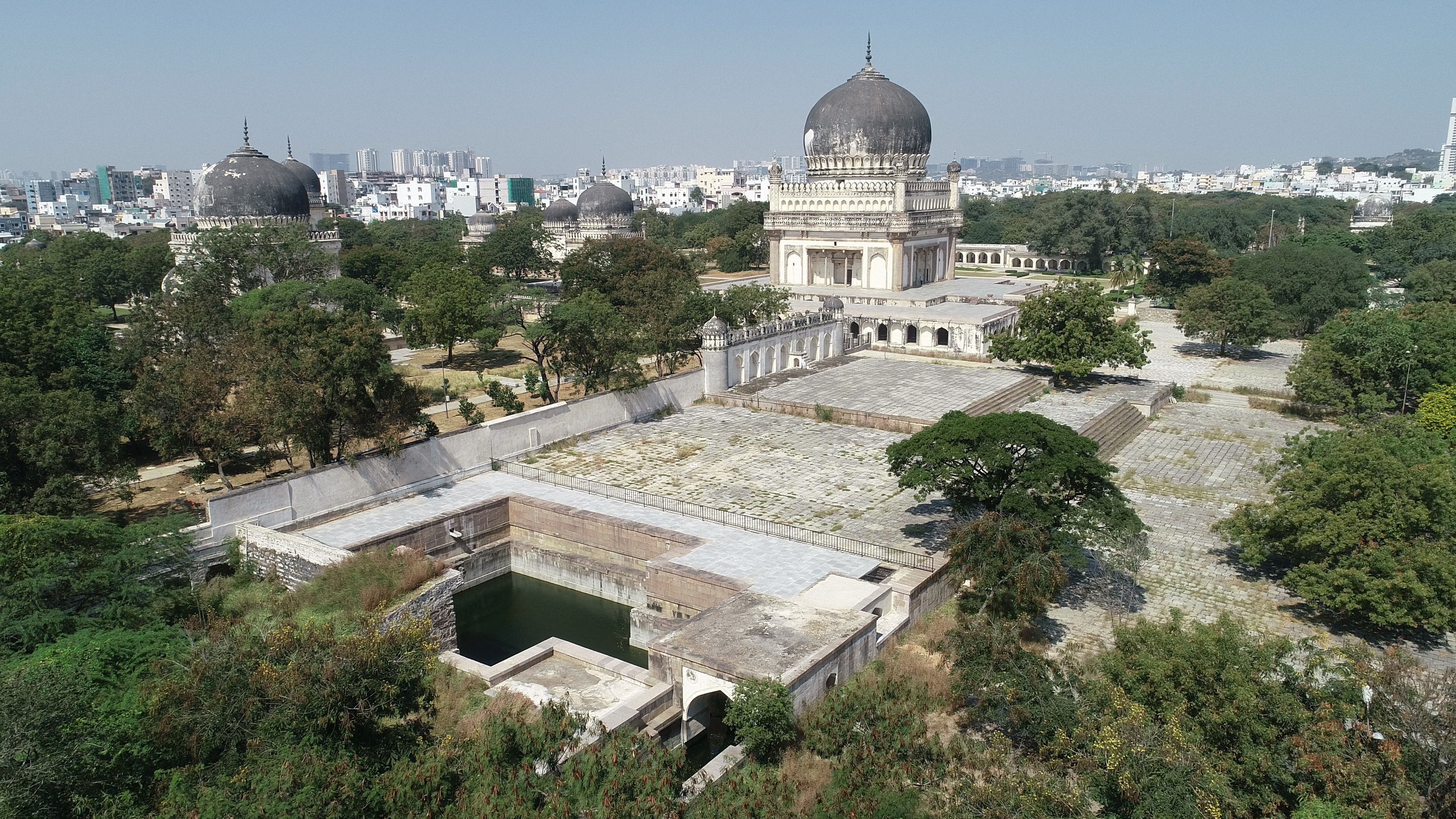
The Idgah Baoli is the grandest stepwell and possibly the earliest among the six stepwells at the Qutb Shahi Heritage Park. Built with massive hand-dressed granite blocks, its restoration involved replacing missing stones, stabilising masonry, reviving lime stucco ornamentation, and restoring the historic water catchment, enabling the baoli to function once again within the landscape.