Open Daily 9:30 am – 6:00 pm
- Fort Rd, Toli Chowki, Hyderabad, Telangana, 500008, India
- Visit


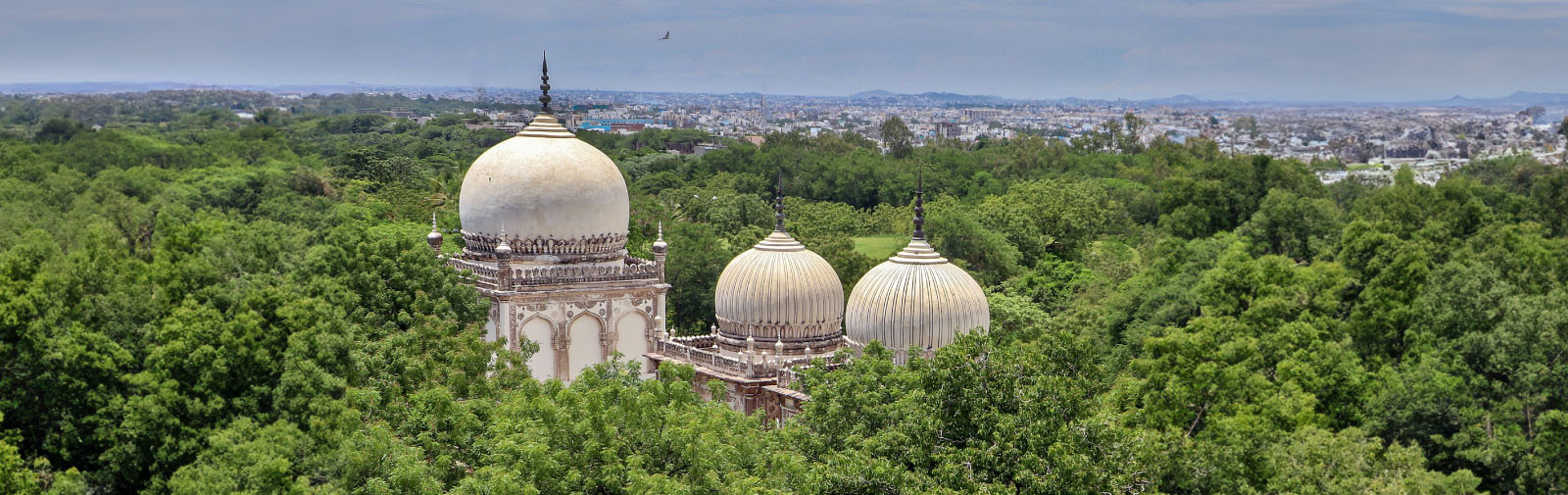
Beyond royalty, the Qutb Shahi Heritage Park is the final resting place for a diverse cast of historical figures. Important courtiers, courtesans, and notable individuals, including two renowned physicians and a commander find their eternal abode here.
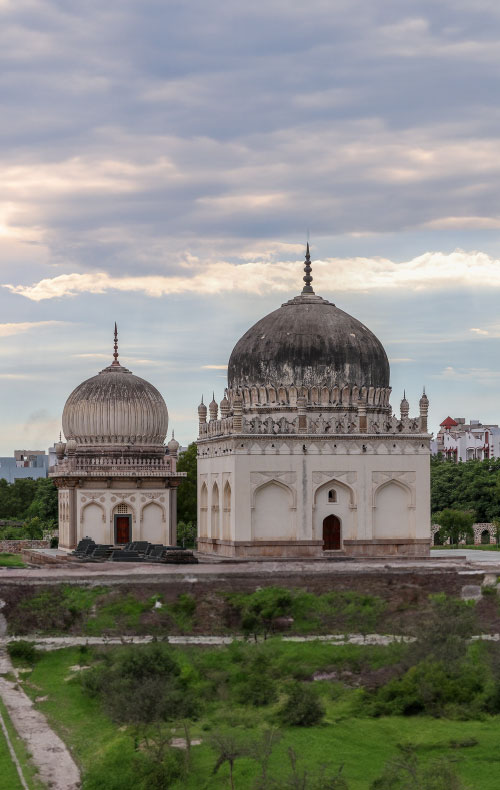
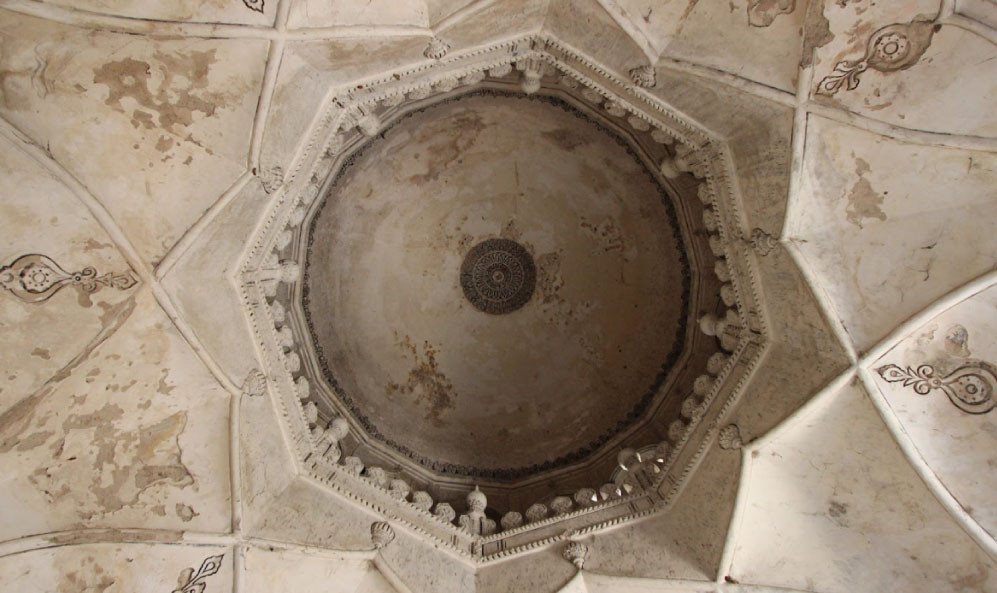
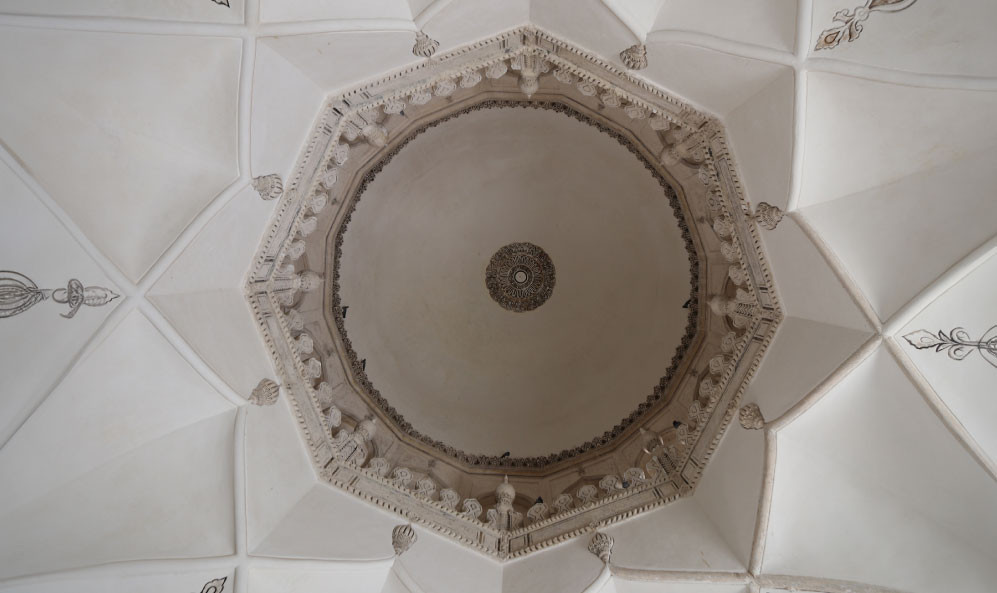
The mausolea of Hakim Nizamuddin Gilani and Hakim Abdul Jabbar Gilani, esteemed physicians serving Sultan Abdullah Qutb Shah, and the tomb of a Commander exemplify the grandeur of mid-17th century Qutb Shahi architecture. Despite their smaller scale compared to the royal tombs, these structures are distinguished by their lavish lime stucco ornamentation.
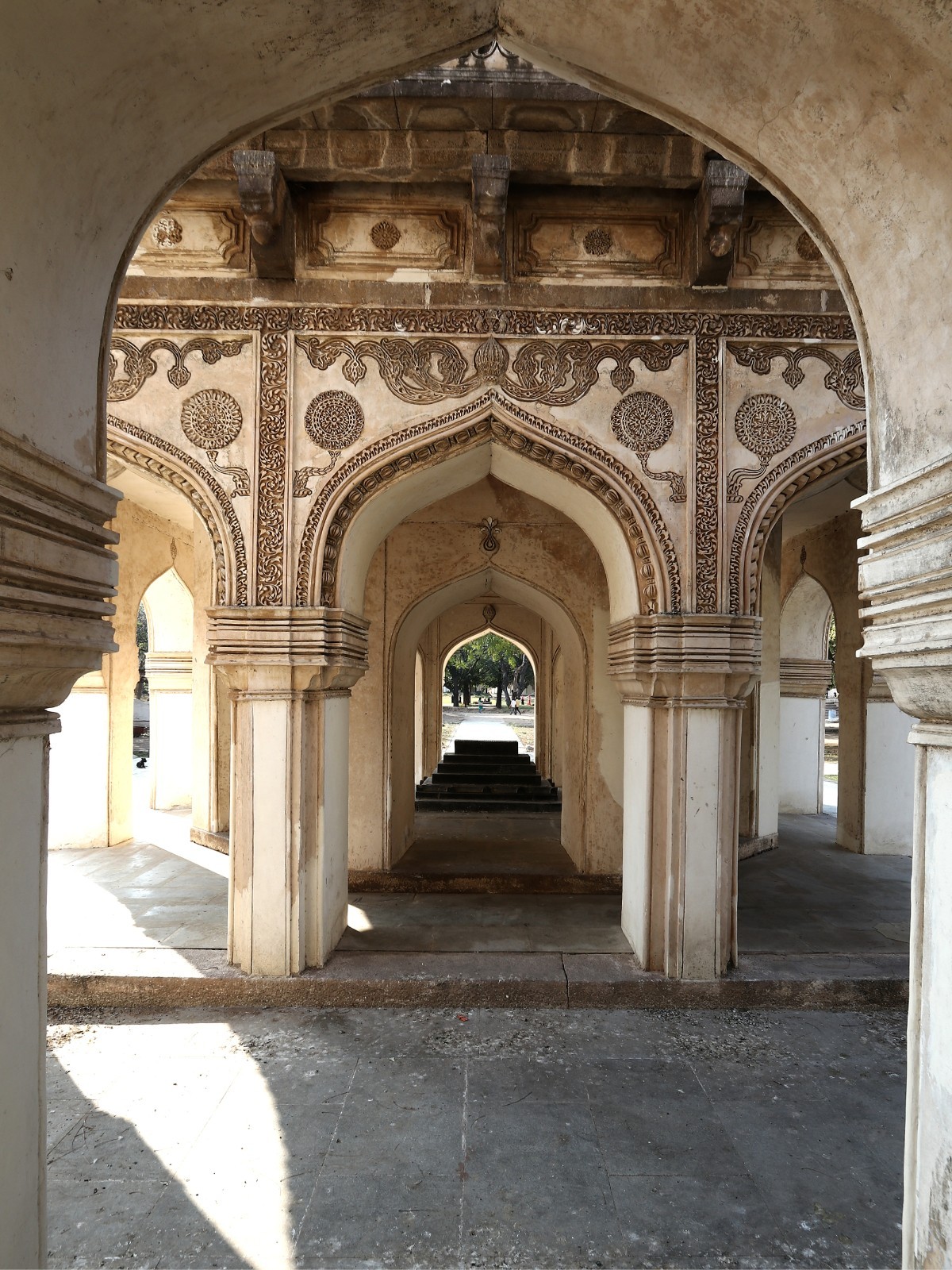
One of the two mausolea often referred to as the ‘Hakims’ tombs’ is said to have been built for Nezam-al-Din Ahmad, revered as Hakim al-Molk. A distinguished Iranian philosopher and physician hailing from Gilan, he served with prominence in the court of Abdullah Qutb Shah.
Renowned as a philosopher, theologian, and statesman, Hakim al-Molk's intellectual pursuits were expansive. His works, such as Anwar al-fasaha wa asrar al-bara a, seamlessly integrated religious beliefs with rational sciences, covering subjects from medicinal botany to Neoplatonic thought.
Before settling in Hyderabad around 1630, he held influential positions in both Safavid Iran and Mughal India. Upon his arrival in the Qutb Shahi kingdom, Sultan Abdullah Qutb Shah appointed him as the chief physician and also entrusted him with diplomatic responsibilities.
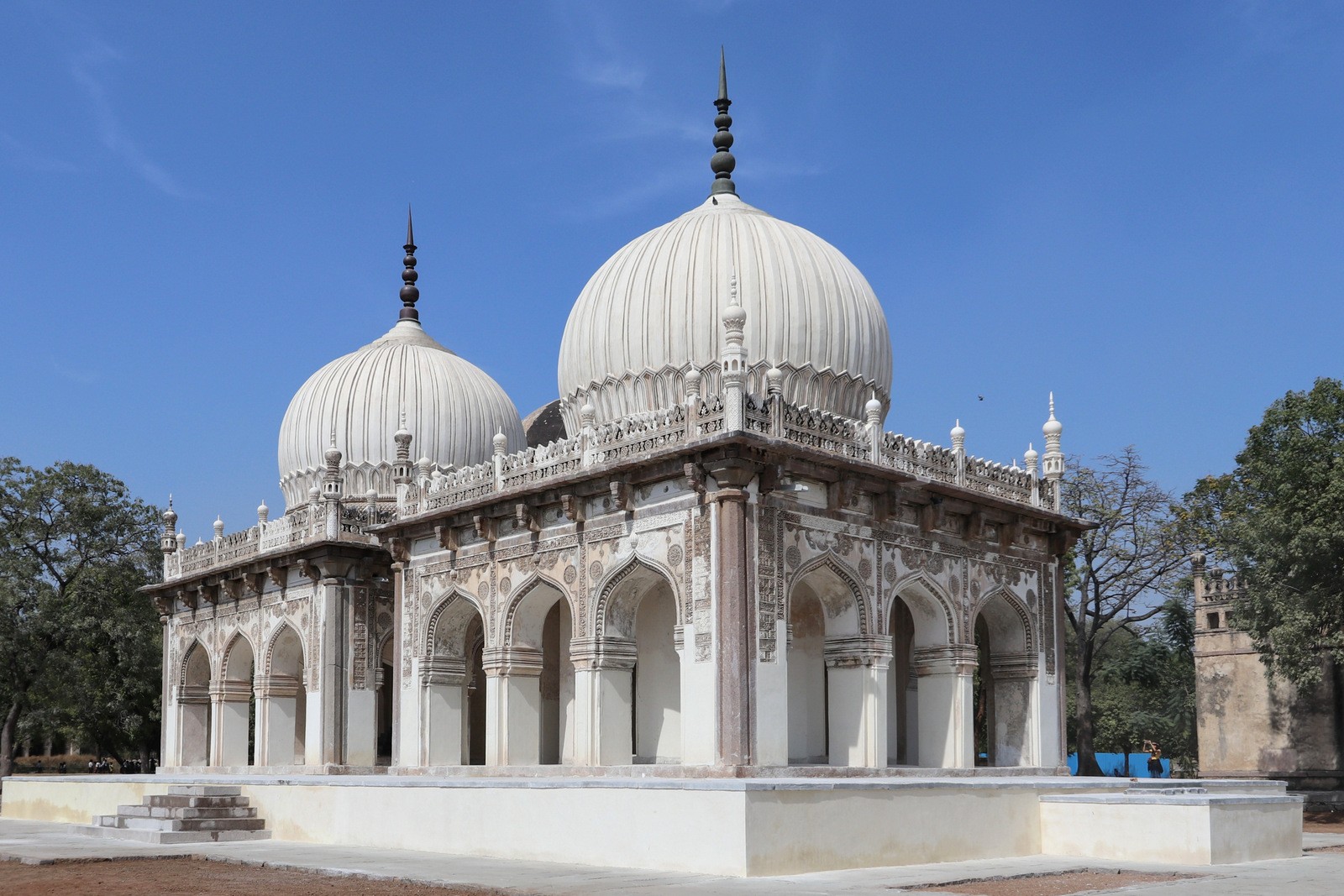
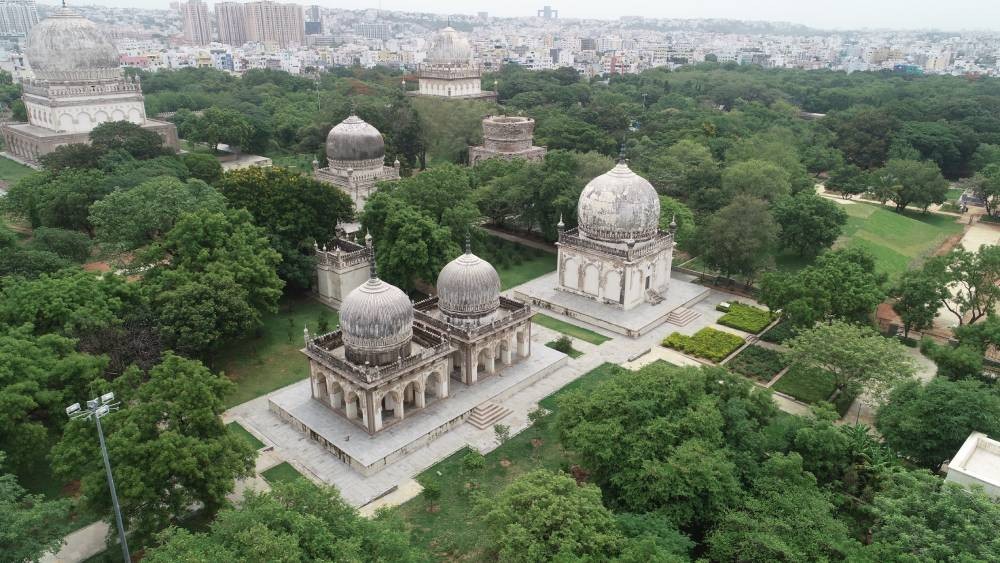
Alongside the grand mausolea of Qutb Shahi royalty, within the necropolis stand the mausolea of prominent nobles, courtesans, commanders and men of medicine.
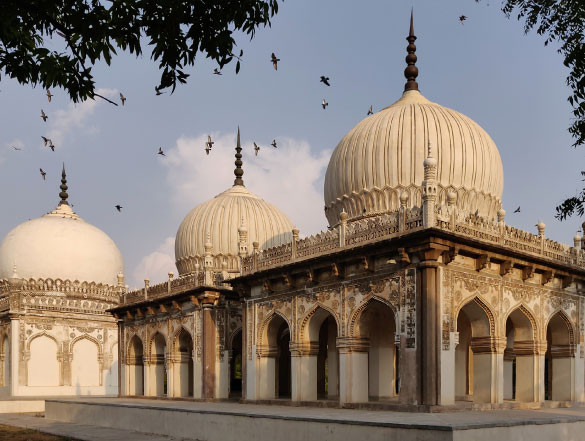
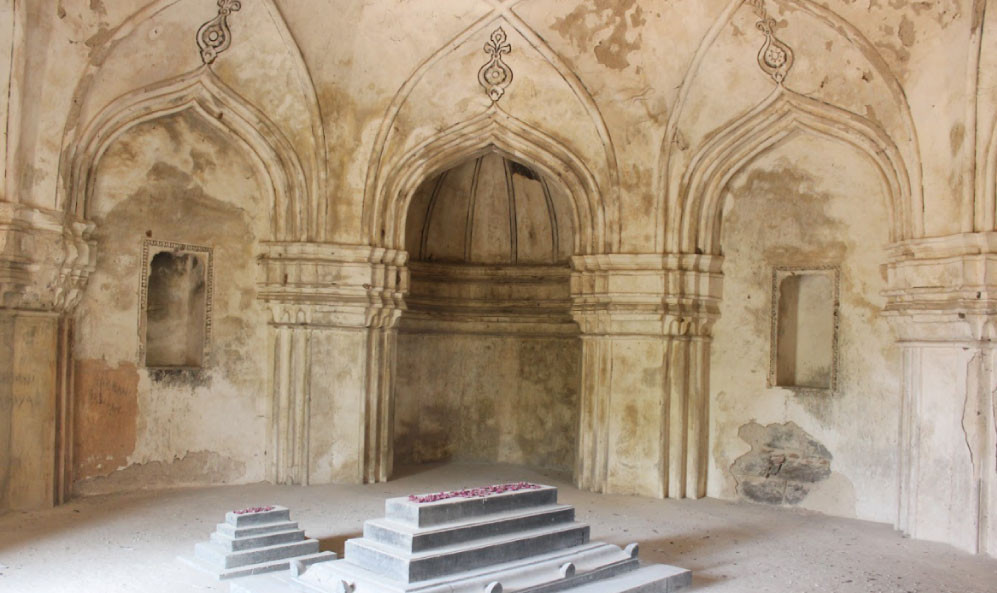
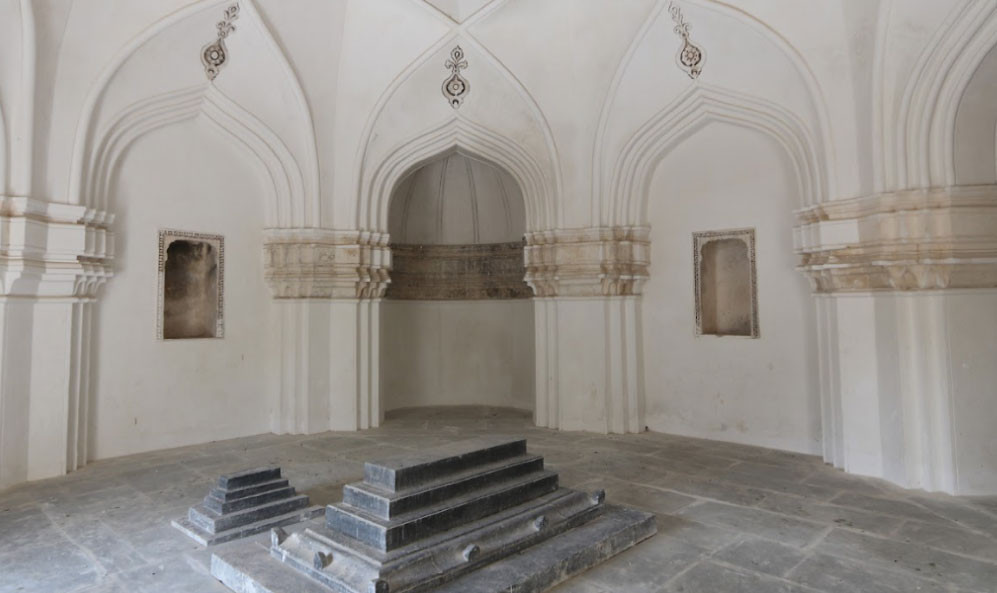
Built in the 1650s, the intricately decorated mausolea of Hakim Nizamuddin Gilani and Hakim Abdul Jabbar Gilani - esteemed physicians of Sultan Abdullah Qutb Shah- are twin structures standing on a common plinth
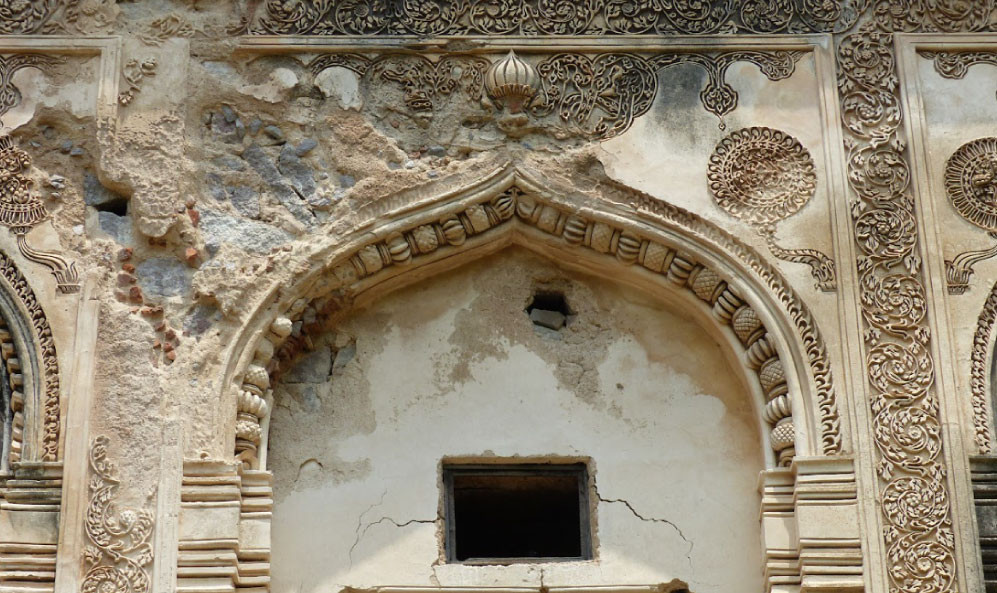
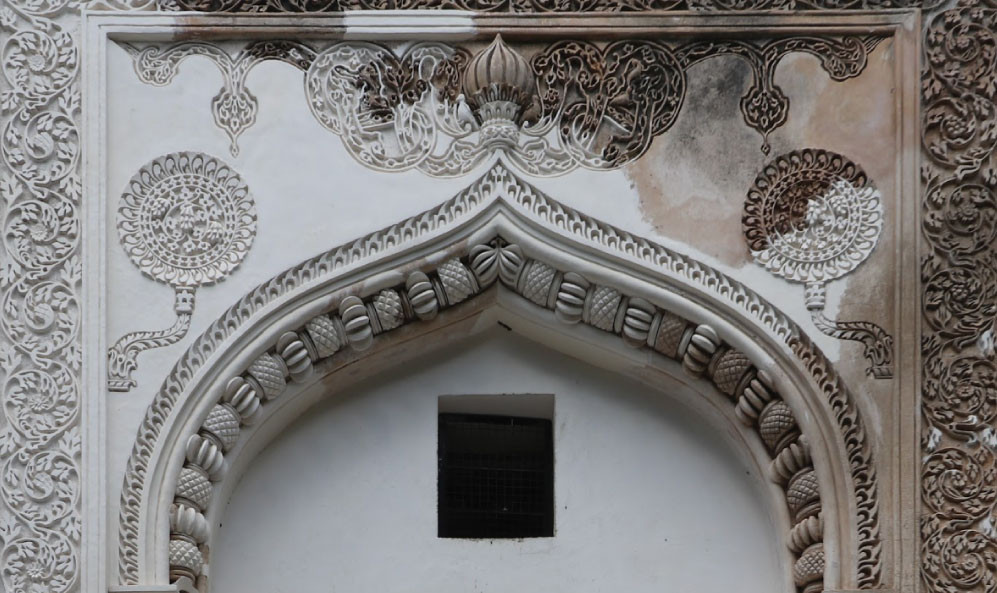
Their façades boast stucco patterns, featuring geometric and floral designs in exquisite lime stucco work, reflecting the skilled craftsmanship of Qutb Shahi architecture.
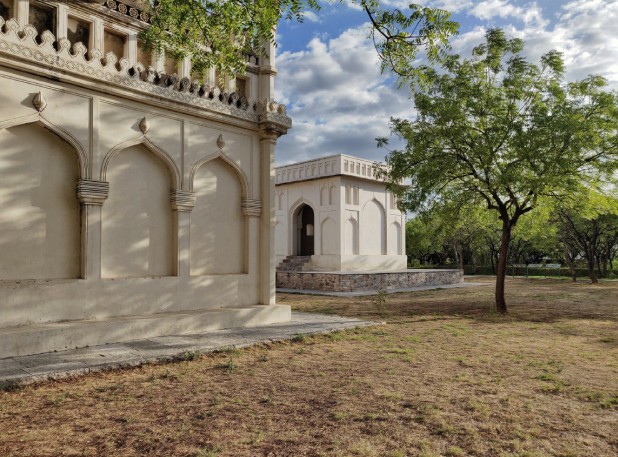
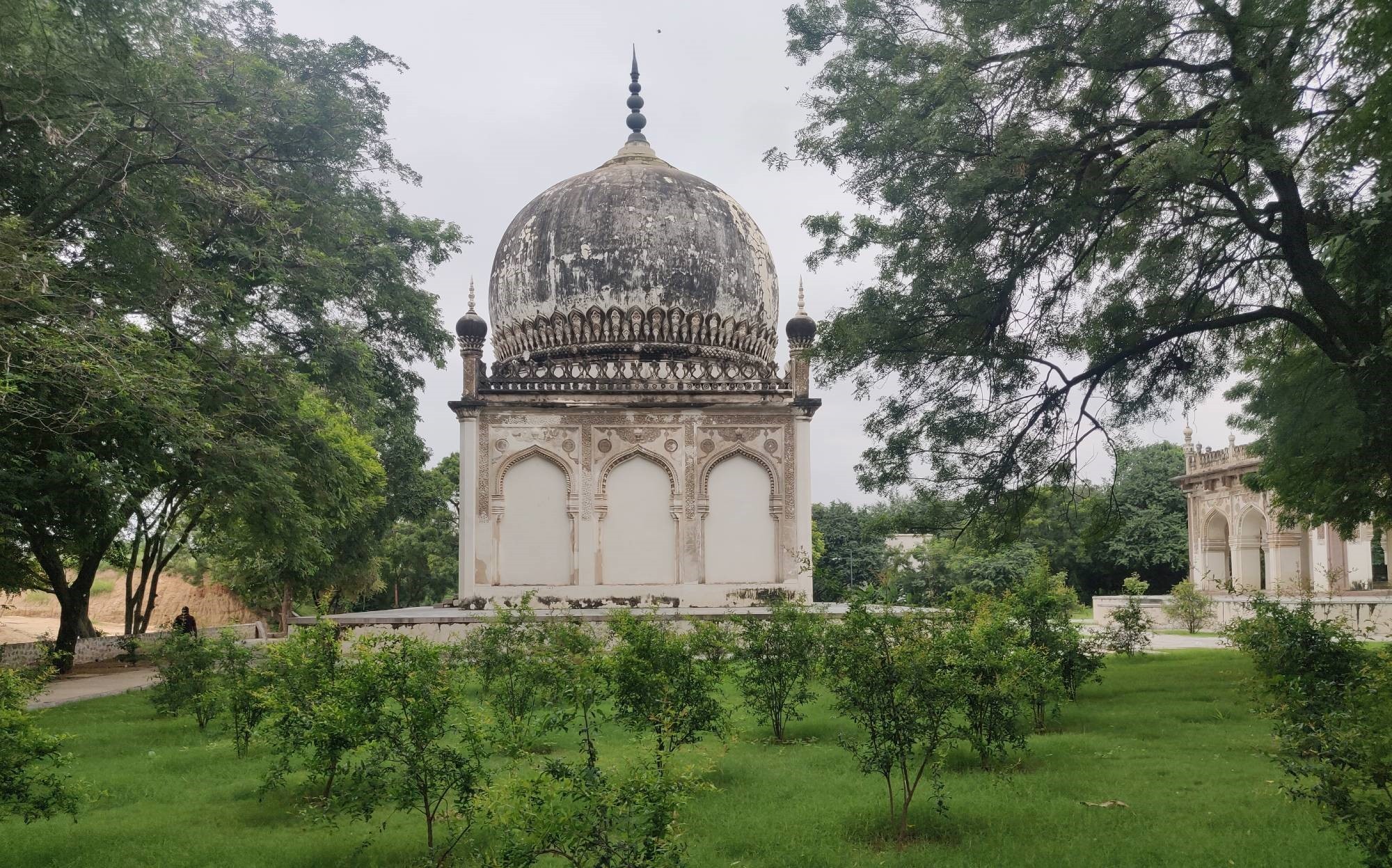
The 17th century 'Commander's' mausoleum features of a high plinth and an elegant dome. A profusion of ornamental stucco plaster adorns the base of the dome and the parapet. Arches on the façade boast intricate geometric, floral, and medallion designs. The interiors are marked by mouldings highlighting the arches.
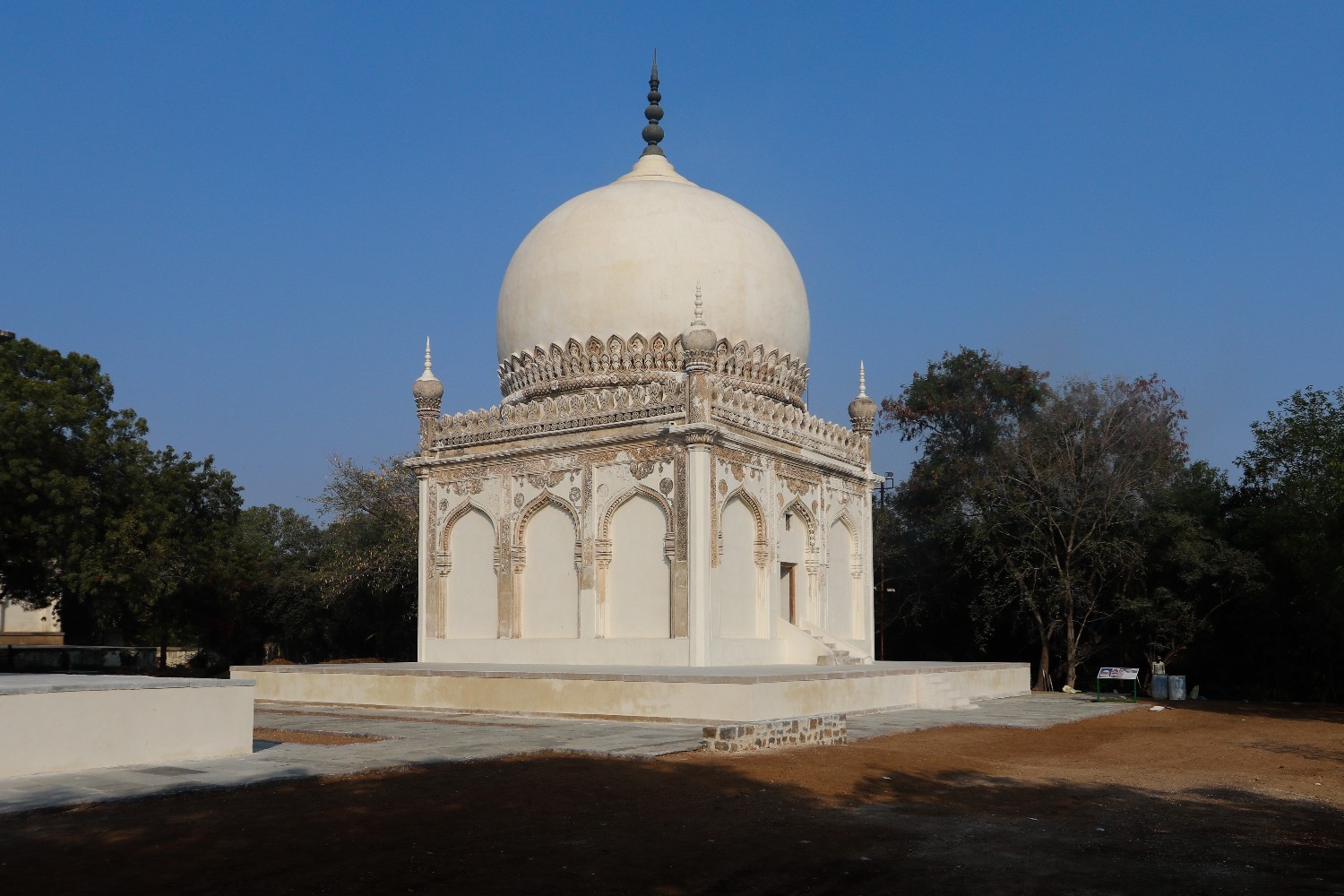
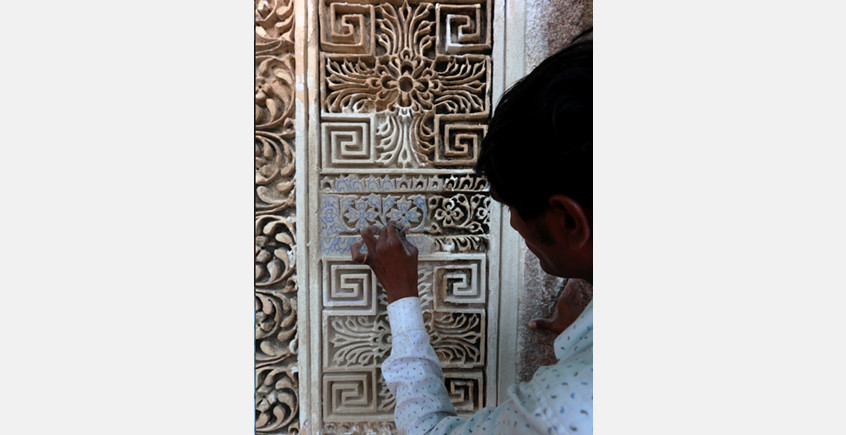
The mausoleums of Hakims and Commander’s are intricately decorated with ornamented stucco work. The patterns on the facades of the mausolea include geometric, floral, and animal representations, though many portions were found damaged or missing. Master craftspeople skilfully restored the missing stucco ornamentation using traditional tools and techniques. Similarly, at the twin mausolea of the Hakims, the missing minarets were reconstructed based on in-situ evidence under the supervision of the multi-disciplinary team at AKTC.
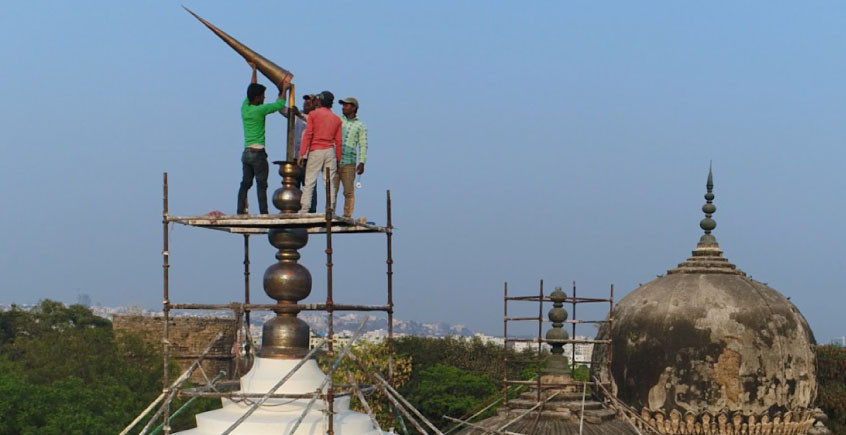
In the 1970s, a cement finial with steel reinforcement was installed atop one of the Hakims' tombs. During the recent conservation works, this was removed and replaced with a copper finial, matching the historic copper finial on the eastern dome, fabricated by a coppersmith over three months and subsequently installed.
The ribbed domes of the twin mausolea of Hakims, each 5 meters in diameter and over 7.5 meters tall, had significant structural issues. When the 20th century cement was removed from the domes, deep holes and cracks were revealed. These were then filled with stone masonry and lime mortar before the domes were replastered with a finishing layer of lime putty. The damaged dome of Commander’s mausoleum was similarly repaired and restored.
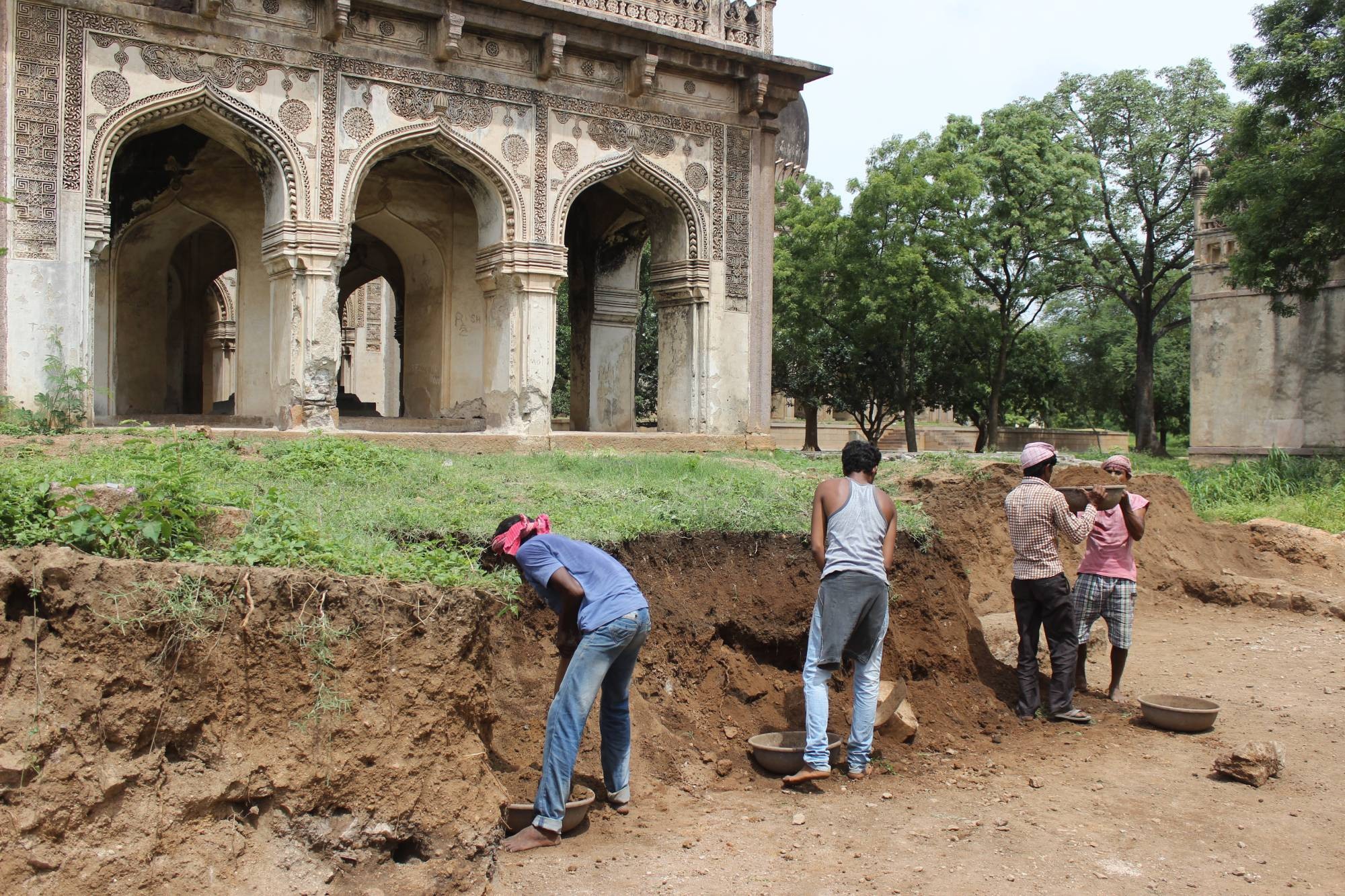
Cement concrete on the terraces of the three tombs was replaced with lime concrete, and new stone rainwater spouts were added to prevent deterioration. Upon commencing conservation work in 2018, it was discovered that the Hakims' and Commander’s mausolea had been altered in the 20th century to stand on a single platform. Archival research and on-site investigations revealed this change obscured the original layout. Originally, the twin mausoleums of Hakims’ stood together, while the mausoleum of Commander was on a separate plinth. Hence, the 20th-century cement concrete platform and earth-filling were carefully dismantled to restore the original setting. Missing hand-dressed granite stone edging was reinstated along the edge of both platforms, and the intervening space was thoughtfully landscaped. Additionally, the platform of a black basalt grave standing in between the Hakims’ and Commander’s mausolea was also restored.
Upon commencing conservation work in 2018, it was discovered that the Hakims' and Commander’s mausolea had been altered in the 20th century to stand on a single platform. Archival research and on-site investigations revealed this change obscured the original layout. Originally, the twin mausoleums of Hakims’ stood together, while the mausoleum of Commander was on a separate plinth. Hence, the 20th-century cement concrete platform and earth-filling were carefully dismantled to restore the original setting. Missing hand-dressed granite stone edging was reinstated along the edge of both platforms, and the intervening space was thoughtfully landscaped. Additionally, the platform of a black basalt grave standing in between the Hakims’ and Commander’s mausolea was also restored
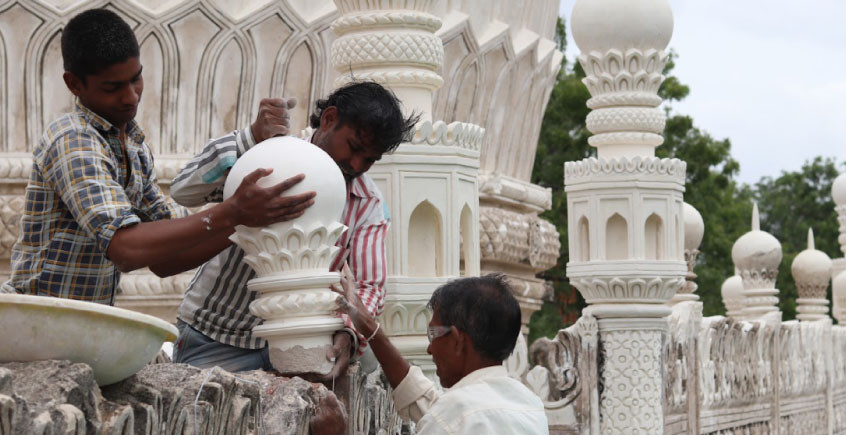
The mausoleums of Hakims and Commander were among the few such structures built for non-royals at the Qutb Shahi Heritage Park, the unique necropolis spread over 106 acres at the foot of the majestic Golconda Fort.
Appropriate landscape restoration adjacent to the mausolea was carried out following the removal of debris, filled-in earth and excess vegetation. This work restored the area to its original levels and improved visitor accessibility.
The southern area of the Commander’s mausoleum now serves as a significant junction, connecting Deccan Park (the visitor facility zone) with the core archaeological zone via a major access path from the main entrance plaza. A meticulously designed garden layout, inspired by Qutb Shahi era poetry, has been created for this junction. Over a thousand perennial roses and Frangipani (Plumeria) trees have been planted in an organized arrangement. Additionally, a small portion of the banana plantation has been reinstated based on archival photographs as part of the landscape restoration.
Beyond the grand royal mausoleums, the Qutb Shahi Heritage Park also contains several smaller tombs. These modest, single-story structures, believed to be the resting places of nobles, ministers, and other members of the royal family, showcase the craftsmanship and architectural legacy of the Qutb Shahi dynasty.