Open Daily 9:30 am – 6:00 pm
- Fort Rd, Toli Chowki, Hyderabad, Telangana, 500008, India
- Visit


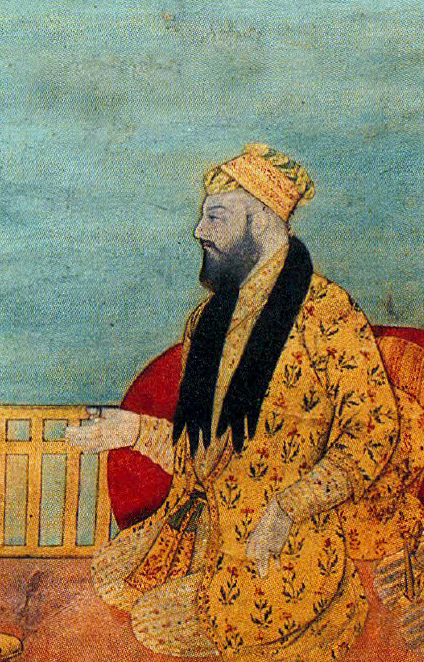
Ibrahim Quli Qutb Shah, the fourth ruler of the Golconda Kingdom, was the first to adopt the title "Sultan" within the Qutb Shahi dynasty. He initially sought refuge in the Vijayanagara kingdom after his brother, Jamshed Quli, ascended the throne. Following Jamshed Quli's death, he returned to Golconda and was crowned Sultan.
Known for his ambitious expansionist policies, Ibrahim Quli significantly expanded the kingdom's territory. He also embarked on ambitious construction projects, most notably the creation of Ibrahimbagh, a planned garden city, and the construction of the Puranapul bridge over the Musi River, which transformed Golconda into a major center of trade. Under his patronage, the port of Masulipatnam flourished, evolving from a small fishing hamlet into a significant global trading hub.
A patron of the arts, Ibrahim Quli fostered a vibrant cultural environment. His court witnessed the flourishing of Telugu poetry and Persian literature, including the notable Persian adaptation of the Panchatantra, known as Anvar-i-Suhayli.
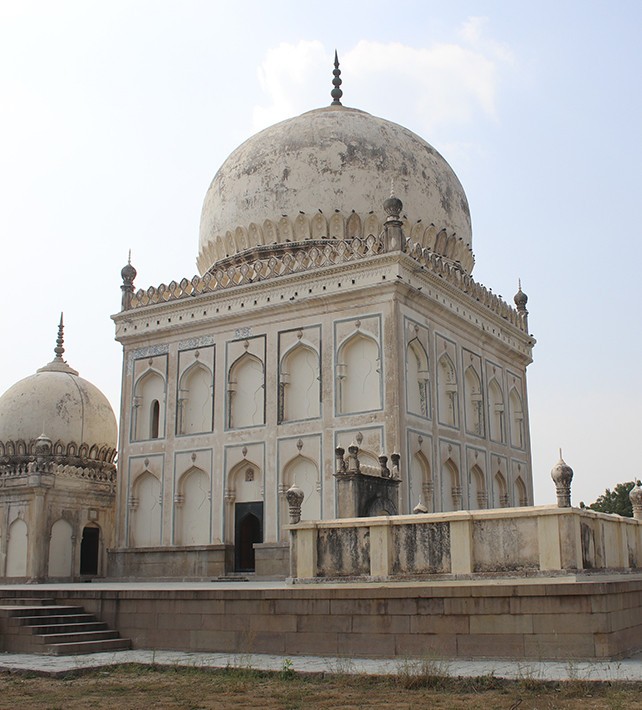
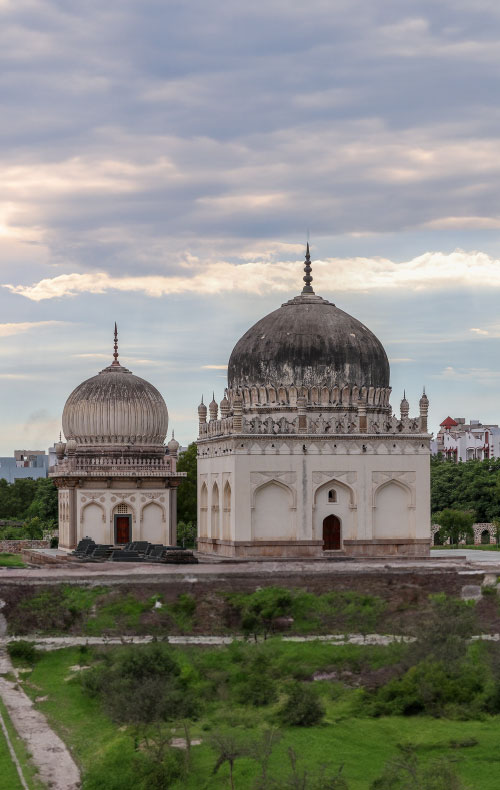
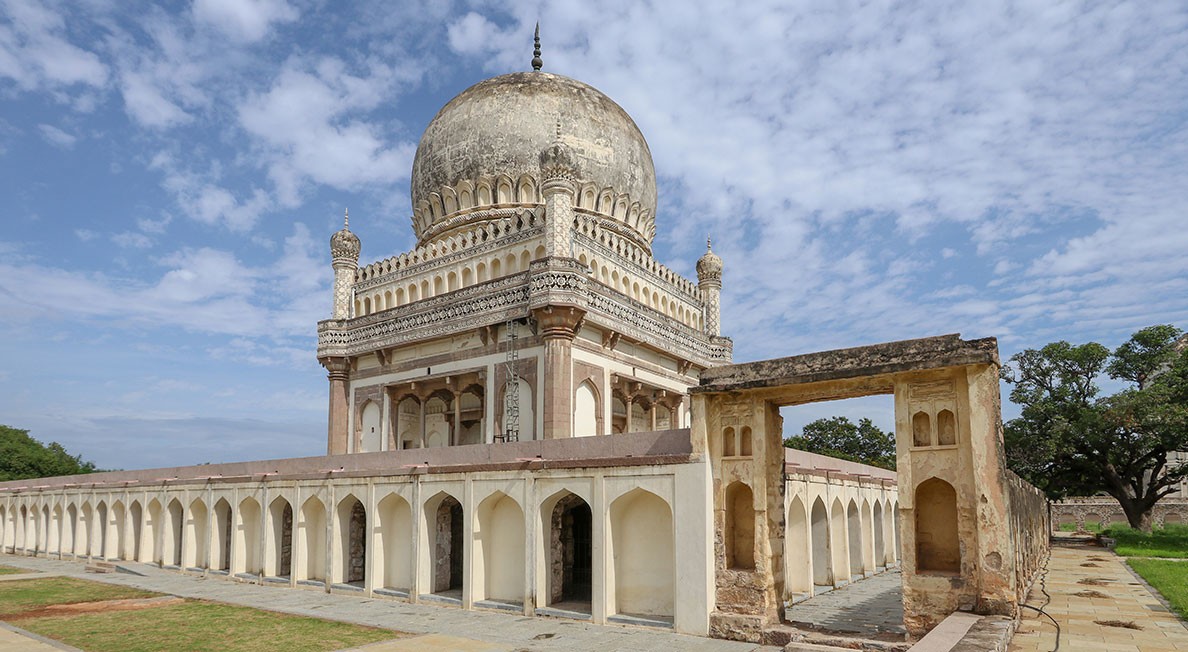
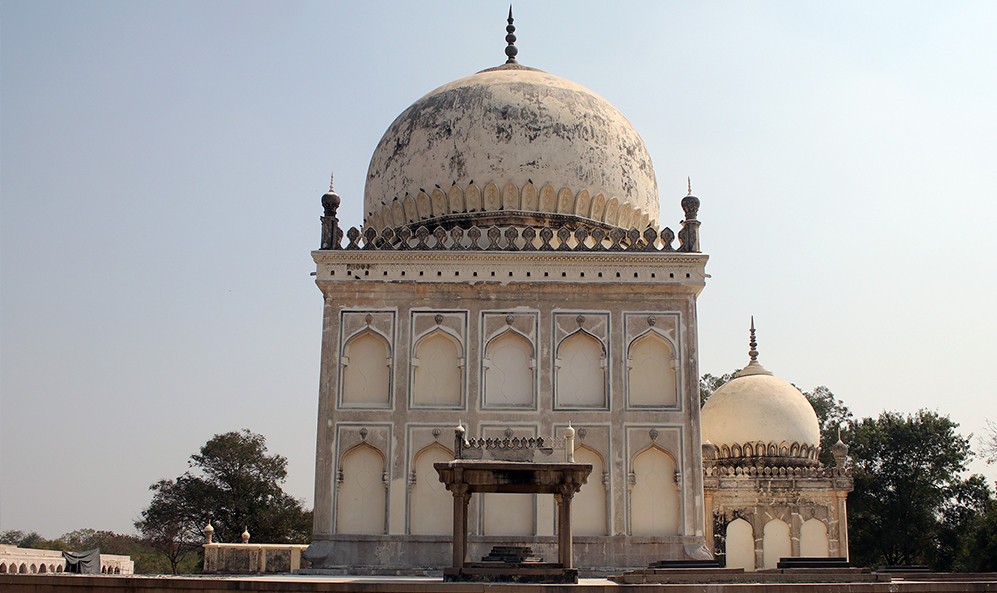
Sultan Ibrahim Quli Qutb Shah's tomb, dating back to 1580 AD, stands within its own enclosed garden, historically accessible from the Golconda fort. The bulbous domed structure has two levels of blind arcade on the façade.
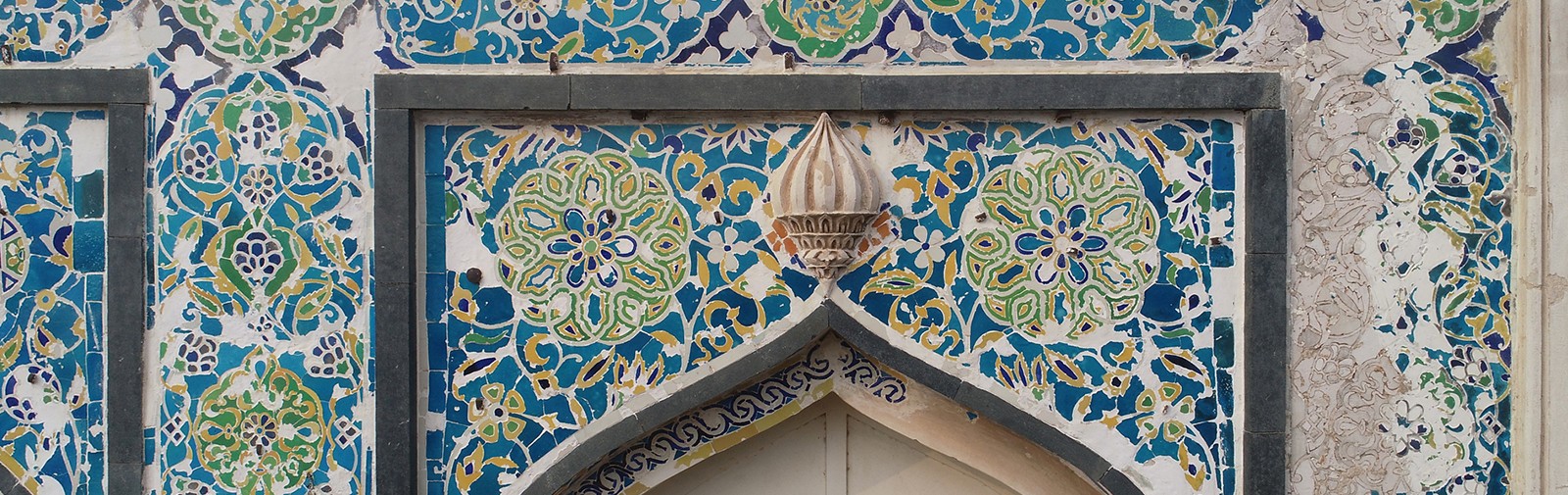
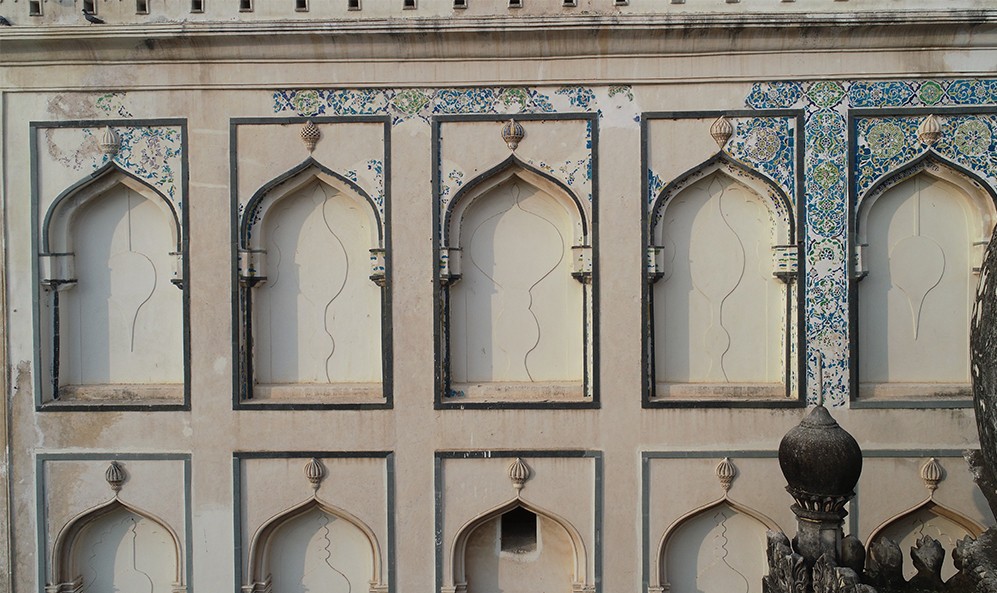
While traces of the vibrant enamelled tiles, which once adorned the entire façade, remain visible on the upper southern and eastern sections, much of the original ornamentation has been lost over time. Archival images from the 1860s reveal that the mausoleum originally had several minarets on each façade and significantly more elaborate stucco ornamentation. This embellishment appears to have been gradually lost during the late 19th and early 20th centuries.
The meticulous conservation of Ibrahim Quli Qutb Shah's mausoleum has been guided by archival evidence. Modern layers were carefully removed from the façade, revealing original details that master craftsmen meticulously restored using traditional techniques and materials. The tomb's unique glazed tilework, particularly on the southern and eastern facades, was thoroughly documented and carefully consolidated.
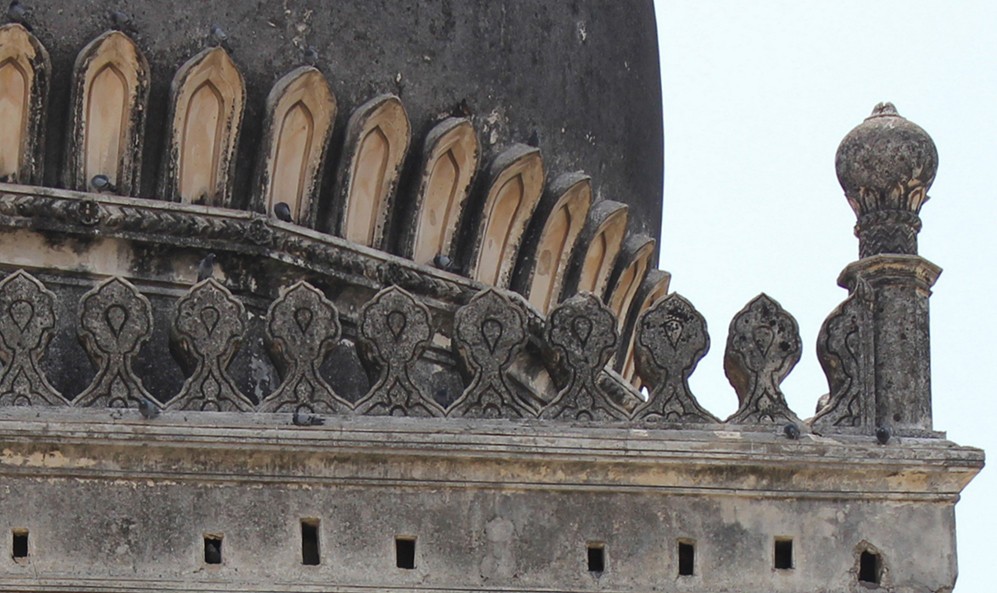
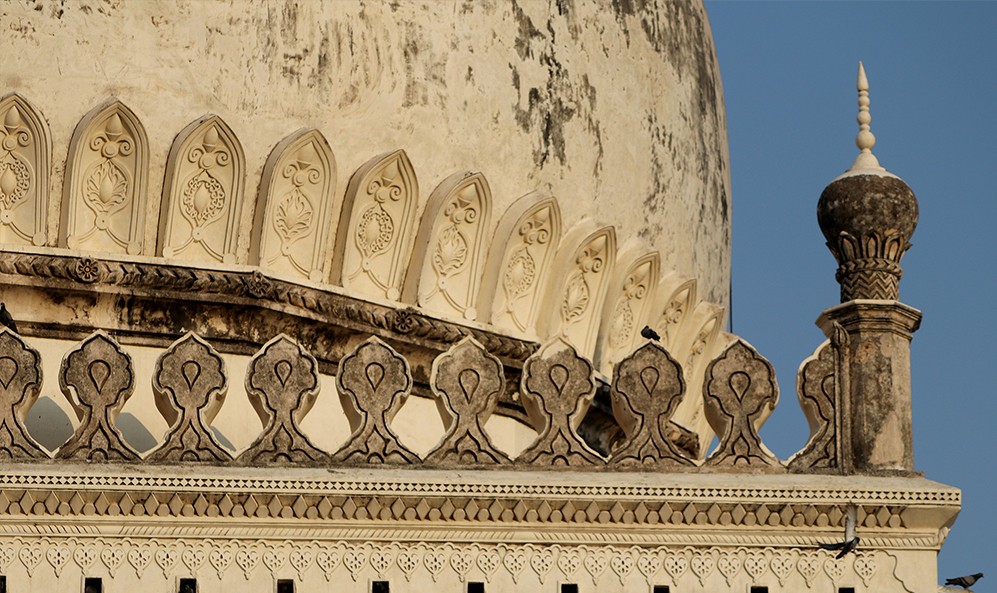
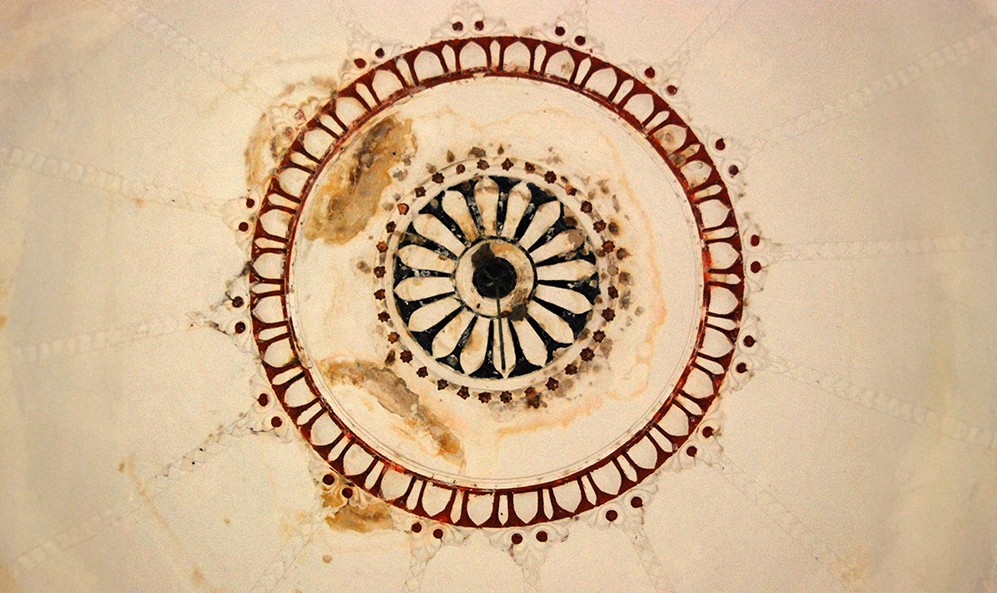
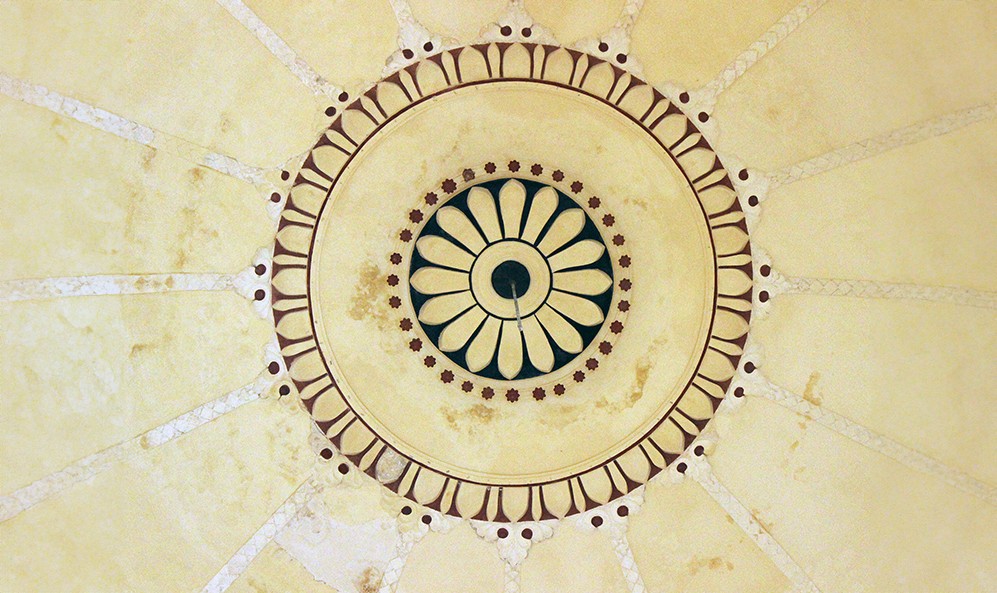
Conservation efforts included dismantling damaged cement plaster on the dome and removing invasive plant roots. The dome was meticulously replastered with traditional lime plaster, ensuring a seamless finish. The internal dome and its ornamental features were similarly cleaned and restored, revealing original chevron patterns on the minarets. Damaged lime stucco motifs at the internal parapet were reinstated, and the central ceiling medallion was restored by master craftspeople. On-site investigations revealed traces of original details on removal of 20th century cement plaster from the petals on the dome and the facades of the monument. The details were documented precisely to create a template of the pattern, which was used by skilled craftsmen in restoring the missing portions. The black basalt band around the blind arches on the façades were also reinstated based on in-situ evidence.
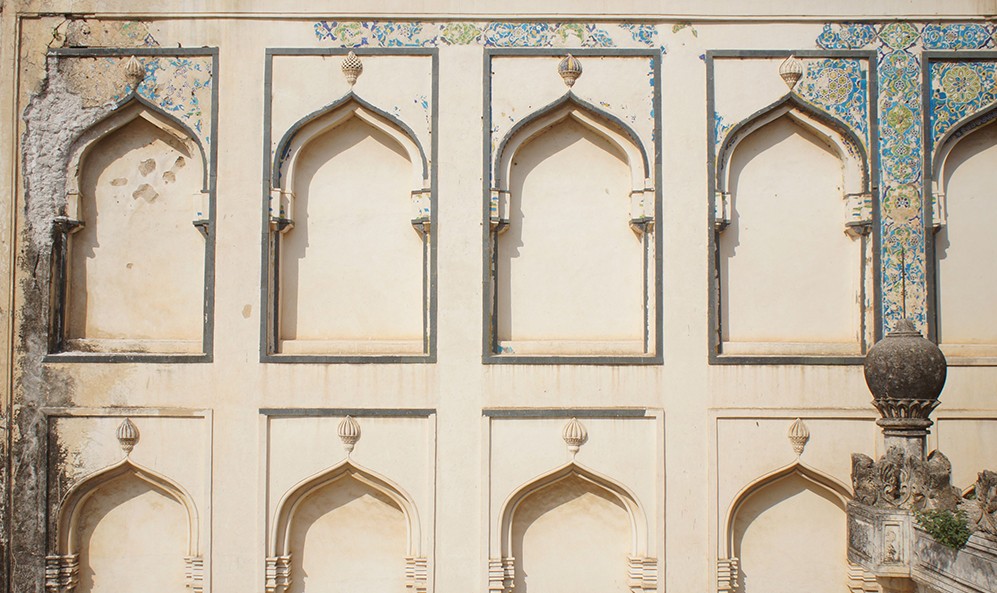
This tomb is one of the few at Qutb Shahi Heritage Park with original glazed tiles still intact. The multi-colored mosaic tilework on the facade was thoroughly documented and carefully consolidated.
The thick cement layer on the plinth was removed and replaced with granite stone flooring, ensuring proper drainage. Missing hand-dressed granite blocks were also reinstated at the plinth's bottom edge. These comprehensive conservation efforts have not only preserved this important historical monument but also showcased the remarkable craftsmanship and architectural ingenuity of the Qutb Shahi era.
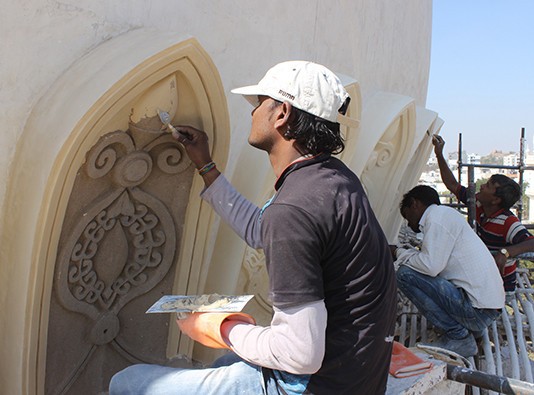
The details were documented in precise detail to create a template of the pattern, which was then used by mastercraftsmen to restore the missing portions
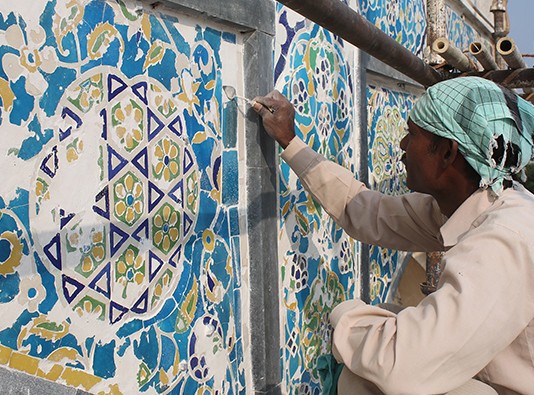
The tiles on the façade were consolidated after thorough documentation.
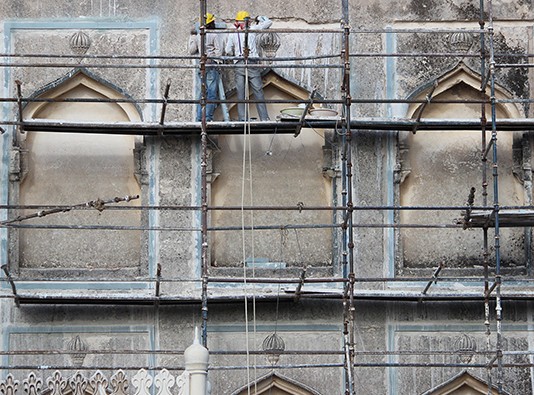
Black basalt edging on the arched bays on the facade were restored
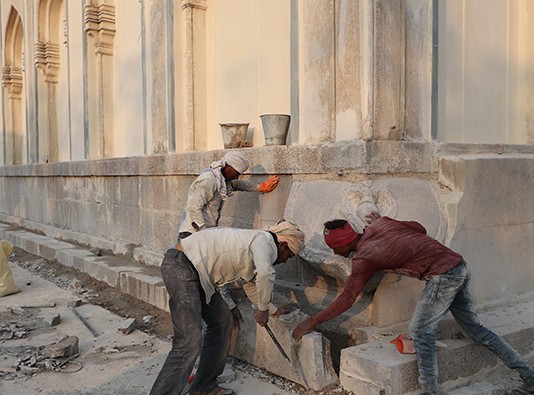
Missing portions of the granite edging around the perimeter of the mausoleum was restored
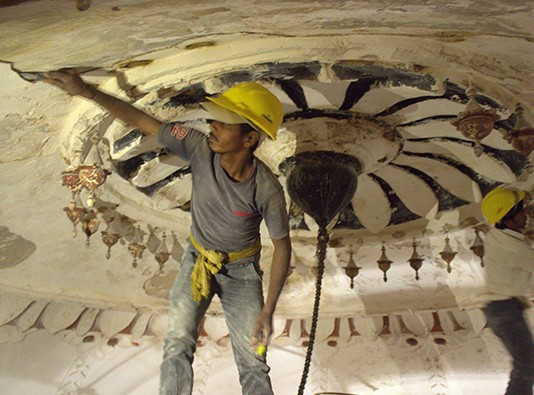
Careful cleaning of modern layers from the ceiling medallion
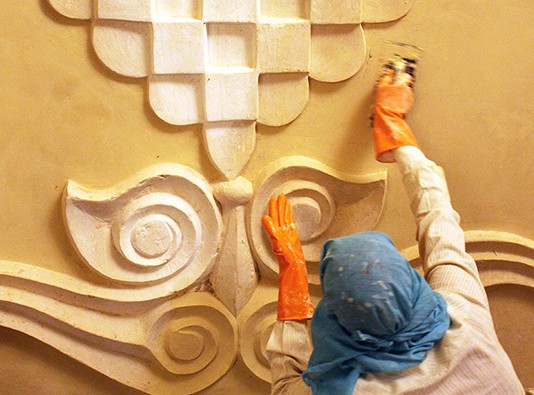
Restoration of details on the internal surface
At this mausoleum, based on archival evidences, modern layers were removed from various elements of the facade to reveal traces of original details, which were then restored by master craftsmen. This is also one of the only tombs with significant remnants of glazed tiles on the facade. Similarly, missing and damaged stone elements on the façade were restored, including the granite edging around the perimeter of the mausoleum and the black basalt edging on the arched bays.
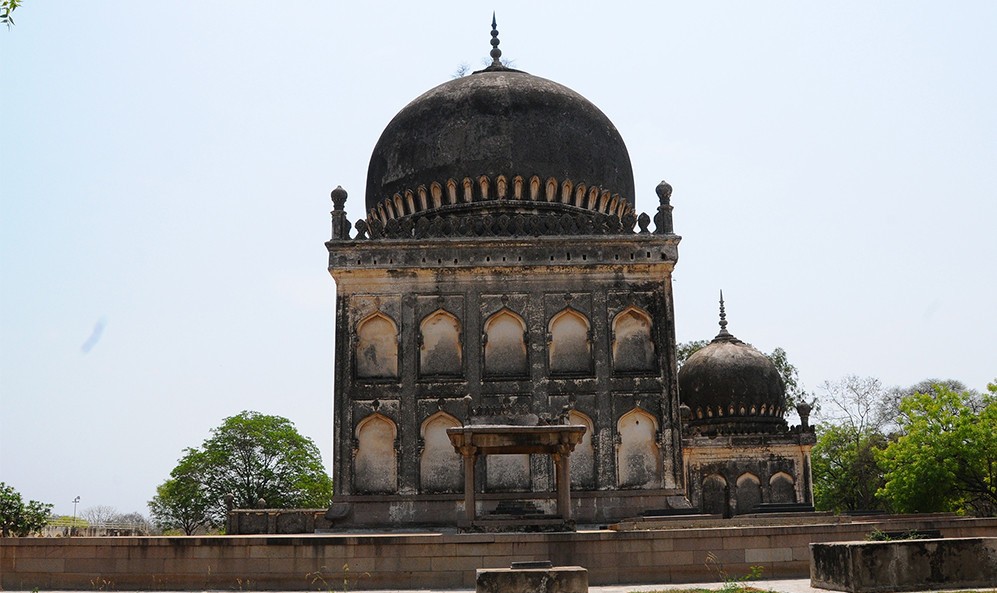
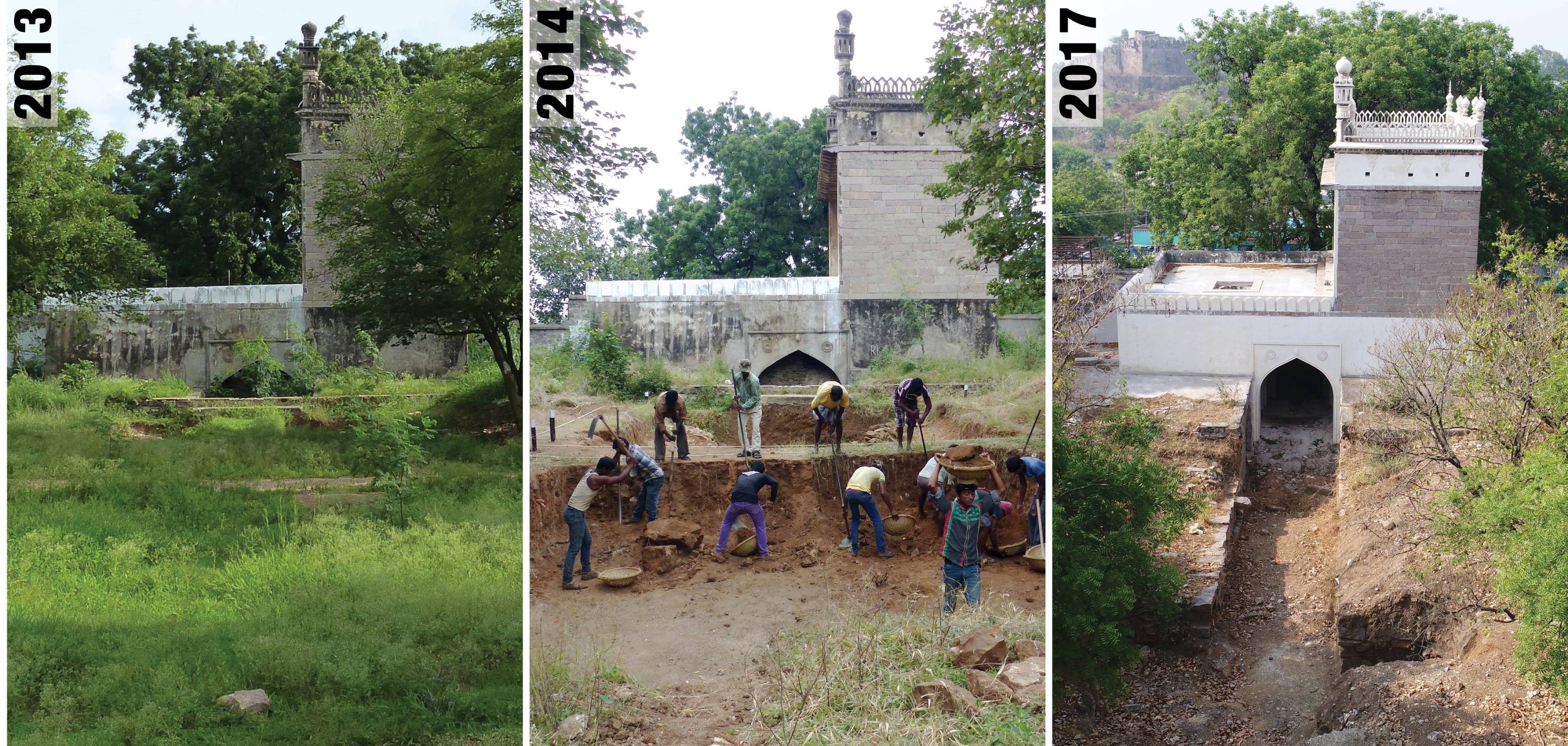
The Southern Gateway at the Qutb Shahi Heritage Park is a remarkable architectural feature with significant historical value. Guided by an archival image from the 1860s, excavations in a depression south of Ibrahim's Tomb uncovered an arched gateway within the enclosure of the tomb, standing less than 500 meters from the Golconda fortifications.
The arched gateway was built in the centre of the southern garden enclosure wall of Ibrahim Quli’s tomb to serve as an entry from Golconda - possibly for the burial procession.The gateway enhances the historical narrative of the Qutb Shahi dynasty. It also reflects the intricate connections between the fort and the mausoleum, highlighting the site's cultural significance.
Unveiling a hidden gem! Guided by an 1860s archival image, excavations revealed this arched gateway, possibly the original entrance to the Qutb Shahi Heritage Park.
Muhammad Quli Qutb Shah, the fifth king of the Qutb Shahi dynasty, founded Hyderabad in 1591. His majestic tomb stands as one of the largest structures at the Qutb Shahi Heritage Park.