
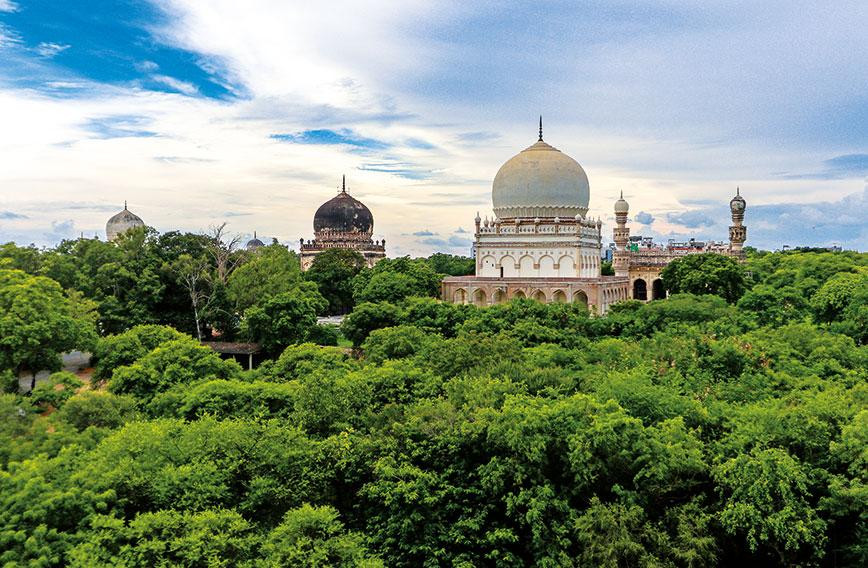
EVERY city has its surprises and they show up for those who look for them. In Hyderabad, the Qutb Shahi tombs don’t usually find mention. But these tombs are marvels of architecture, design, craftsmanship and engineering.
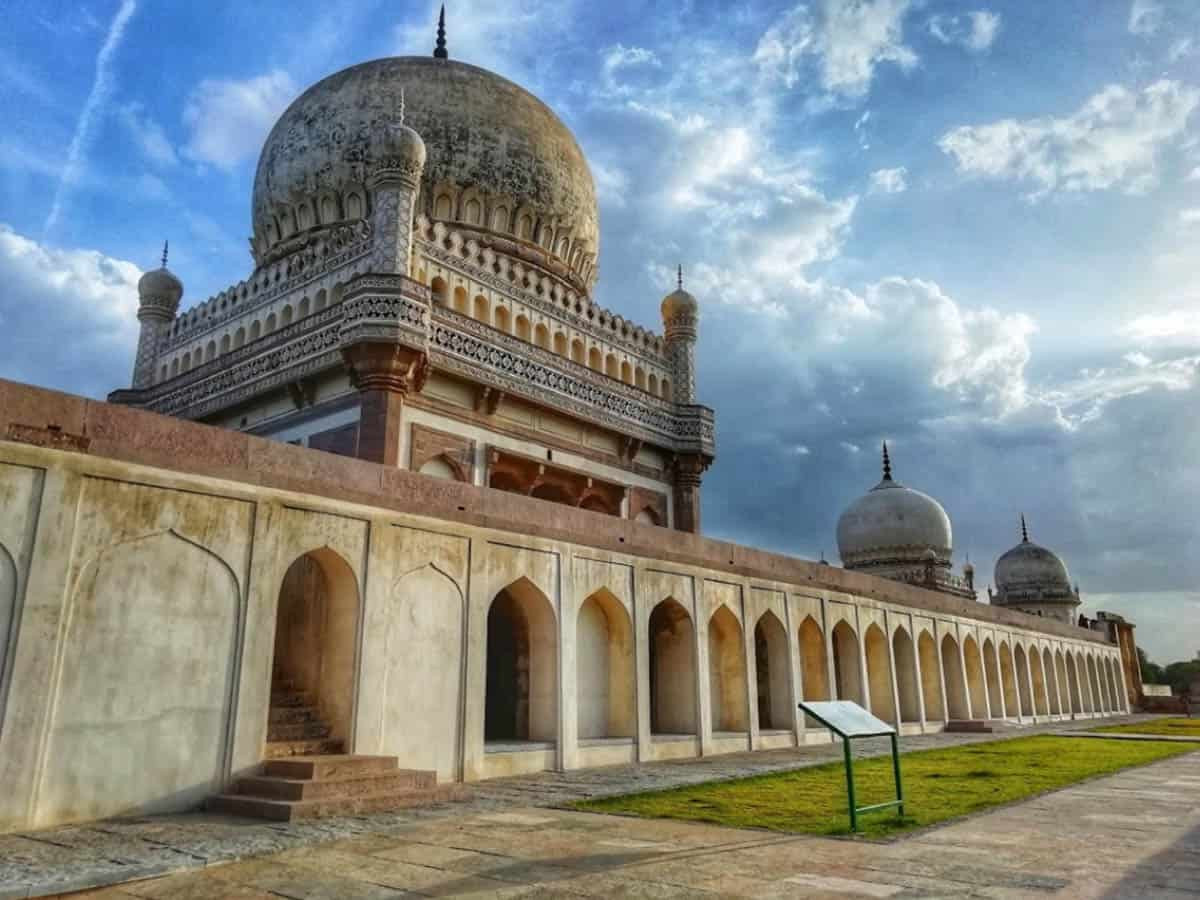
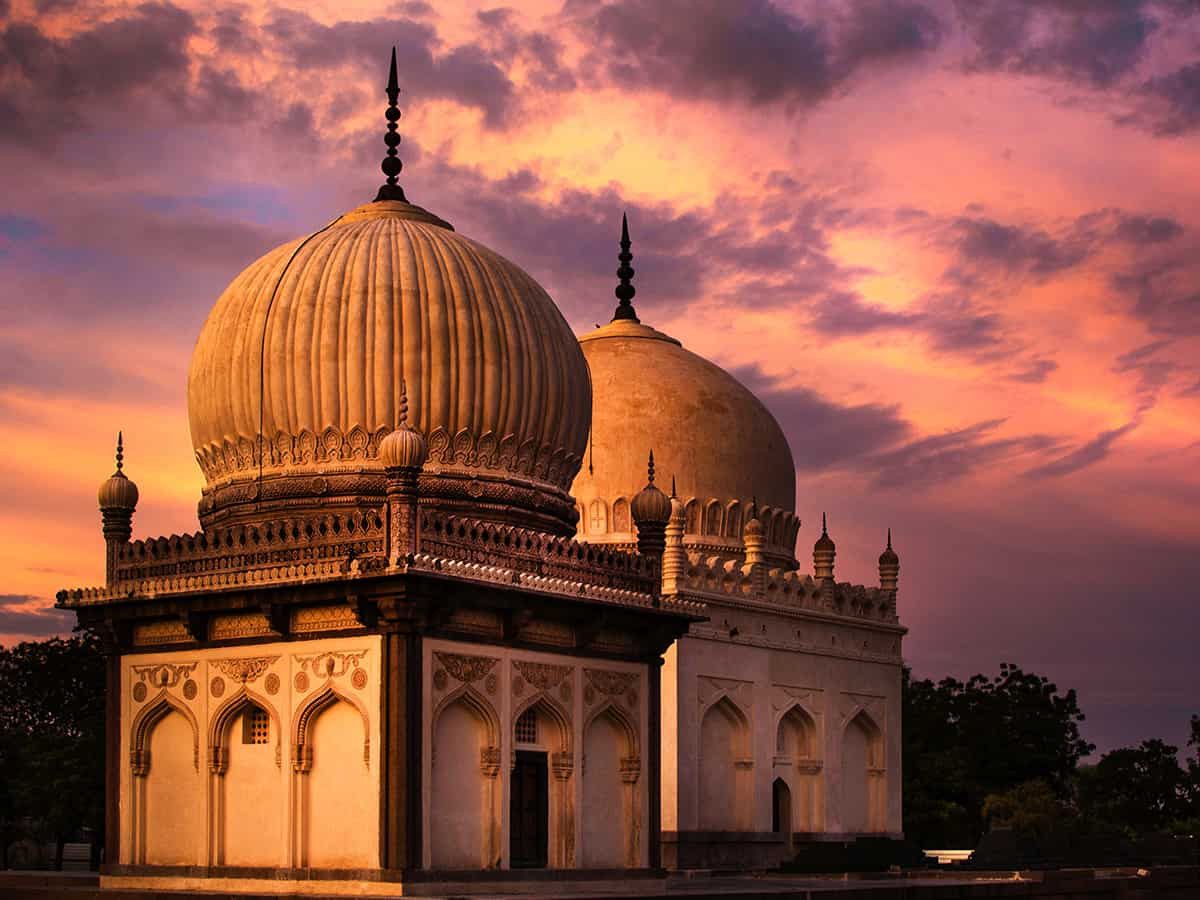
A visitor to the historic Qutub Shahi Tombs will be mesmerized by its architectural beauty. The colourful enameled tiles were used in decorating the tombs.Quli Qutub Shah bears intricate carvings. The enameled tiling of the tomb made it unique from the other tombs.
In a site-transforming discovery, large panels of coloured glazed tile-work have been uncovered on the tomb of Sultan Muhammad Qutb Shah at the foothills of the Golconda Fort.
On a pleasant winter morning in early December last year, I was invited to visit the Qutb Shahi Tombs by the authorities of the Aga Khan Trust for Culture to see the ongoing restoration process at the site in the company of friends and likeminded persons. It was a special occasion for me for it was the first time I could see the Murda Darwaza (Door for the dead) that connected the Golconda fort and the Qutb Shahi necropolis after the removal of several layers of mounds of earth.
Early 19th century paintings and photographs of Qutb Shahi Tombs in Hyderabad show the monuments in open splendour surrounded by gardens. But visitors to the heritage complex in the latter part of the 20th and 21st century saw a different precinct — reinforced concrete fountains, walls, monuments with connecting platforms, iron railings on platforms, a Japanese garden with a bridge over a water channel and an asphalt road connecting it all.
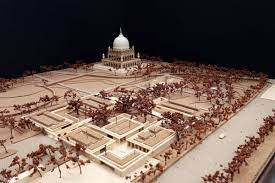
The transformation of the Qutb Shahi Tombs Complex in Hyderabad can now be seen from space as the outer contours of the interpretation centre become evident in satellite imagery. But the transformation is not limited to the outer part of the complex. “This will work as an entrance to both the Qutb Shahi Heritage Park and the Golconda Fort. It is partially buried so that the views of the site remain unimpeded,” says Ratish Nanda of Aga Khan Trust for Culture
The Qutb Shahi Heritage Park which contains over 80 Monuments, the Deccan Park and an archaeological zone, will be getting a new addition in the form of a Rs 45-crore Interpretation Centre.
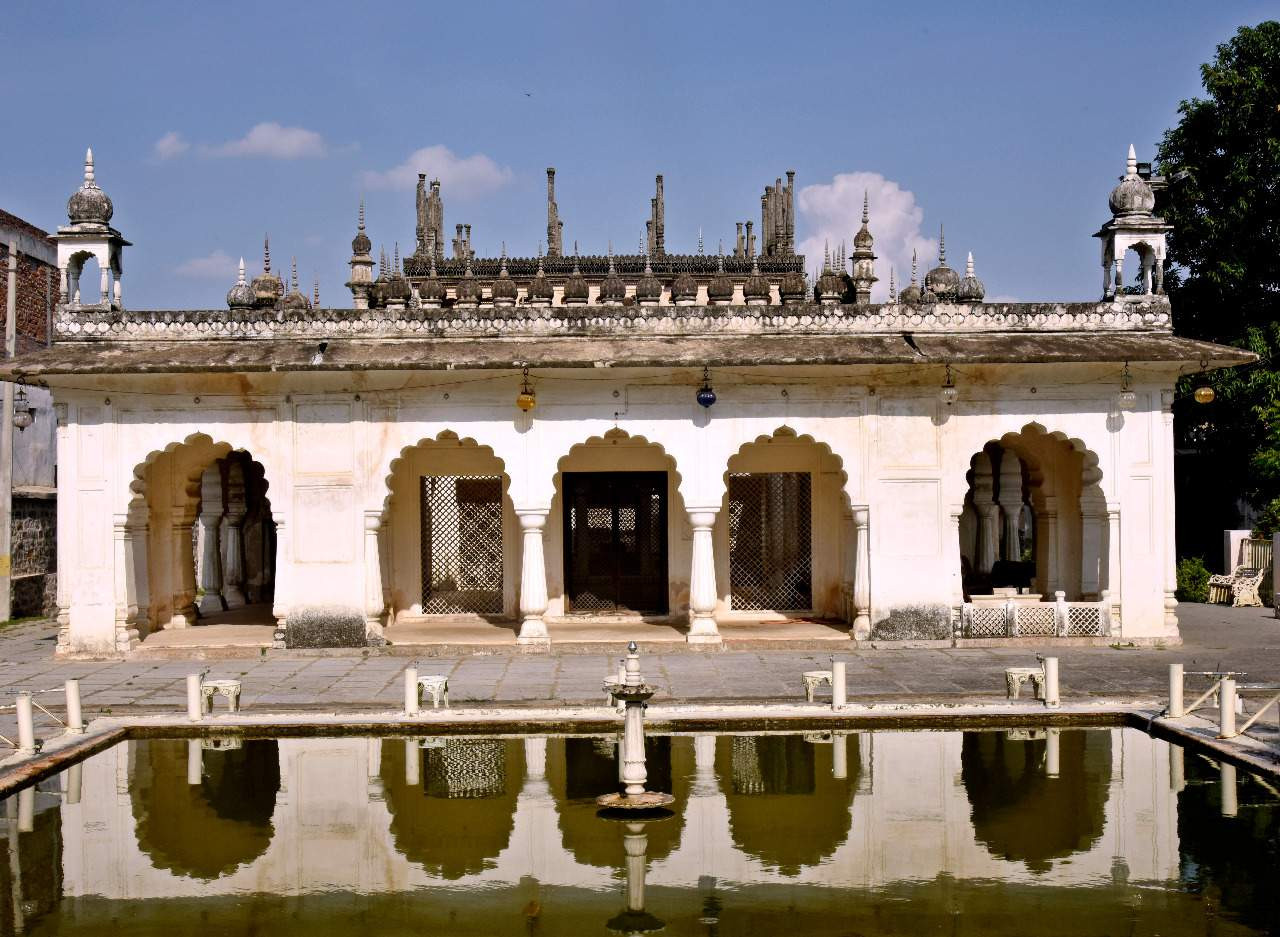
The large-scale restoration of the historic Paigah Tombs, which proposes better landscaping, illumination and drinking water facility, is in progress. It is learnt that an exhibition, aimed at providing an all-round experience of the tombs to the visitors, is also on the cards.
On Tuesday, as visitors walked past the freshly laid lawn and stepped inside the dome of Premamati, the morning sunlight bounced off the floor and lit up the insides. The accumulated grime over the years was gone, it was no longer dark; also gone was the musty damp odour.
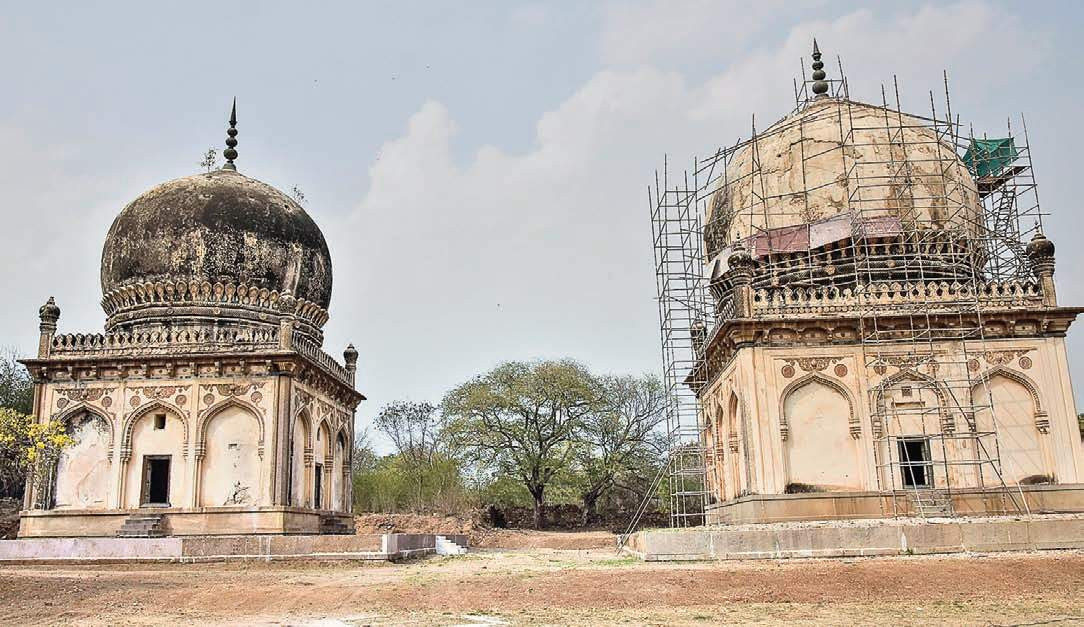
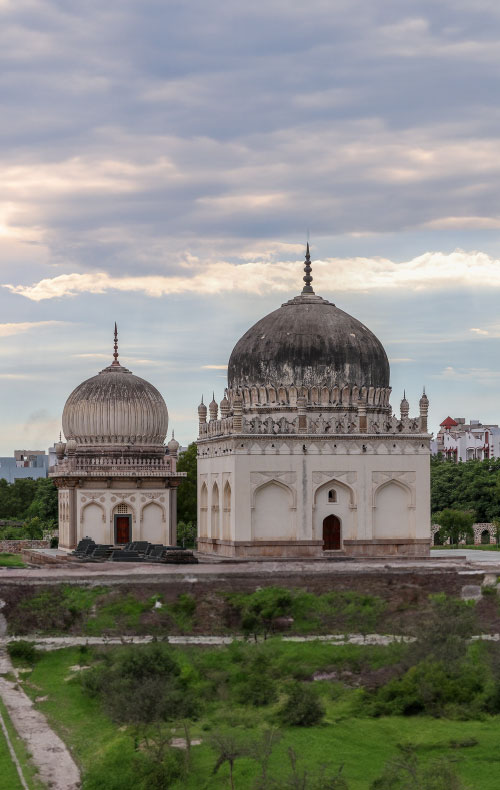
There is a palpable sense of excitement as the restoration of the Qutb Shahi tombs complex gains pace. “We have discovered that the Abdullah Qutb Shah’s tomb had a ribbed structure that was plastered over during restoration in the 19th and 20th century,” says Ratish Nanda, CEO of Aga Khan Trust for Culture (AKTC), which is carrying out the conservation work along with the Telangana government
The gravestone of Premamati reads, “From all eternity Pemmati was a flower of Paradise”. These words are said to have been inscribed on Premamati’s tomb by Abdullah Qutb Shah himself, which use ‘Pemmati’ to refer to Premamati, instead of her original name. While Taramati is said to have commissioned a mosque built within the Golconda Fort
The conservation works of the three Mausoleums of Hakims and a commander at the Qutub Shahi Heritage Park, which began two years ago have ended. The restoration work was supported by Cultural Preservation Programme of the Federal Republic of Germany.