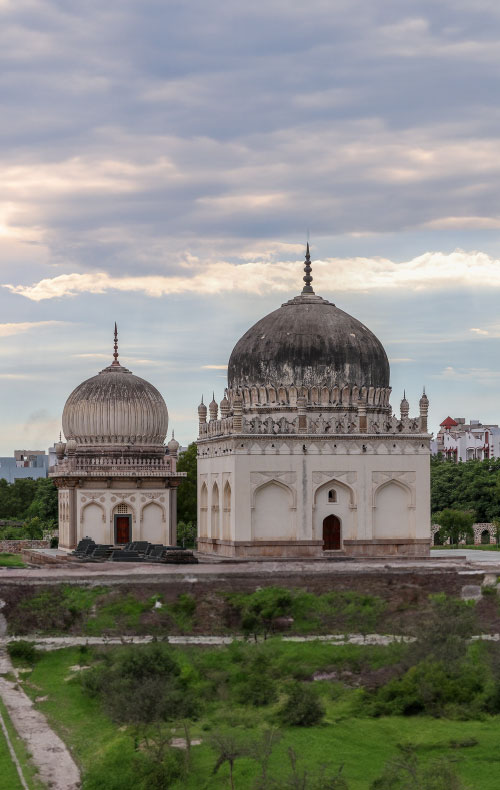
Open Daily 9:30 am – 5:30 pm
- Fort Rd, Toli Chowki, Hyderabad, Telangana, 500008, India
- Visit



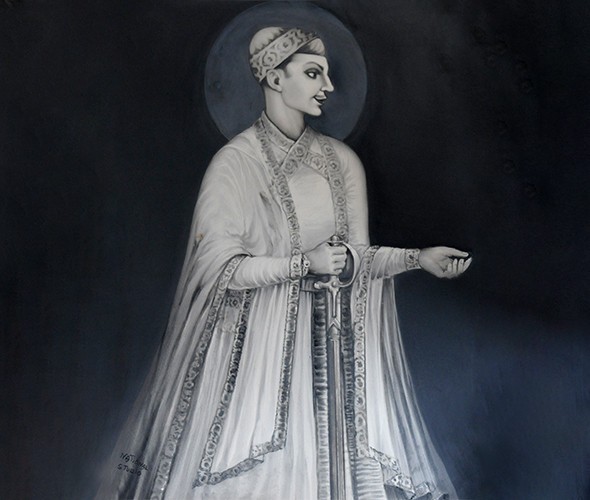
Muhammad Quli Qutb Shah, the fifth ruler of the Qutb Shahi dynasty, ascended the throne at just 14 years of age and went on to become the visionary founder of Hyderabad. A remarkable patron of the arts, he transformed his realm with significant architectural and cultural achievements.
His most celebrated legacy is undoubtedly the iconic Charminar, a symbol of Hyderabad recognized worldwide. A distinguished poet himself, Muhammad Quli Qutb Shah is credited as the first author in the Urdu/Dakhni language, having published "Kulliyat-e-Muhammad Quli," a collection of Dakhni Urdu poetry. His reign is remembered as a golden age of prosperity and creativity within the Qutb Shahi dynasty.
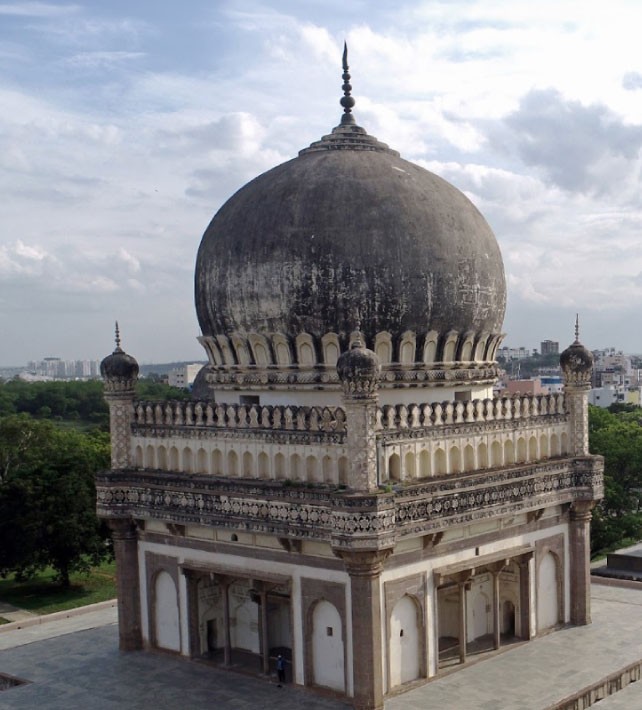
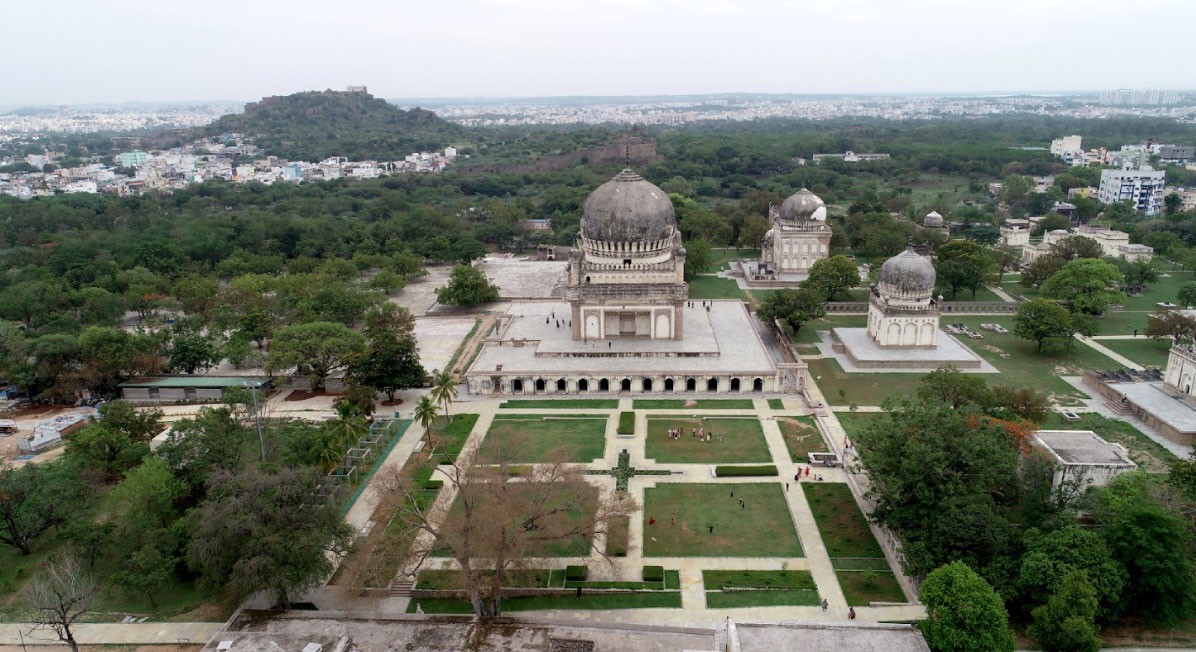
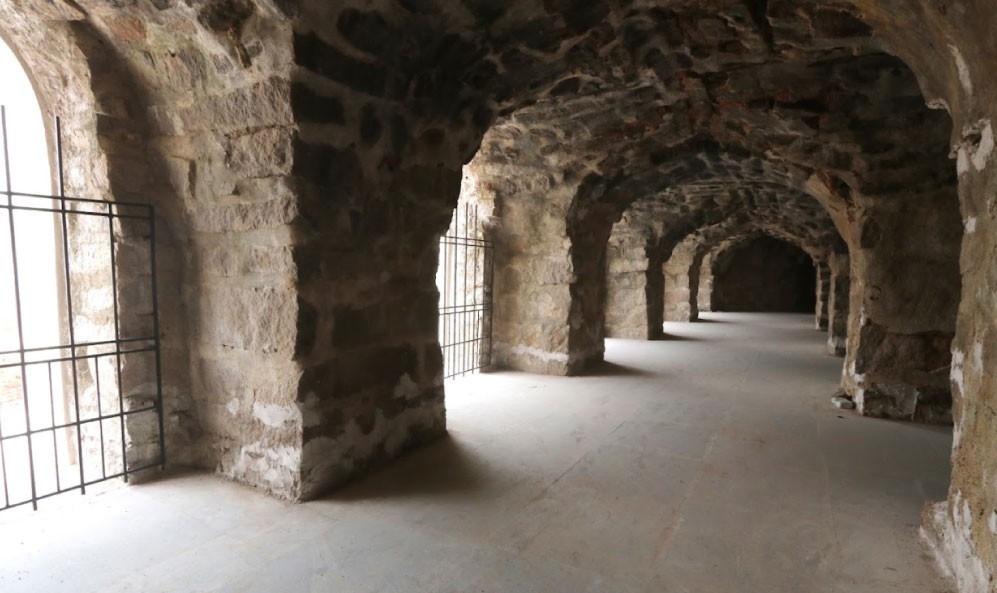
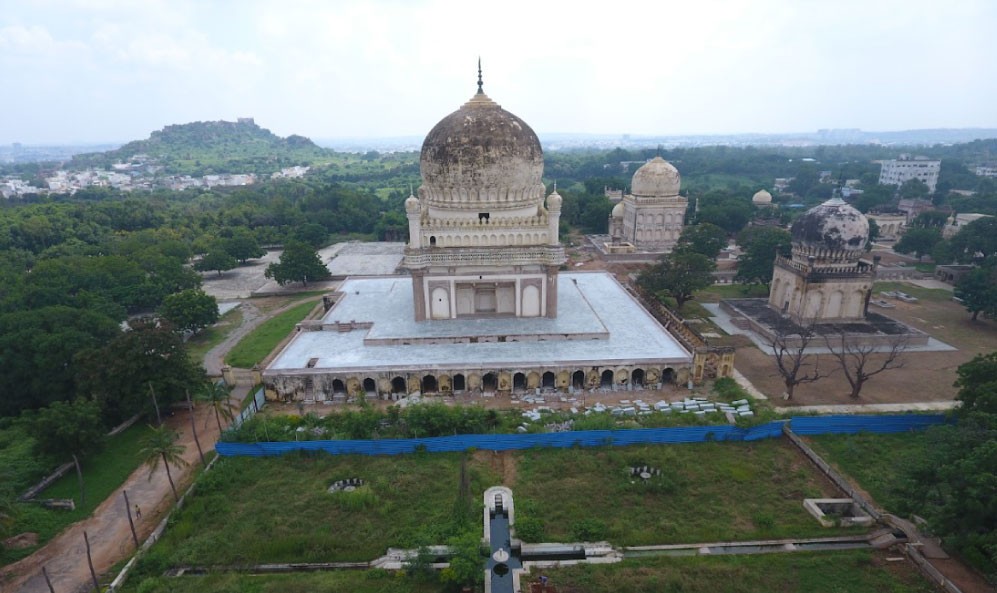
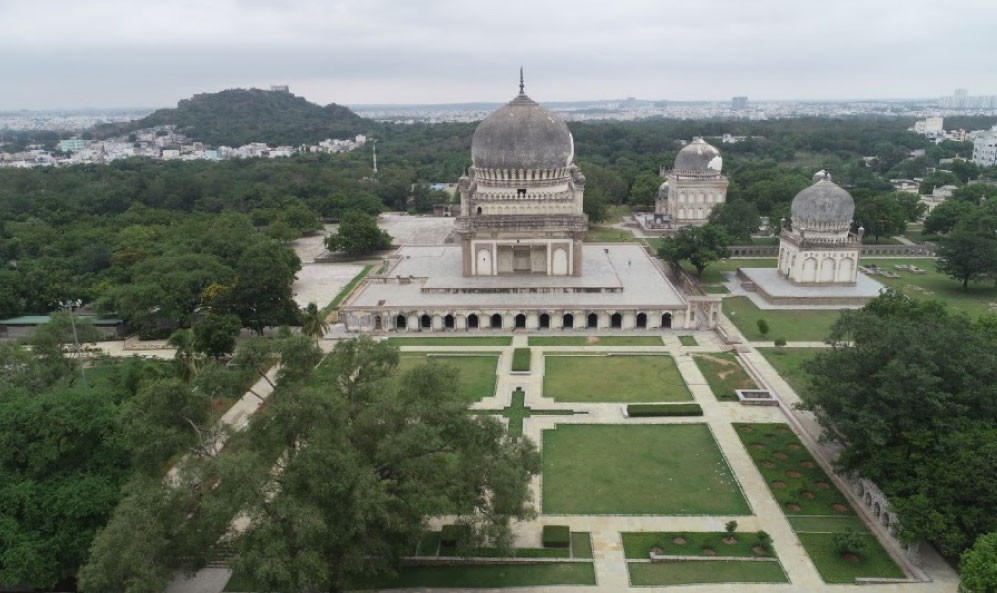
Muhammad Quli Qutb Shah's tomb stands as one of the largest and most impressive structures within the Qutb Shahi Heritage Park. The tomb, built on a raised vaulted base, houses the Sultan's original grave—the only accessible one among all the Qutb Shahi imperial tombs.
The upper terrace features a recessed bay in the center on each of its four sides, and each of these bays is supported by two massive granite pillars, standing at an impressive 7 meters tall. These pillars, reminiscent of the Charminar (also built by Muhammad Quli Qutb Shah), are supported by brackets on all four sides. A majestic bulbous dome crowns the structure and looms large over the surrounding area.
Archival images from the 1860s reveal that the tomb was originally set in a sprawling garden. This garden featured stone pillars that supported climbing vines and lush foliage.
The majestic tomb of Muhammad Quli Qutb Shah underwent a meticulous and exhaustive conservation effort
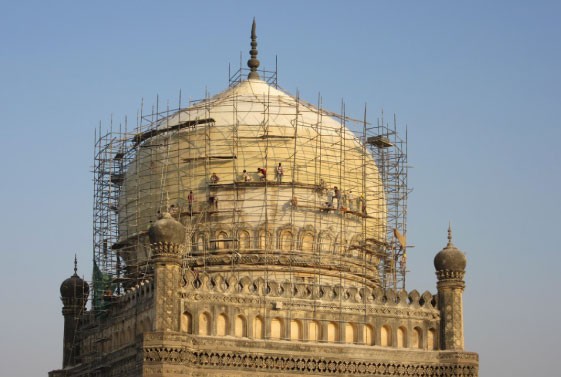
The original lime plaster of the dome had suffered significant damage. The 20th century cement covering the dome was removed revealing deep holes, possibly left during past repairs to support the scaffolding and later superficially filled without adequate protection against water ingress into the dome’s masonry.
During the conservation of the mausoleum, these were filled with stone masonry in lime mortar.Over two dozen skilled craftspeople worked simultaneously to re-plaster the dome in order to minimize the joints in the successive layers of lime plaster.
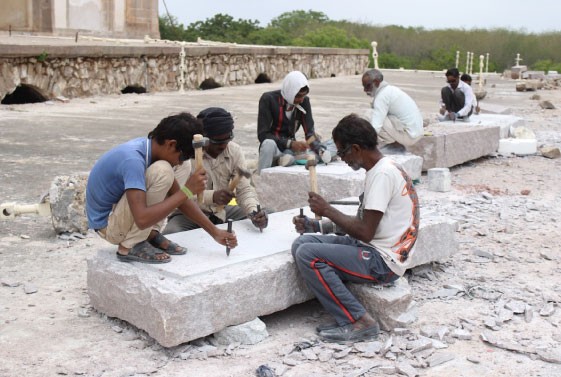
Archival photographs dating back to 1860s provided crucial evidence for the restoration of the parapet. They showed a solitary parapet stone surviving on the western edge of the upper plinth. Taking cue from the archival evidence and replicating the historical design found on similar monuments at the necropolis, a total of 144 granite blocks, each weighing a staggering 2000 kilograms were hand carved and reinstated.
On inspection, it was found that the principal tomb chamber originally had openings on all four sides, with the ones on the north and the south closed at a later date. The external facade of the doorways was marked with ornate bands on all sides. Except for the east side, these bands were tampered and covered with modern layers in cement. The bands on the south and the north side are now restored. However, the openings were not reopened.
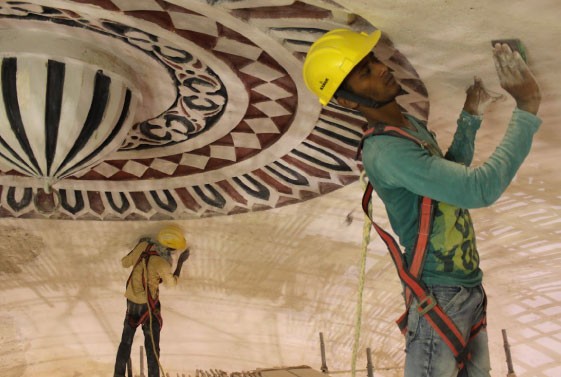
Inside the cenotaph chamber, scaffolding equivalent to a five-storey building was erected to access the domed ceiling. Here, layers of modern paint and cement were removed from the central floral medallion, and it was repaired using traditional lime mortar and natural colors. Arch moldings, bands, arch crowns were also restored with lime mortar.
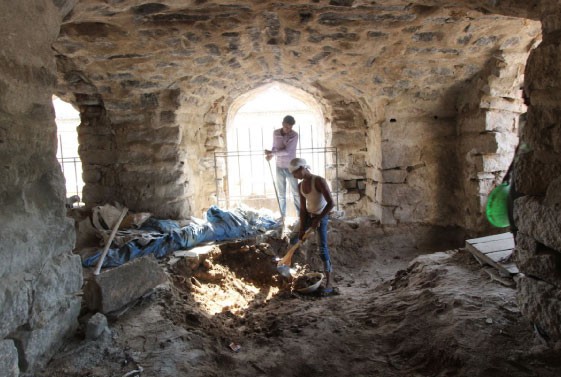
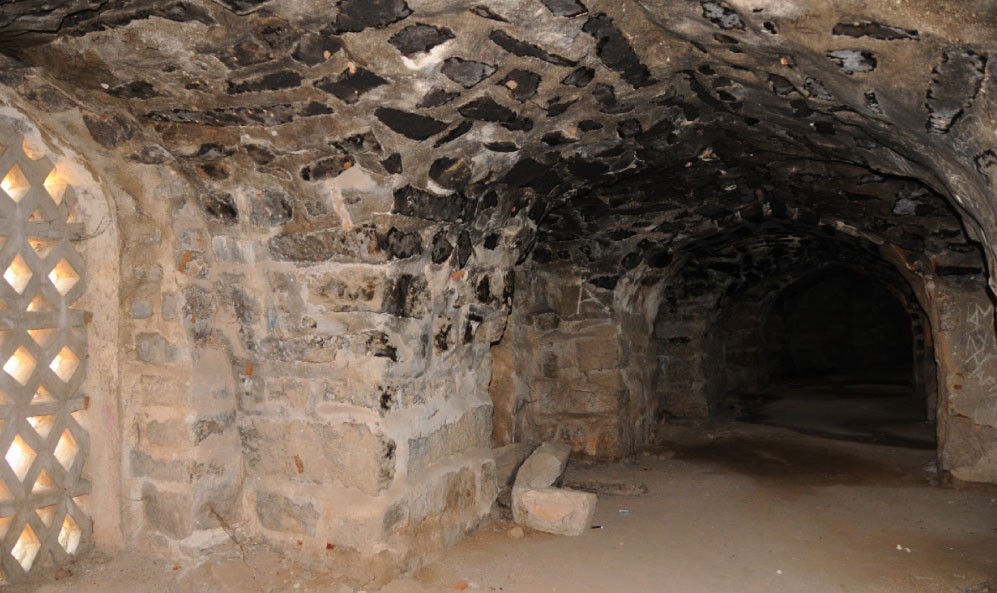
The tomb's unique feature – an accessible crypt chamber – was also found in need of repairs. Documentation revealed the monument was enlarged with a peripheral bay at a later date than the original construction. It was also discovered that earth levels in the crypt were insensitively altered. Trial trenches were made to find the original levels of the crypt. This also revealed a hidden trove of coloured glazed tiles. This discovery, along with historical records, confirmed the use of such tiles on the monument's facade. Sadly, these tiles are now lost, but the knowledge gleaned from the crypt allows us to have a better understanding of this tomb’s original appearance. Intrusive brick screens at the elevation of the crypt from the 1980s were replaced with simple recessed metal for light and ventilation. 20th century cement concrete was also removed from the roof, thereby reducing the weight on the monument Hand-chiselled granite steps and a ramp for universal access were installed. To ensure rainwater disposal, 45 metal water-spouts were installed at the upper plinth level.

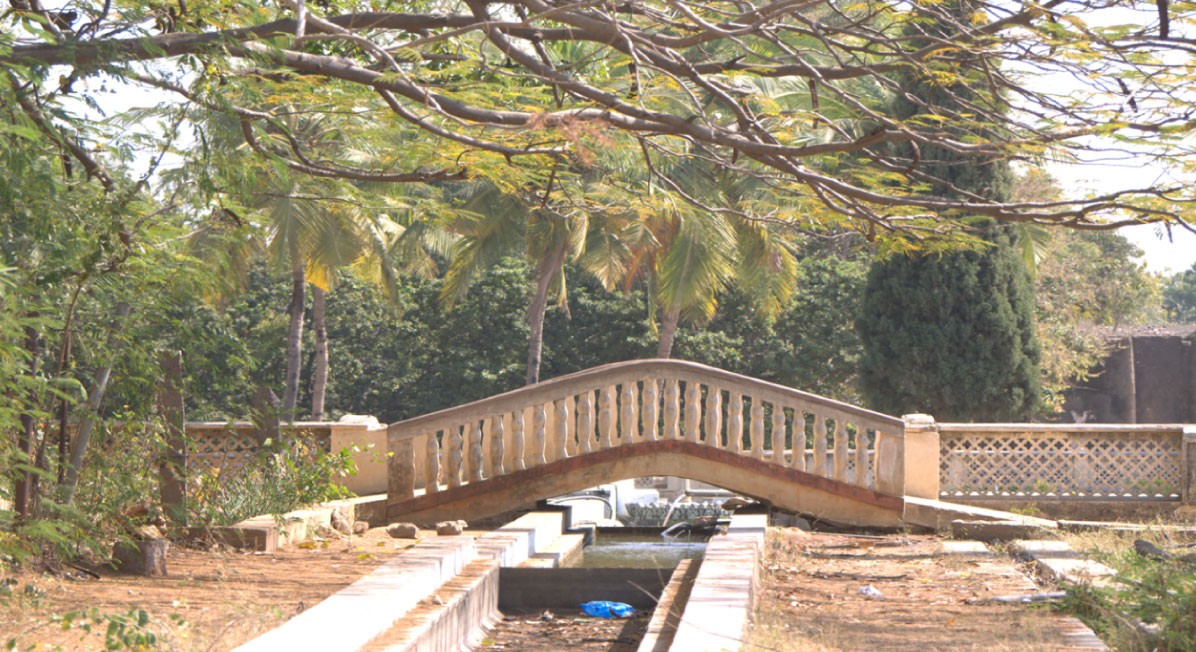
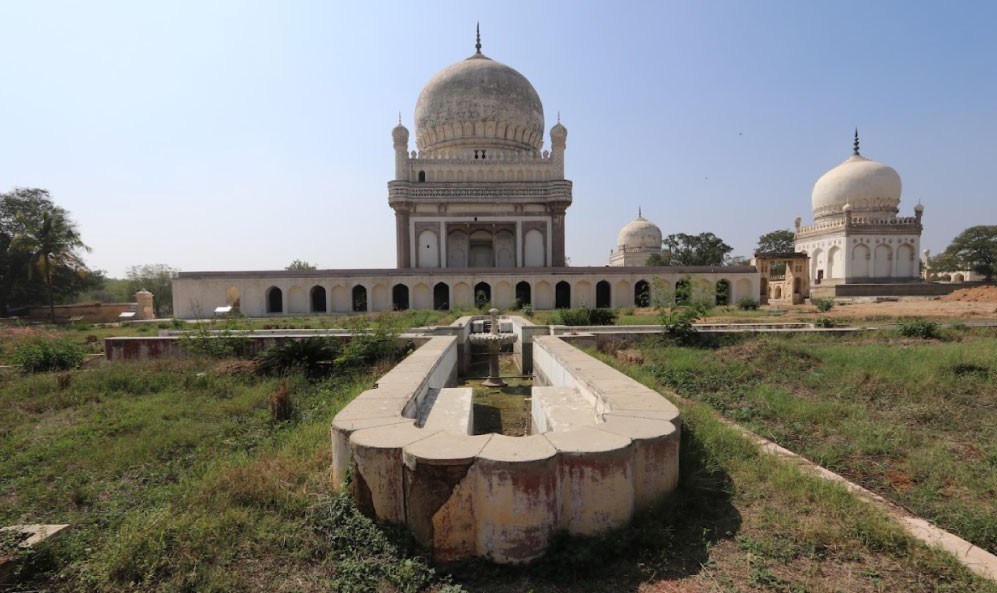
The majestic tomb of Muhammad Quli Qutb Shah was set amidst sprawling gardens consisting of stone pillars to support vine tendrils and foliage. The garden was largely altered with late 20th century additions such as water fountains, cement concrete railings, Japanese style bridge, lampposts and shallow water channels.
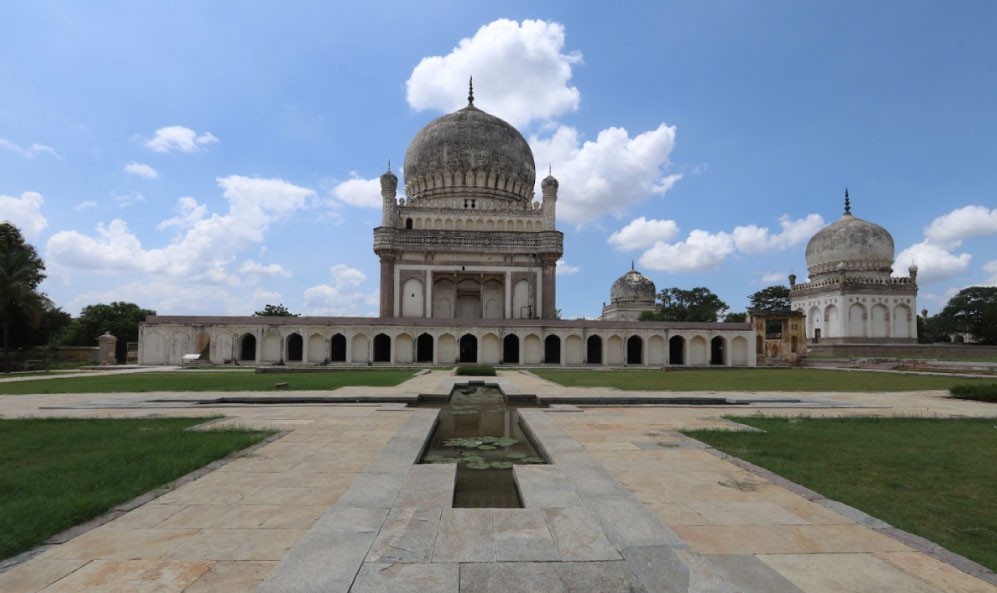
The landscape development of the forecourt of Muhammad Quli’s mausoleum was undertaken with the intention of enhancing the setting of the location. The 20th century additions such as cement concrete railings, modern day bridge, and lamp poles were removed from the forecourt, while the 19th century cruciform water tank was retained as a lotus tank. The surrounding is developed as a plaza with ample seating for visitors. Citrus plants and floral beds were planted on the edges of the forecourt.
To preserve the memory of grape vines mentioned in archival texts which adorned the forecourt of the mausoleum, a series of stone trellises have been installed. The design of the trellis is inspired from stone chaukhandis traditionally crafted in the region and found within the Heritage Park. Local species of grapes were planted as a tribute to the legacy of Qutb Shahi dynasty.
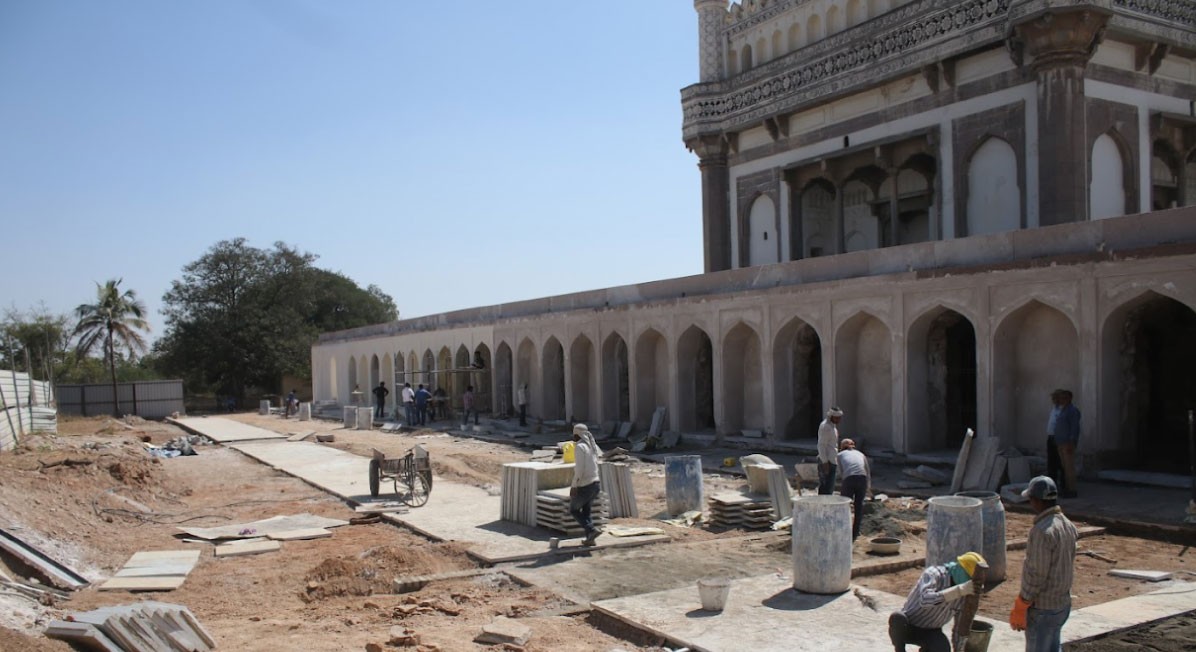
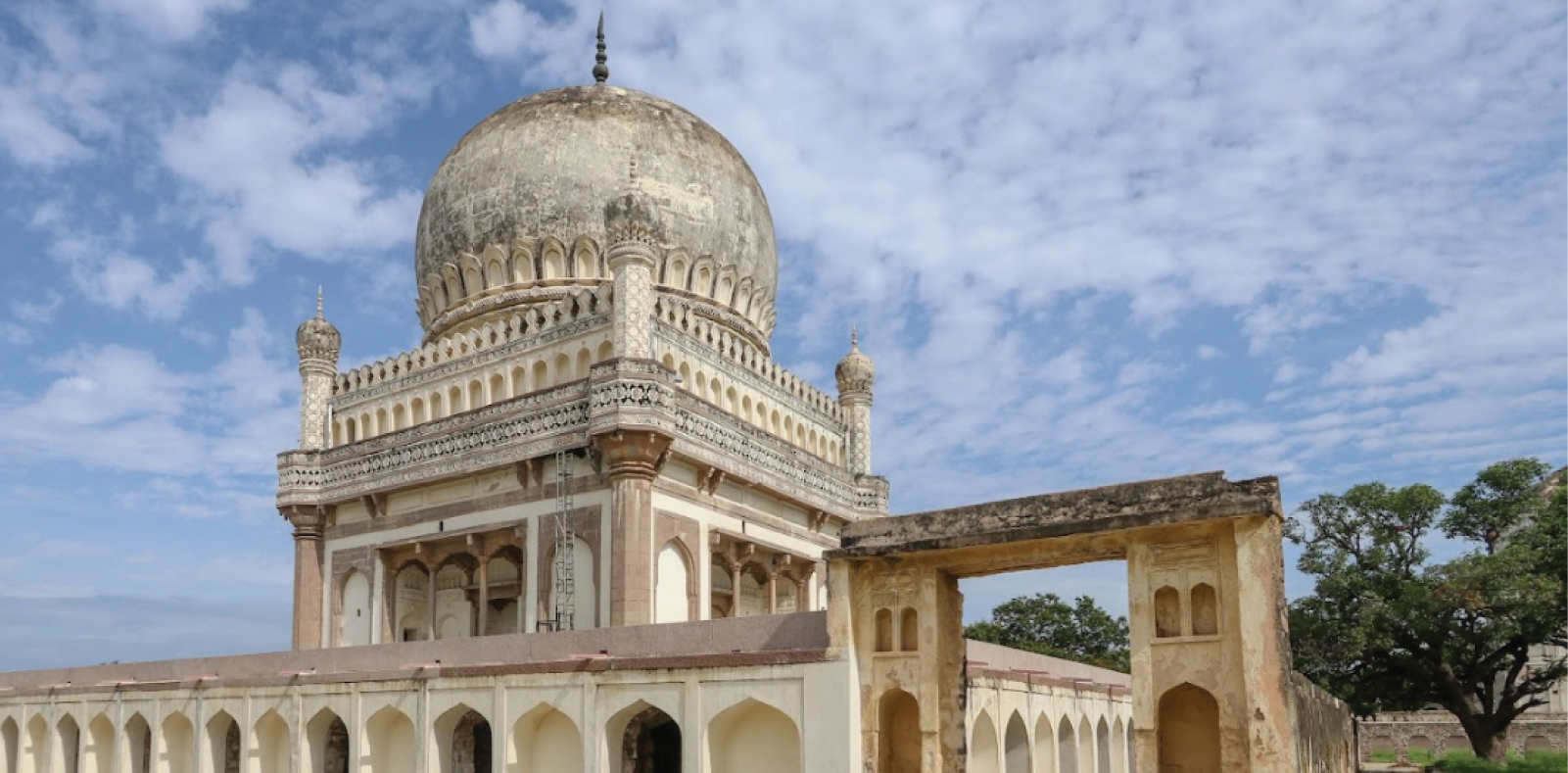
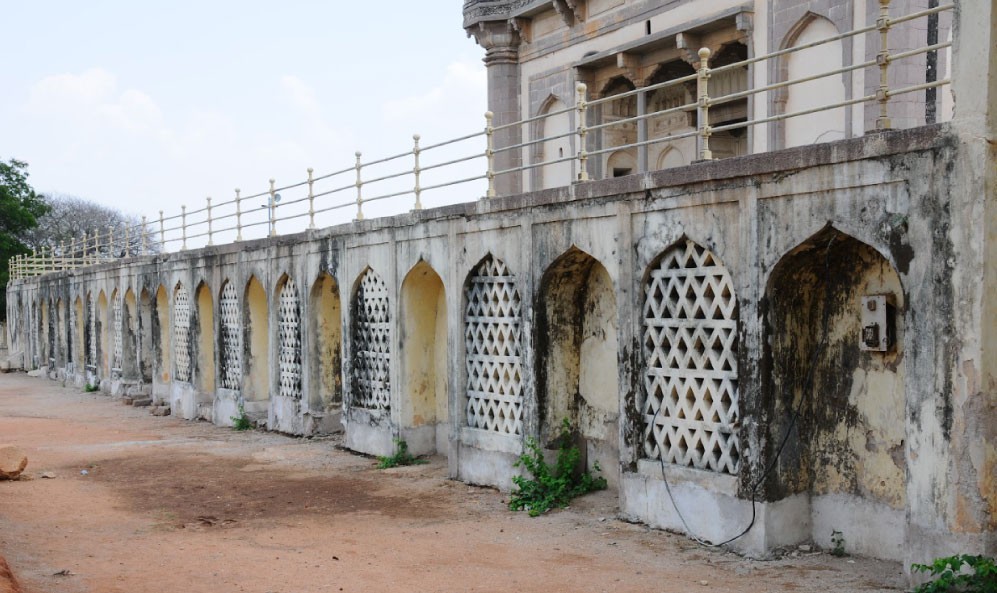
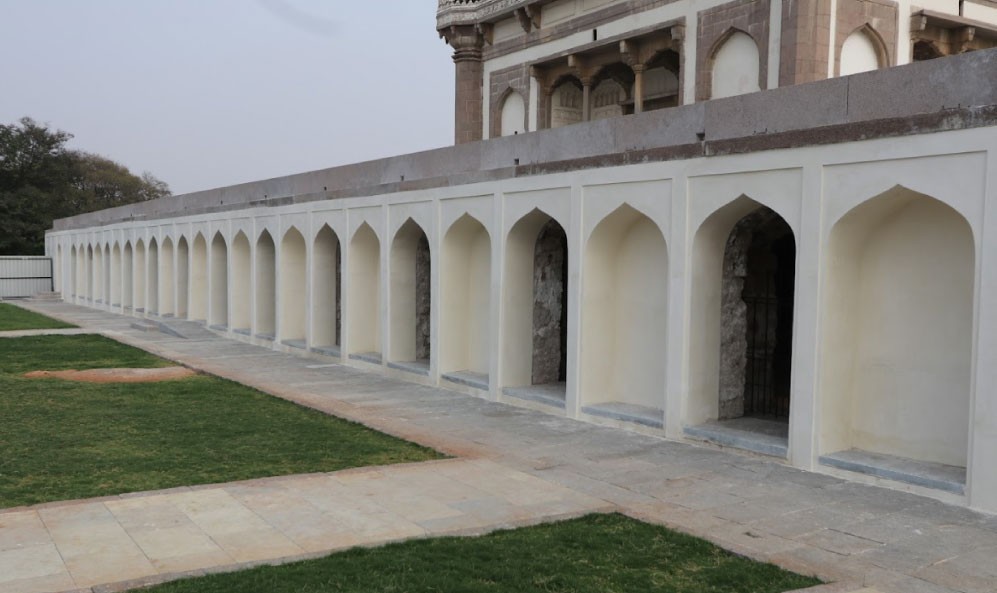
Conservation works on this monument majorly involved removal of cement, replacing it with traditional lime mortar. The character of the building was further accentuated by reinstatement of the missing granite parapet across the plinth of the mausoleum with hand chiseled dressed stones
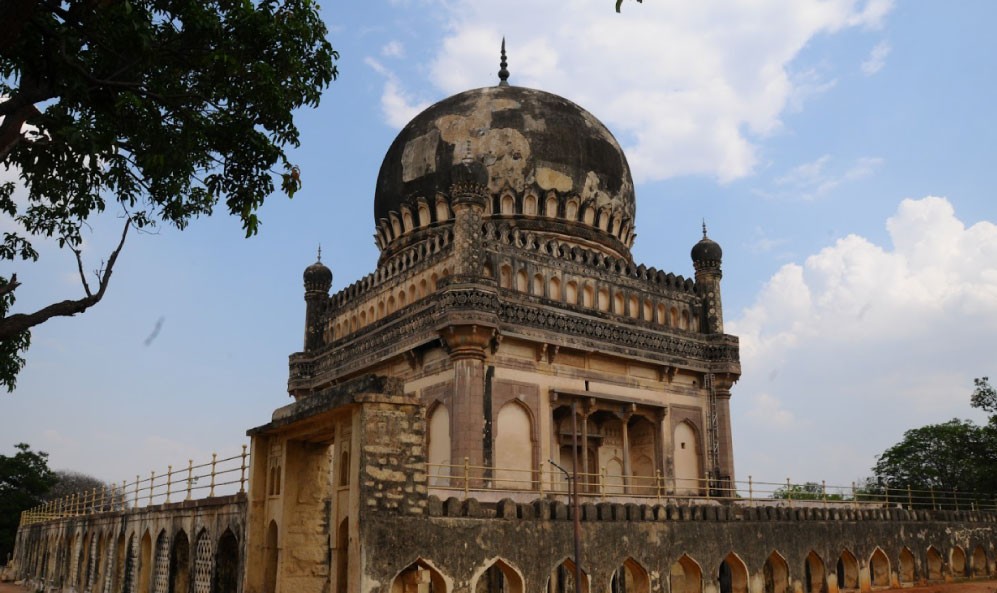
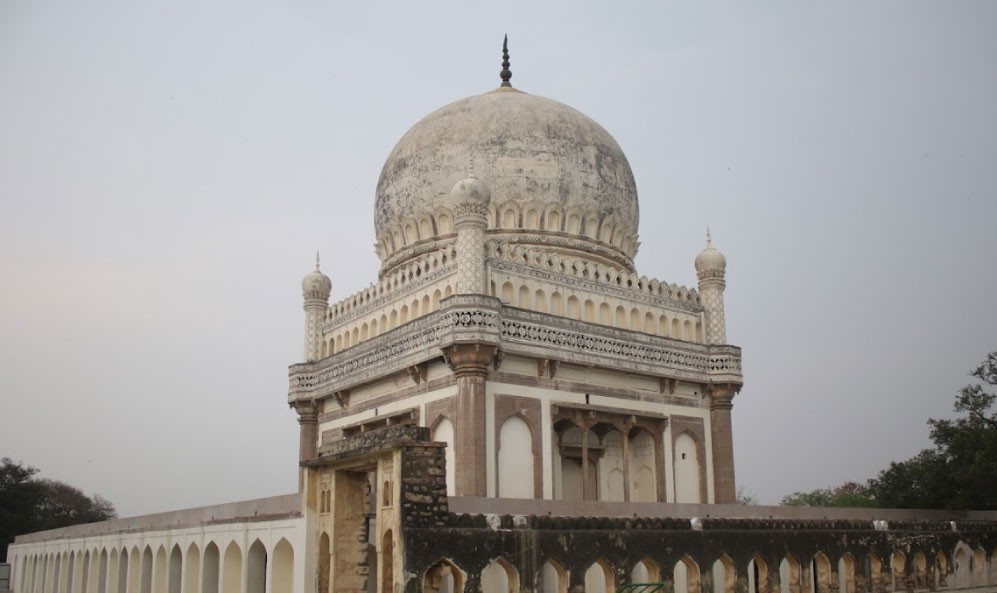
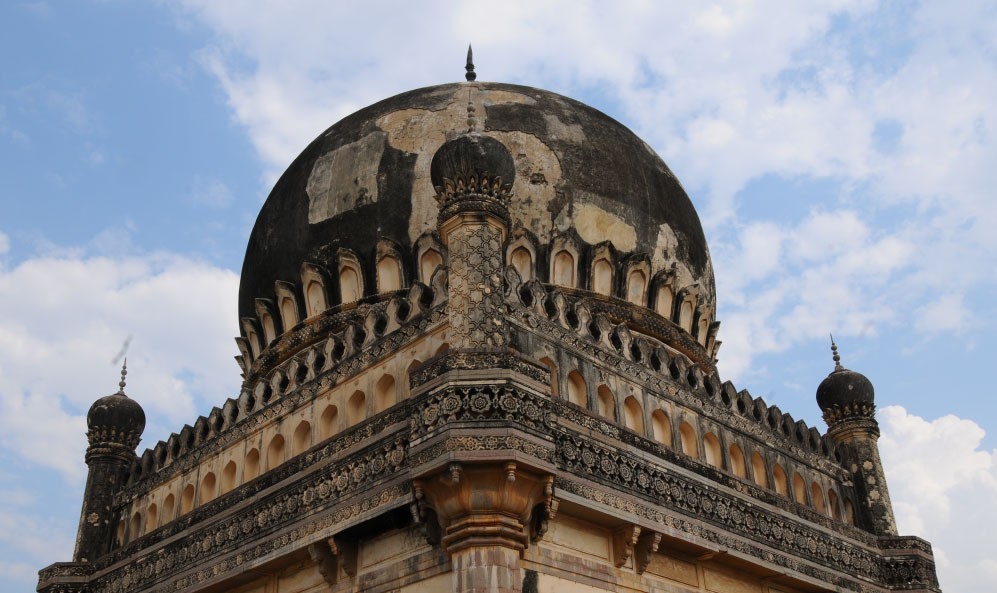
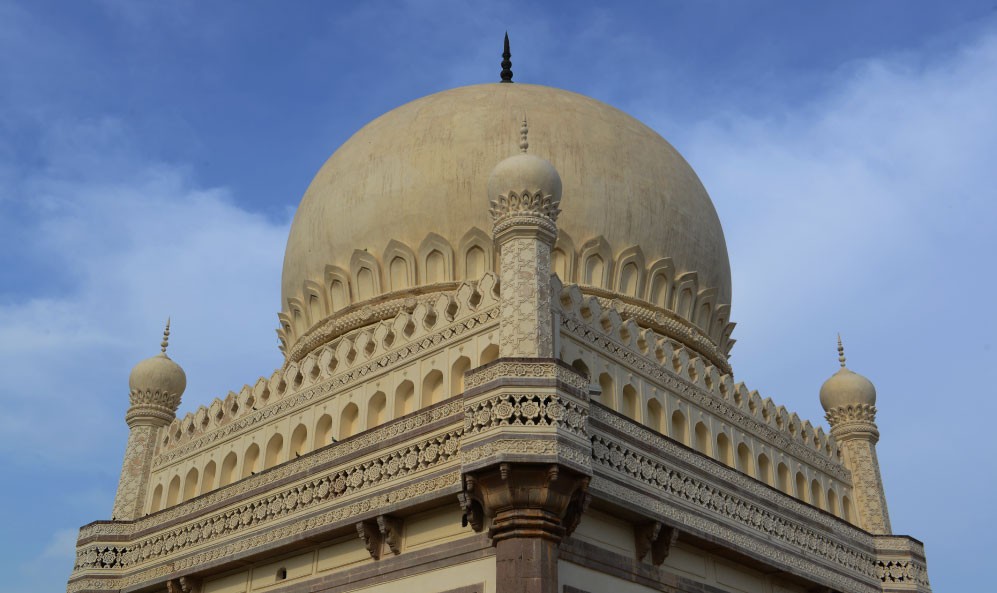
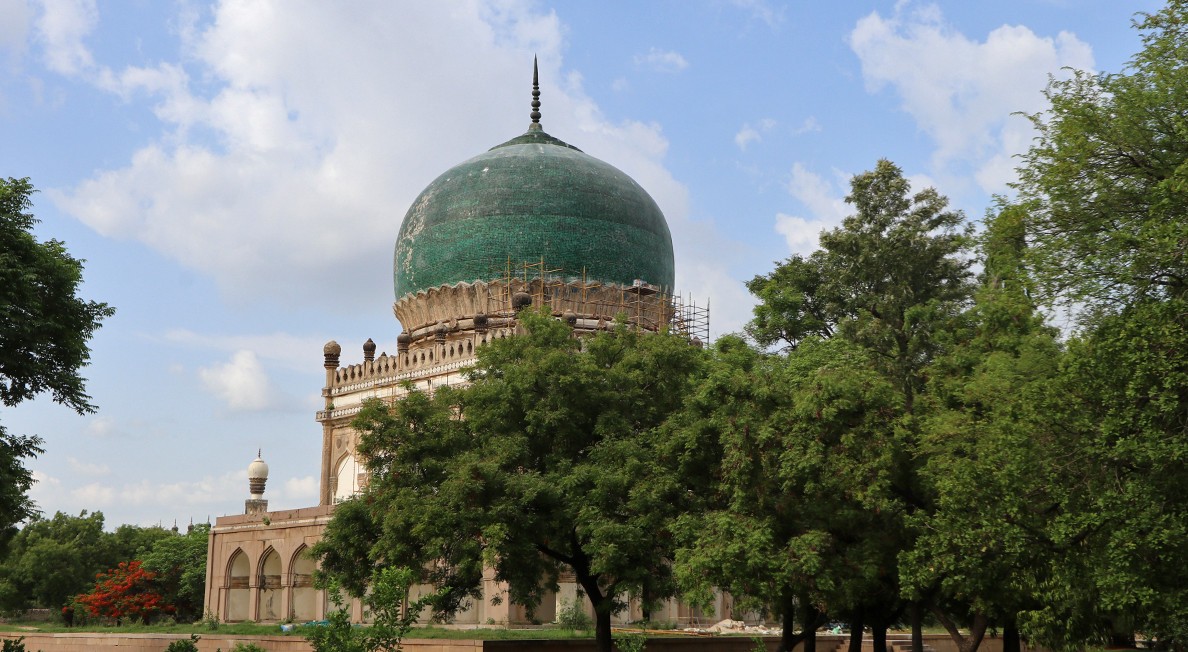
Sultan Muhammad Qutb Shah, the sixth ruler of the Qutb Shahi dynasty, left a lasting legacy despite his brief reign. Recent conservation efforts have unveiled a hidden gem: the tomb's facade, dome, and other sections were once adorned with intricate tilework. This exquisite artistry, now being restored based on in-situ evidence, adds a new layer of splendor to the already magnificent monument.