Open Daily 9:30 am – 5:30 pm
- Fort Rd, Toli Chowki, Hyderabad, Telangana, 500008, India
- Visit


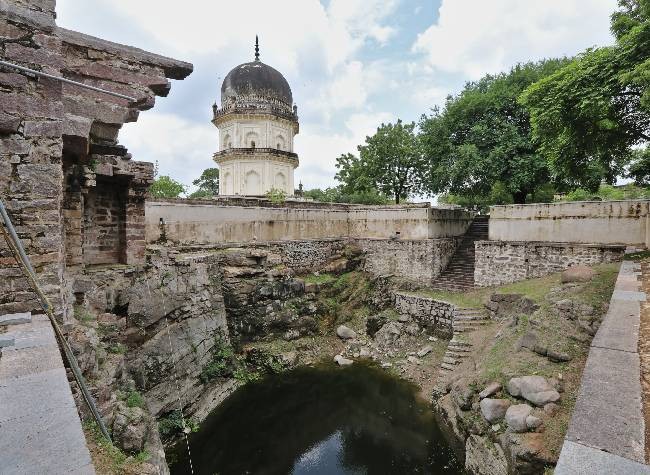
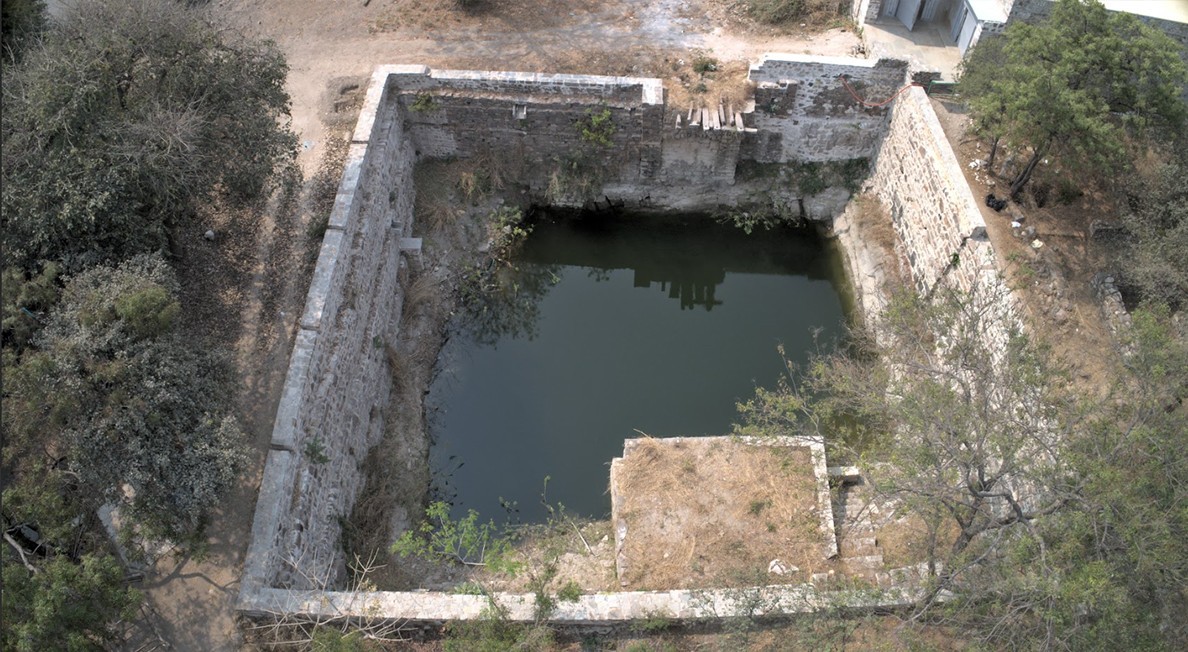
The baoli located west of Jamshed Quli Qutb Shah’s mausoleum stands to the western edge of the Qutb Shahi Heritage Park. This was the main distributary well amongst the network of stepwells found within the complex. The discovery of the aqueducts during excavations has shown that it received water from Durgam Cheruvu lake, located several miles north of here. This aqueduct was also the principal water supply line to the Golconda fort, standing south of the necropolis.
Western Baoli was in a state of serious deterioration with crumbling retaining walls, missing approach steps and misuse as a waste dumping site. Past repair attempts, using cement, inadvertently worsened the situation by blocking natural water ingress. The Western Baoli had, despite the neglect, escaped large scale collapse. The conservation of this Baoli commenced with desilting and removal of accumulated debris from it. The cement repairs were carefully removed from the wall surfaces of the Western Baoli. In a meticulous restoration process, missing stones were replaced with granite stone matching the original evidence, including at the steps leading into the stepwell.
The aqueduct revealed in the setting of this structure was cleaned of accumulated earth, repaired and made functional. As part of the larger restoration effort, the earth was regraded in a manner that would allow rainwater from a large catchment area into this stepwell.
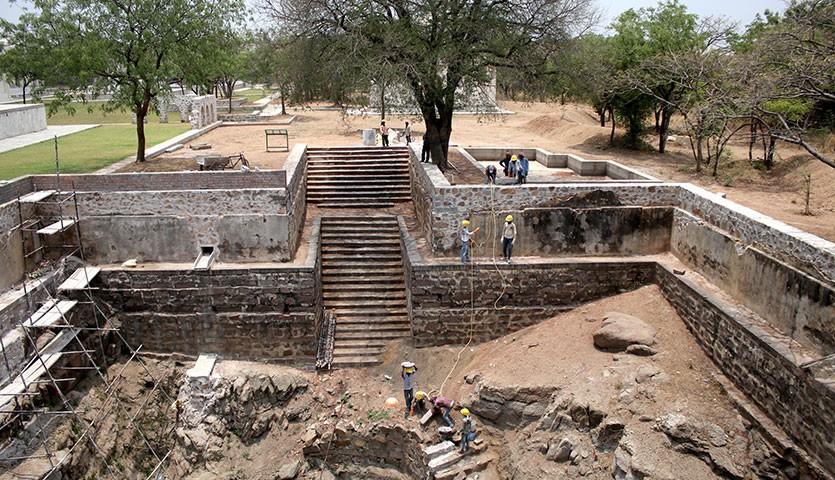
At the Western Baoli, the approach steps at the south were restored with hand dressed granite stone blocks, matching the existing evidence at site
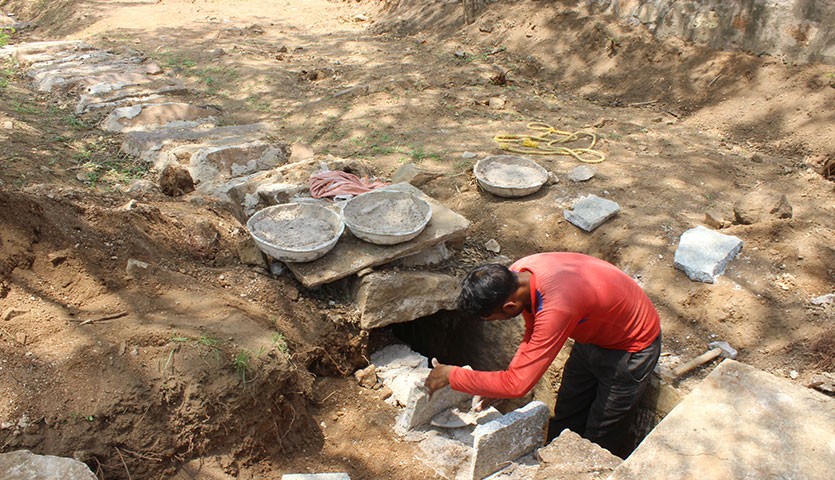
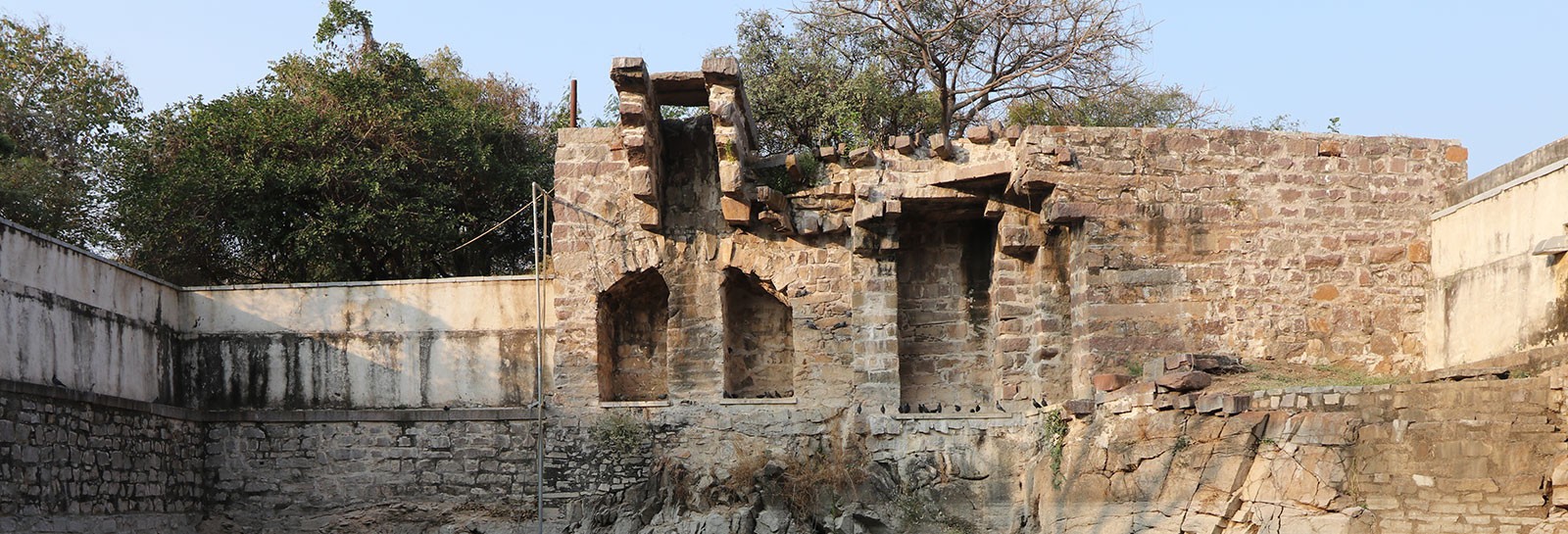
Stone masons restored the missing wall portions on all four sides of the Western Baoli along with under pinning and repointing of damaged stone masonry of the retaining walls
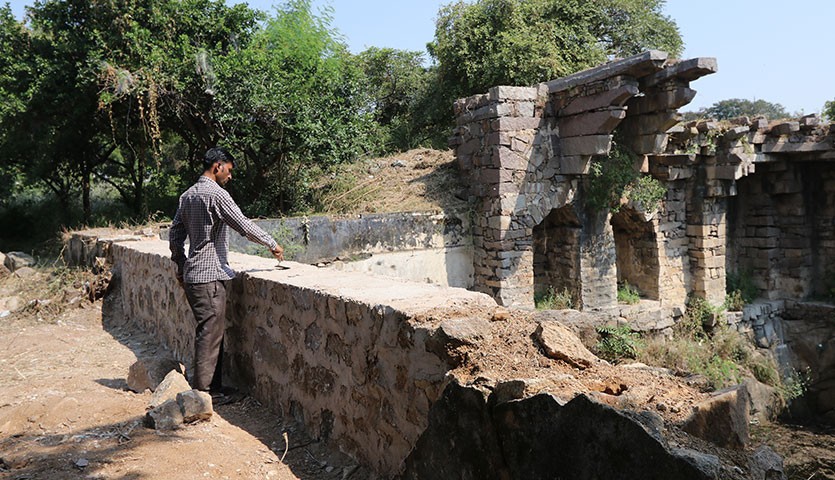
The aqueduct feeding the Western Baoli was excavated, cleaned, and made functional
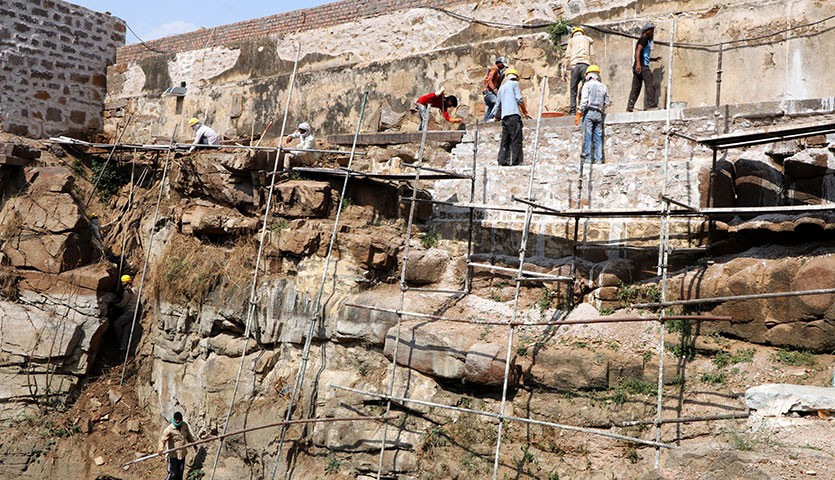
Reconstruction of Walls
Conservation works at the Western Baoli have revealed the original architectural appearance of the structure.
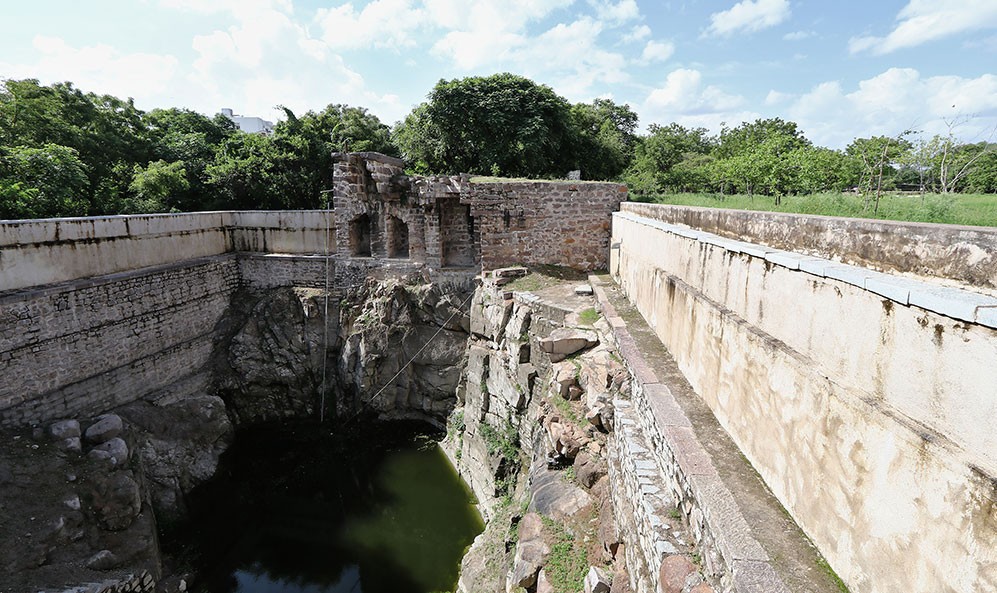
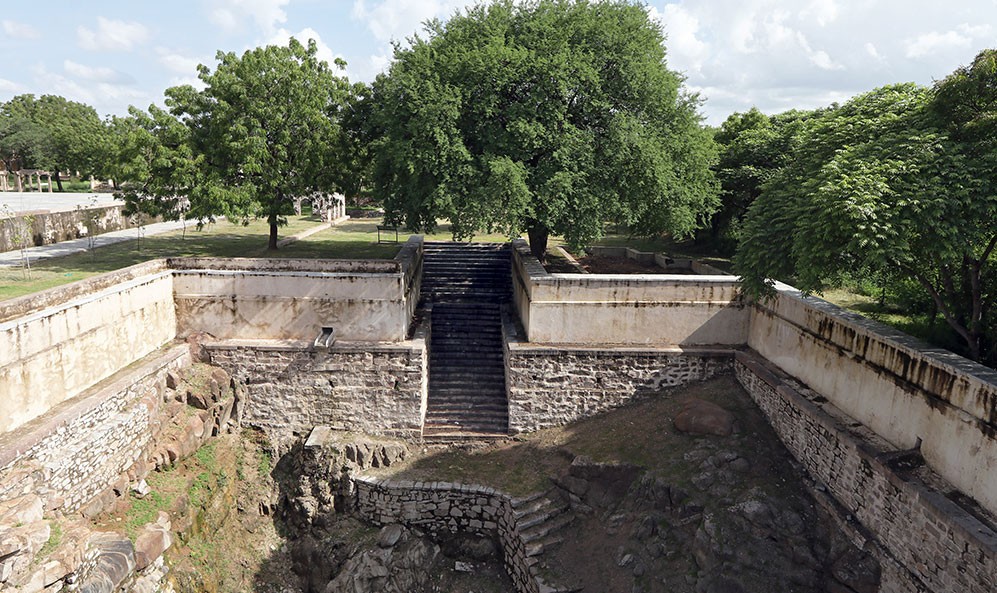
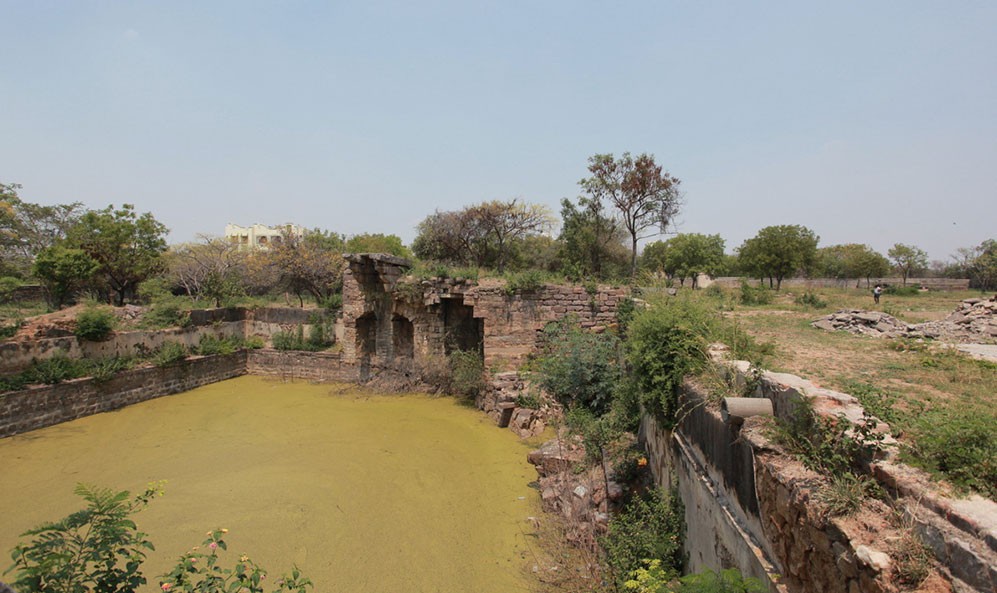
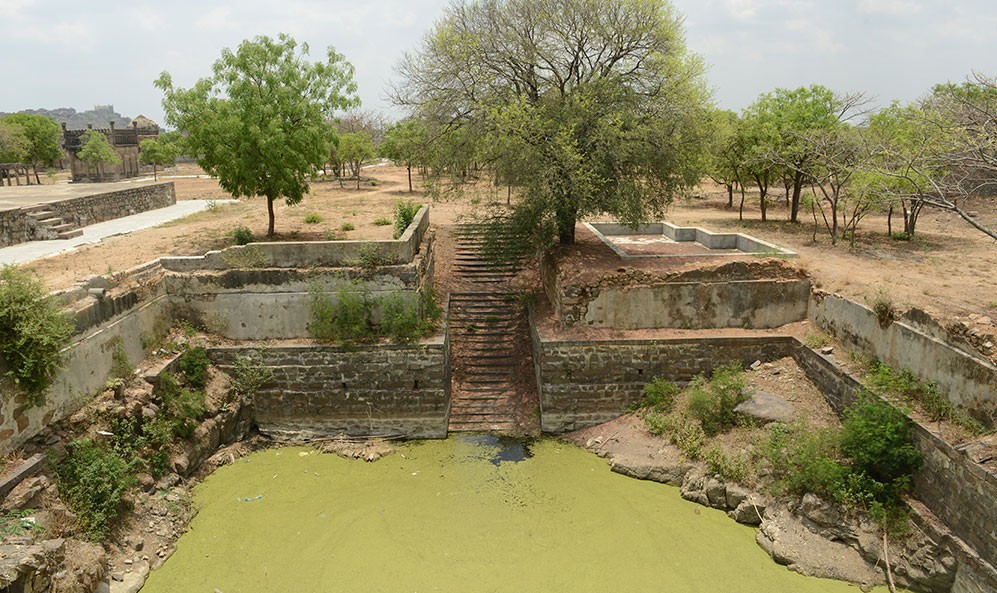

With regrading of earth and conservation of the Western Baoli, 3.7 million litres of rainwater was collected during the 2021 monsoons, highlighting the traditional wisdom of traditional Indian craftsmen.
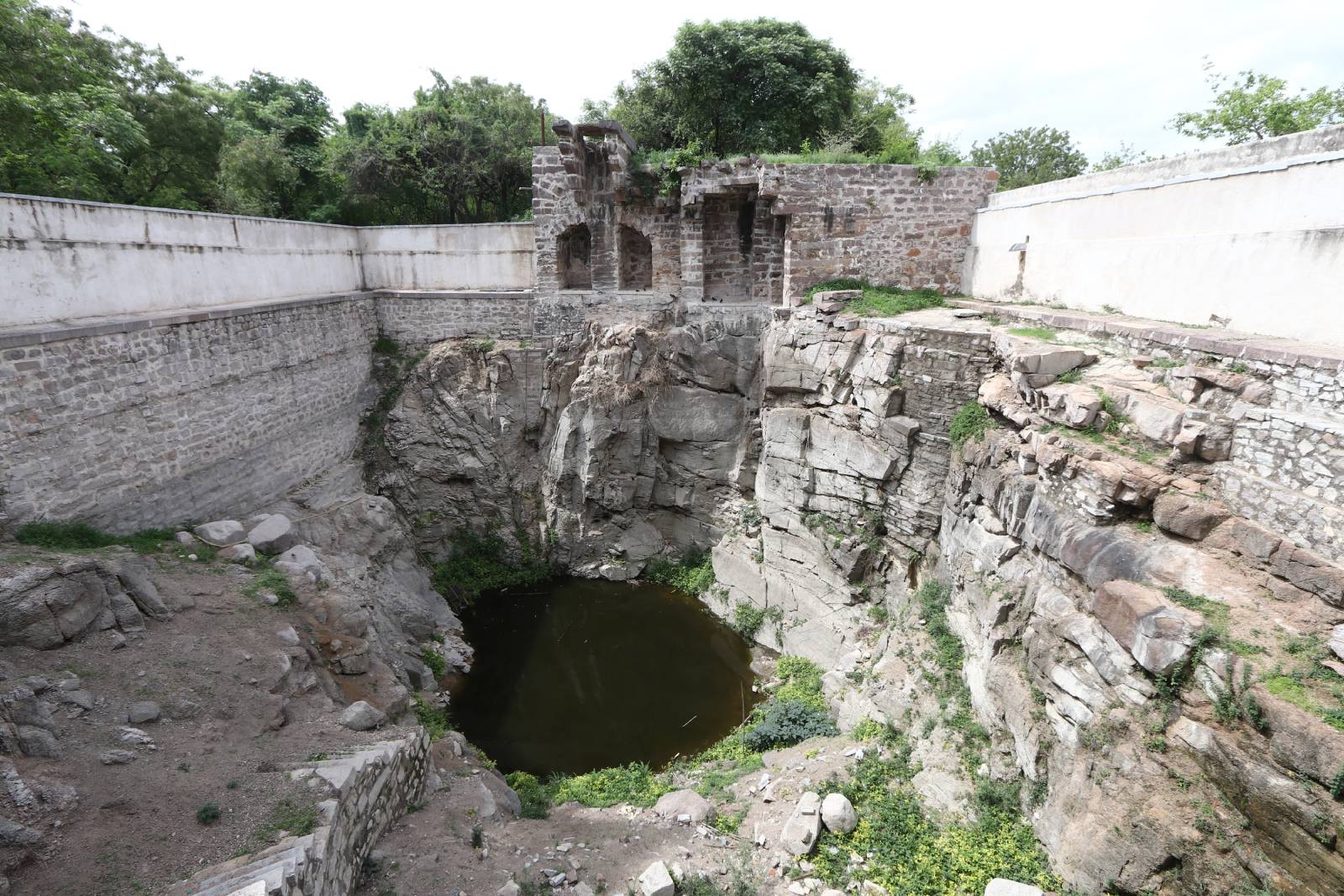
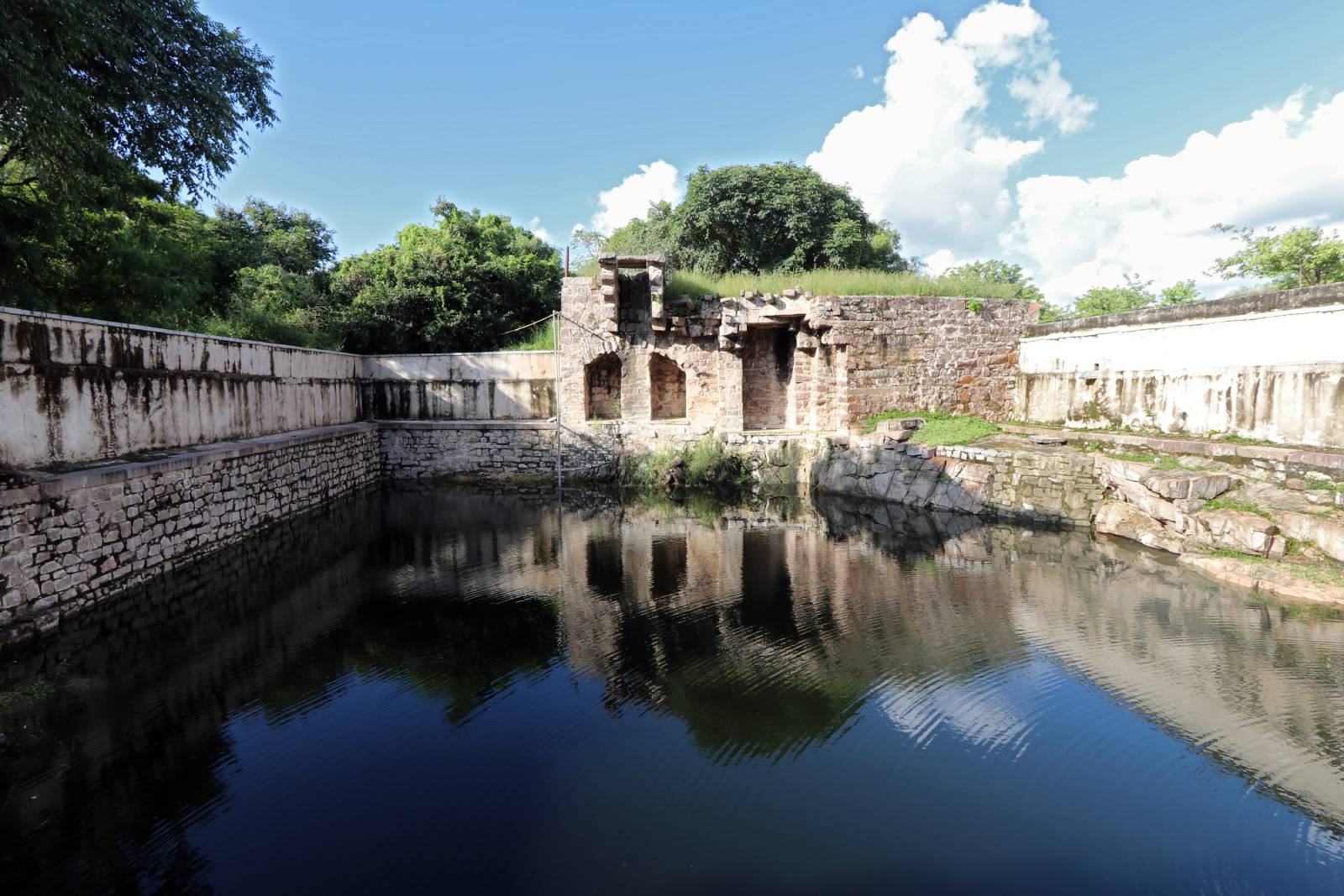
The Hammam Baoli, located to the south of Muhammad Quli Qutb Shah’s mausoleum, once served as a vital water source for the adjacent Hammam (bathhouse). The baoli's retaining walls are constructed from local granite stone in random rubble masonry, with a series of stone steps leading down on the western side. Connected aqueducts supply water to the Hammam Baoli, which now plays a key role in irrigating and maintaining the green spaces at the forecourt of the mausoleum.
The restoration of granite steps, underpinning, and re-pointing of historic walls has reinstated the stepwell’s grand, formal appearance as originally envisioned by its builders. Additionally, the removal of silt, debris, and surrounding vegetation has significantly increased the stepwell's capacity.