Open Daily 9:30 am – 6:00 pm
  • Fort Rd, Toli Chowki, Hyderabad, Telangana, 500008, India
  • Visit
Abdullah Qutb Shah’s Mausoleum
Reign: 1626 – 1672
Reign: 1626 – 1672
ABDULLAH QUTB SHAH

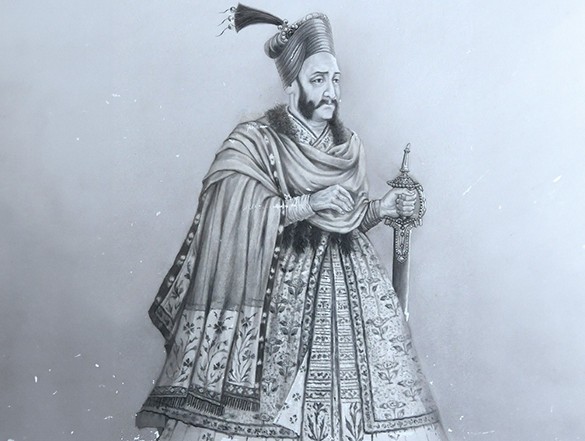
Sultan Abdullah Qutb Shah, the seventh ruler of the Qutb Shahi dynasty, reigned from 1626 to 1672. A patron of arts and culture, he fostered a flourishing of literature and architecture in Golconda. The celebrated Persian Lexicon ‘Burhan-i Qati’ was compiled during his reign. Under his rule, the extent of the Qutb Shahi Empire reached as far as the Carnatic. 

Abdullah's legacy is immortalized in the exquisite mausoleum that stands as a testament to his vision and the architectural brilliance of his era.
MAUSOLEUM
Qutb Shahi Artistry

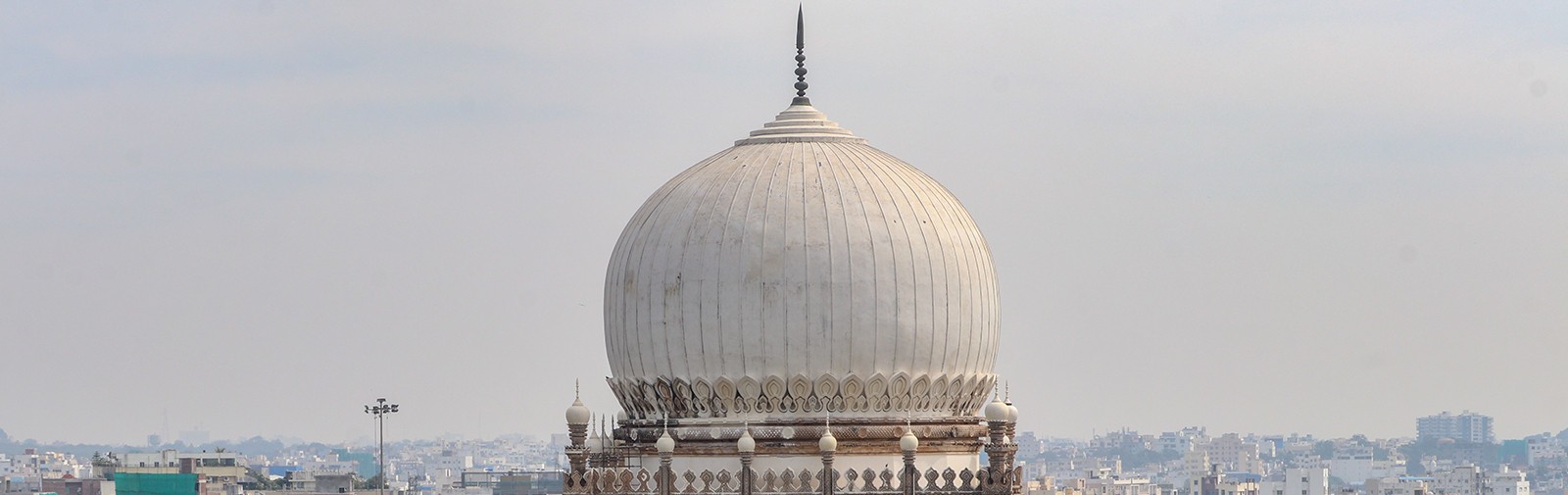
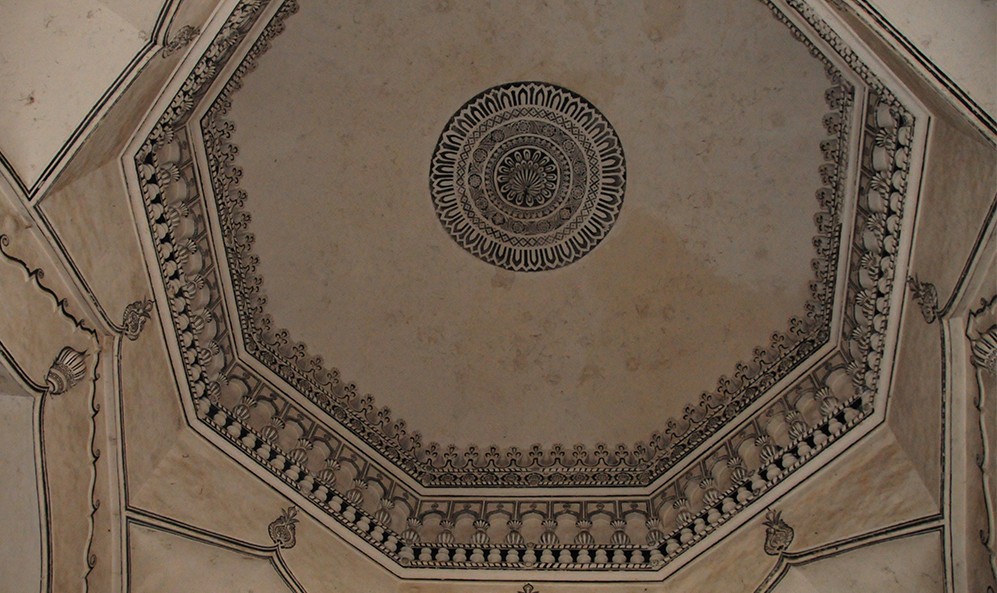
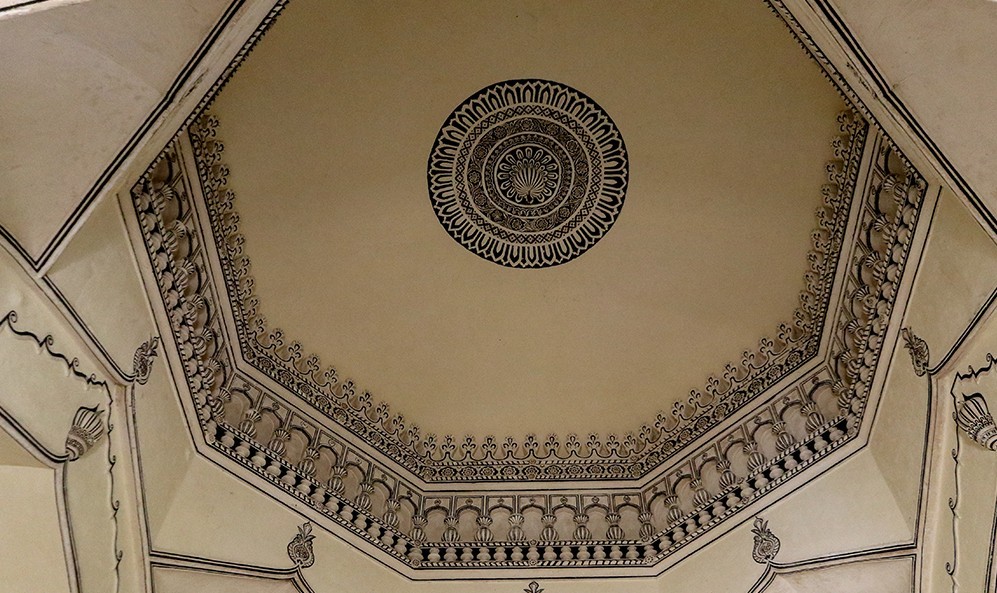
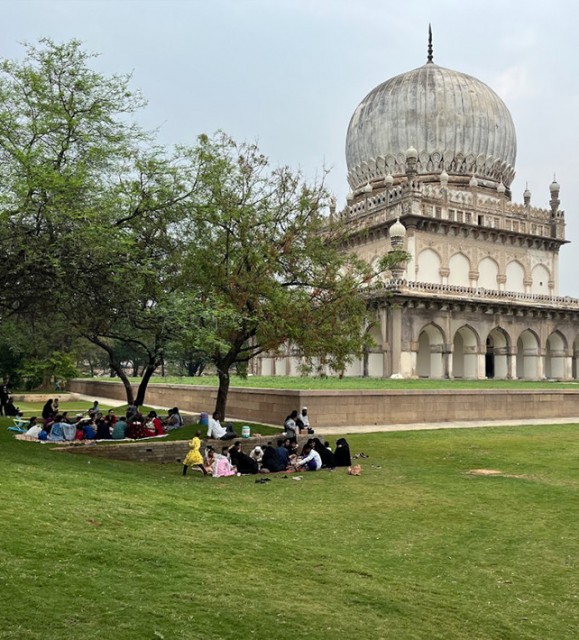
A masterpiece of Qutb Shahi architecture, Abdullah Qutb Shah's mausoleum stands as a testament to the era's artistic zenith. Completed during his reign, this elegant structure showcases intricate detailing, including stunning lattice screens, ornate minarets, and elaborate floral motifs. Its double-story design culminates in a ribbed dome reaching a height of 45 meters. 

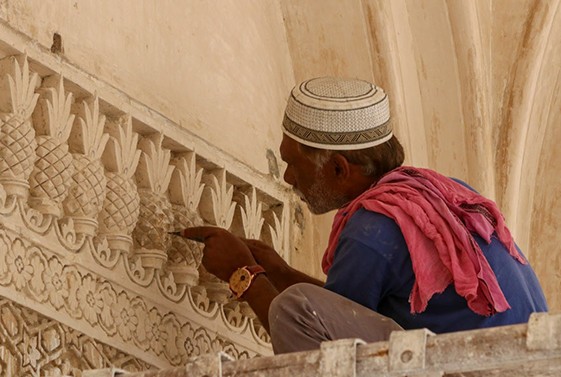
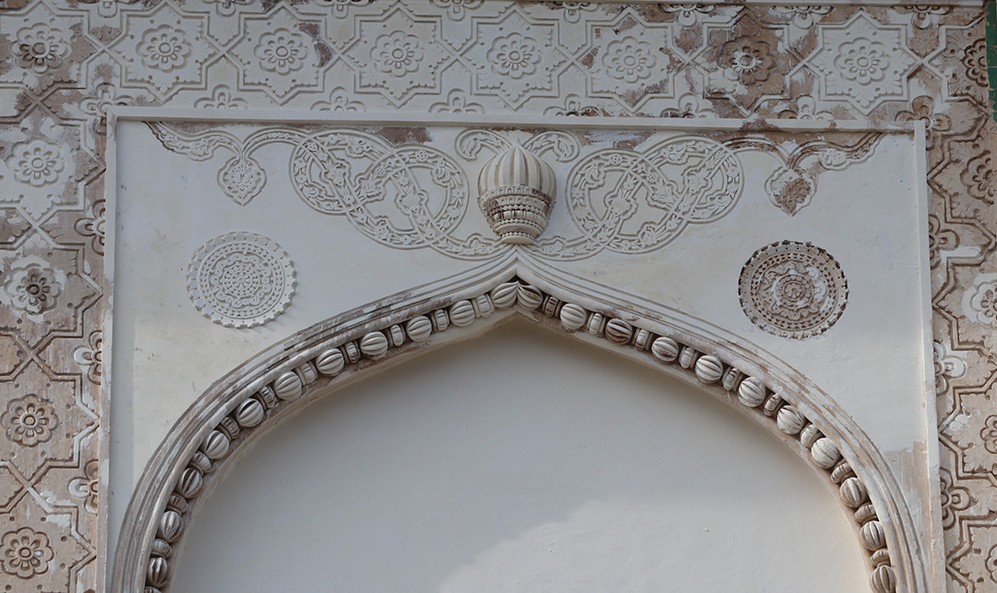
Notably, this mausoleum is one of the few Qutb Shahi tombs to retain remnants of its original glazed tiles. The mausoleum's distinctive pineapple motifs above the western doorway is a striking feature. 

Abdullah Qutb Shah
Conservation of the Mausoleum

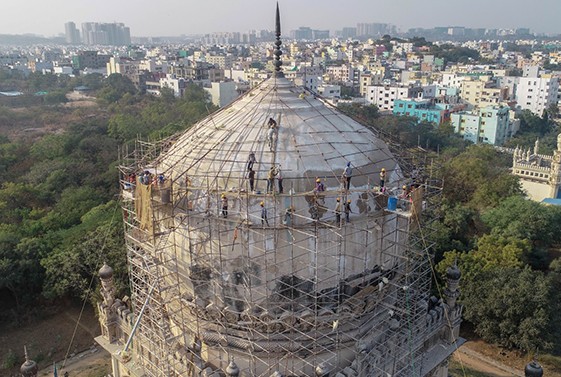
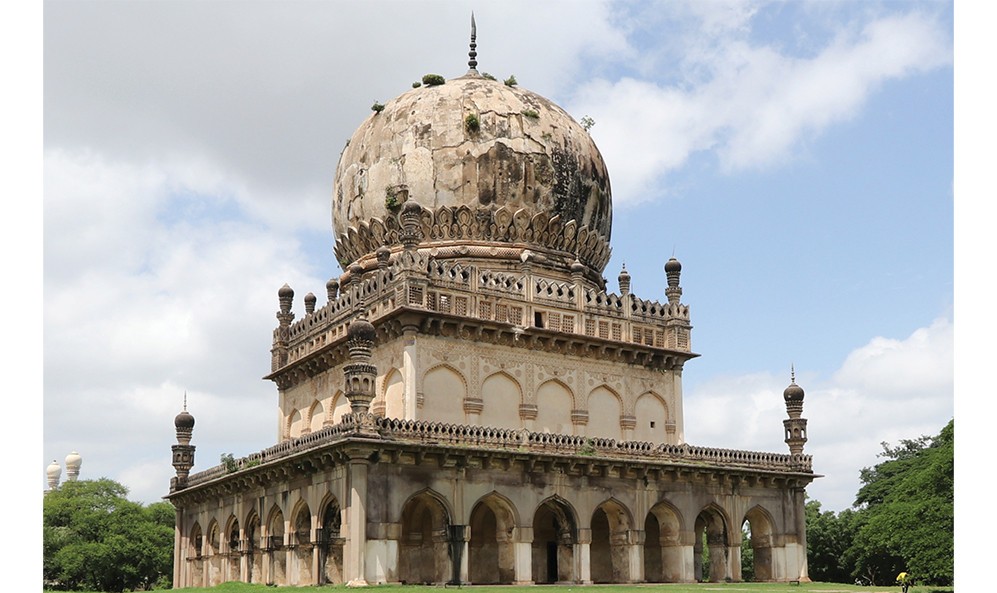
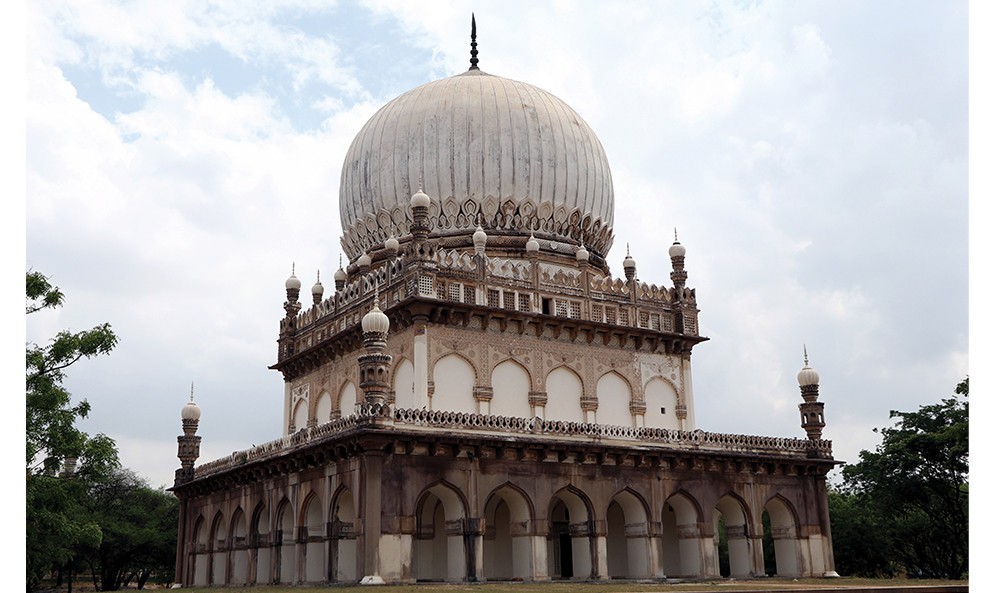
The majestic tomb of Abdullah Qutb Shah underwent a meticulous and exhaustive conservation effort. Conservation of Abdullah Qutb Shah’s mausoleum involved meticulous repairs to its intricate architectural elements, including the dome, finial, minarets, parapet, and lime stucco details, to restore its original grandeur.
The Ribbed Dome

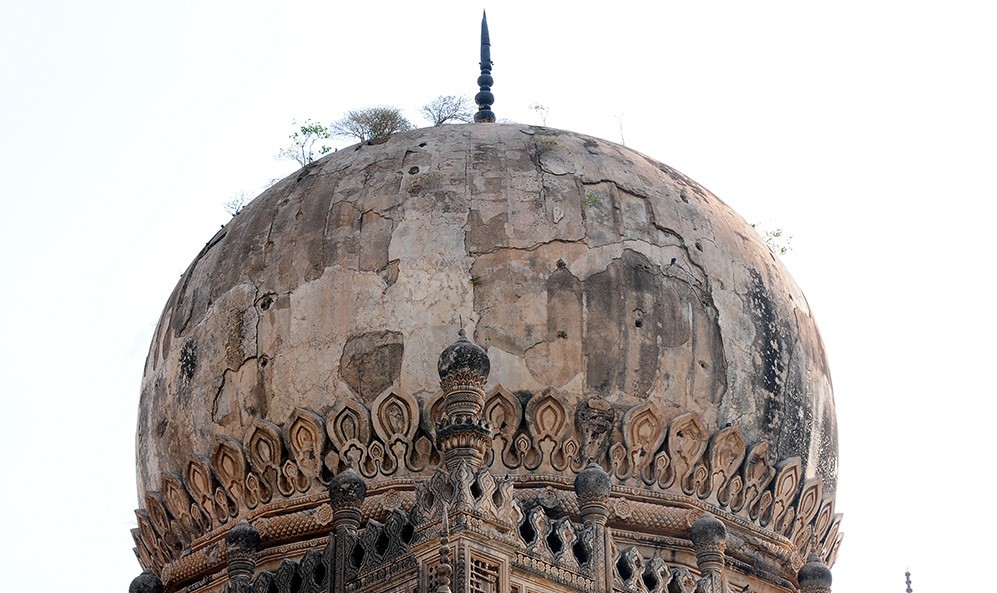
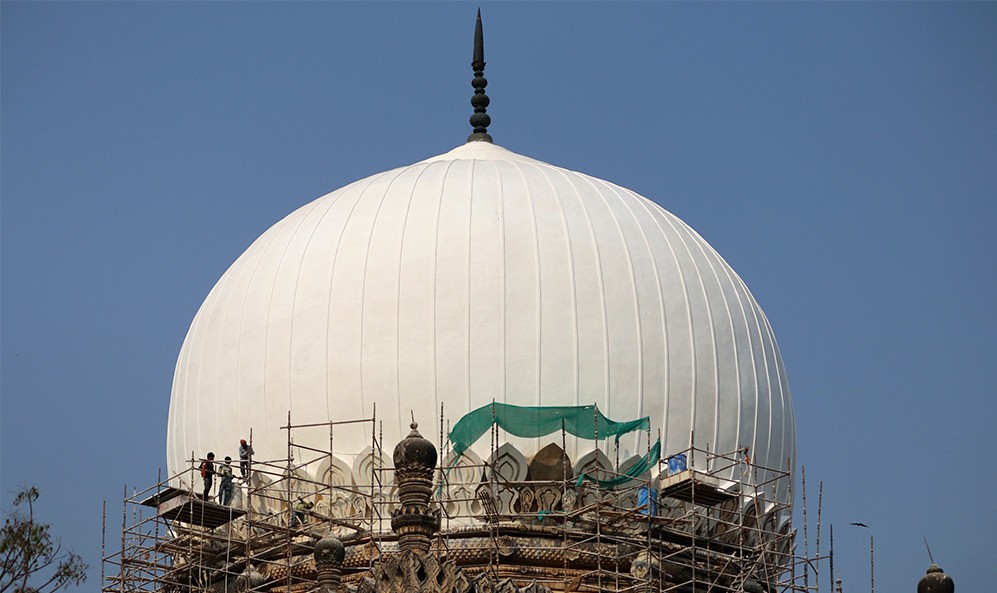
After a condition assessment, approximately 4 inches of 20th-century cement mortar was removed from the dome, revealing equally spaced ribs that were disintegrating. These ribs were then carefully restored based on in-situ evidence.

Similarly, the masonry on the dome was repaired after the removal of deeply embedded tree roots to prevent water ingress. The petal band along the base of the dome was also found in dilapidated condition before conservation and was carefully repaired by skilled craftsmen. 

Finial

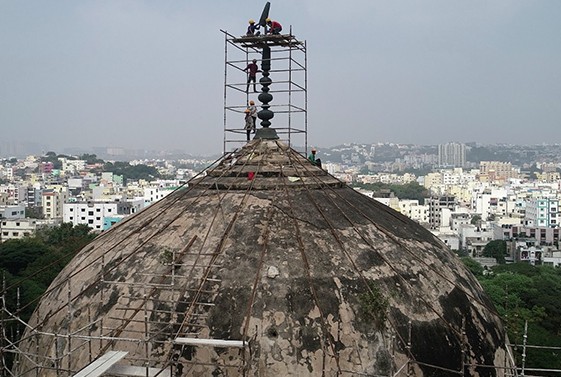
Among the significant architectural elements of the mausoleum is the 25-foot-high copper finial, which required specialized repairs by a traditional coppersmith due to considerable damage. The top conical piece of the 8-meter-high finial was skewed and appeared disjointed.


The top three individual hollow pieces were carefully removed, allowing the coppersmith to repair the damaged sections, correct the alignment, stitch the holes from previous repairs, and reinstate them in their original position. 

Ribbed Minarets

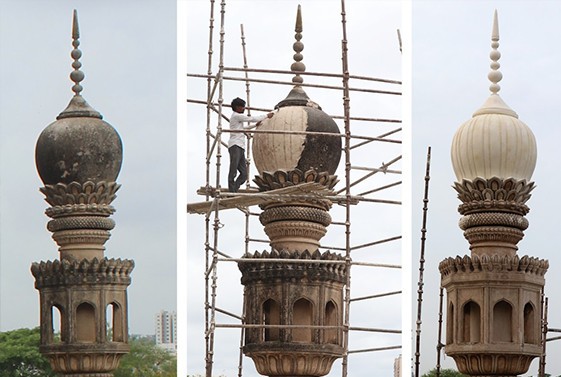
Like the dome, archival images from the 1860s showed ribs on the minarets. These became visible after dismantling the 20th century cement layers. Skilled craftspeople then restored it with traditional lime mortar, based on in-situ evidence.  

Parapet

The restoration of Abdullah Qutb Shah's parapet required extensive work to address the damage to its intricate features. Cement layers on the minarets were removed and replaced with traditional lime plaster. Damaged and missing finials were meticulously reconstructed based on in-situ evidence, while broken details on the minarets were restored with lime plaster and finished by master craftsmen.


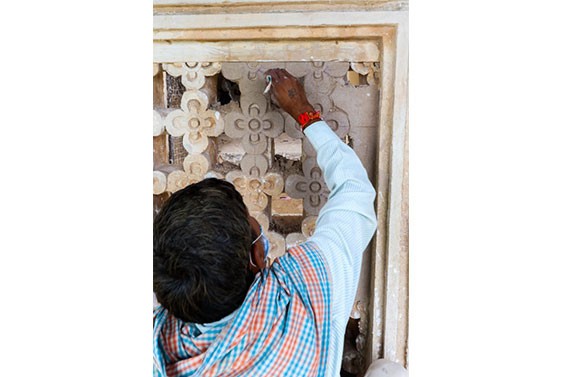
The framework for the missing lattice screens was built using locally sourced stone pieces, adhering to the original design and finished with lime mortar and a thin layer of lime putty. Additionally, damaged moulding bands, floral medallions, and ornamental stucco details were carefully restored, ensuring the parapet's historical integrity was preserved.

Lime stucco Details

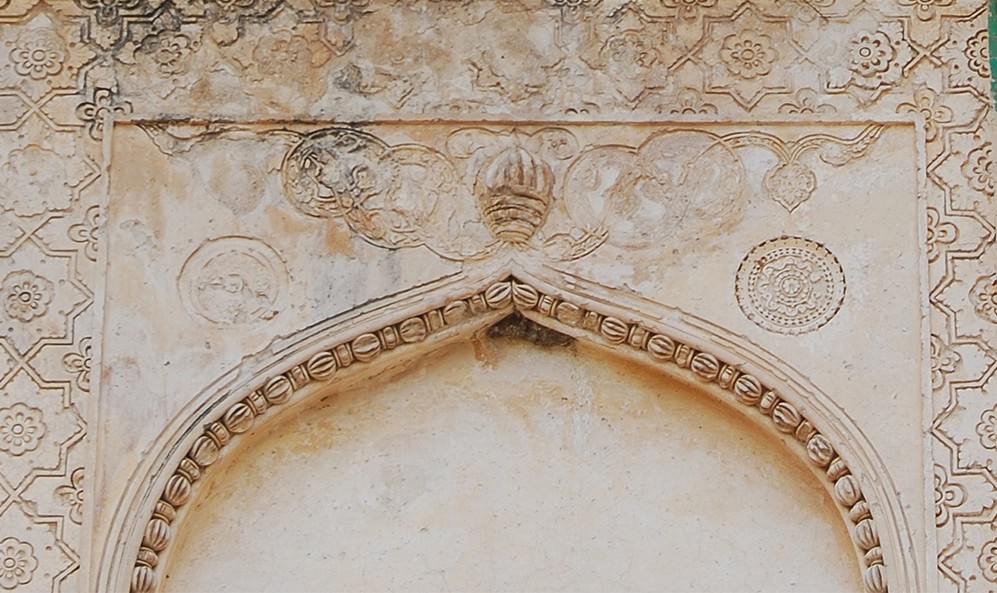
Following the removal of deteriorated lime plaster and cement layers, the façade of the upper plinth has been replastered with lime mortar. The damaged or broken portions of lime stucco details adorning the facades was restored. Similarly, the pineapple motifs at the doorway was cleaned, missing portions restored and color was reapplied based on original evidence found on site.

arrow-long-svg
Abdullah Qutb Shah’s Mausoleum
Restoring the Mausoleum

Through meticulous conservation efforts, the intricate details and architectural grandeur were meticulously restored, bringing the tomb back to its former splendor.
After
Before
After
Before
After
Before
After
Before
arrow-svg
Restoration of Abdullah Qutb Shah’s Mausoleum
Landscape Restoration

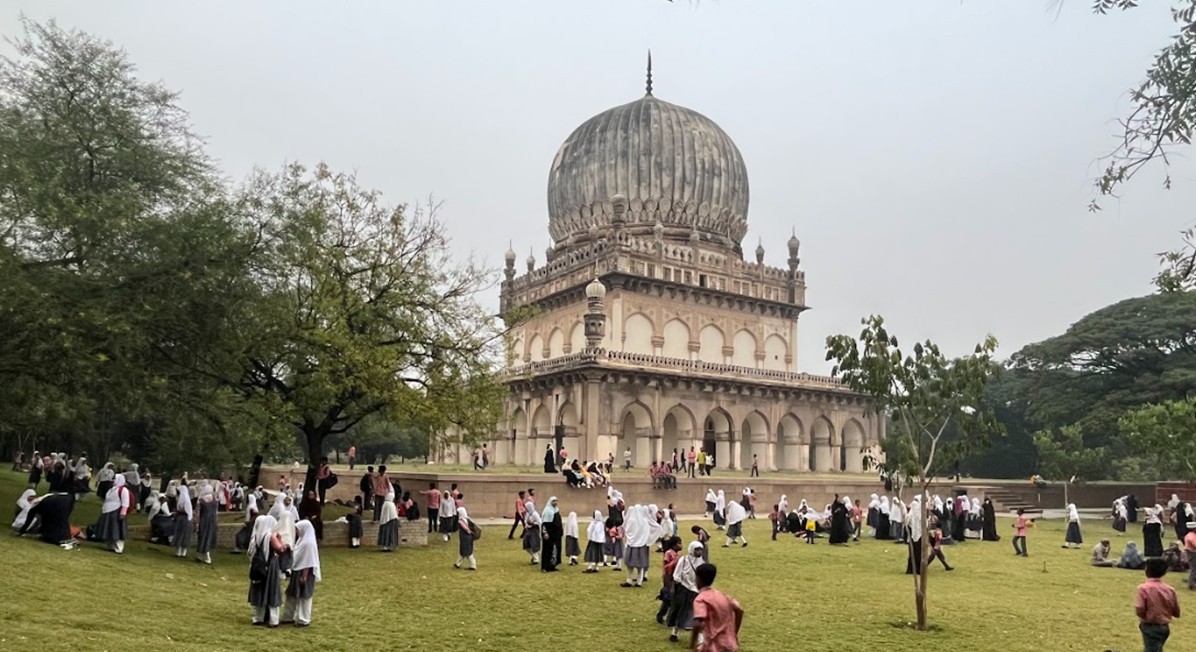
With the adequate development of the area surrounding the mausoleum of Abdullah Qutb Shah, there has been a significant increase in tourists visiting the monument. This structure was once left unattended, with visitors driving along the monument up to the parking beyond this mausoleum. However, now, with the development of pathways around the monument, the shifting of the parking to the eastern edge of the site, and the development of a stepped garden, the area around the tomb has been reinstated, making it a prime point of interest for visitors
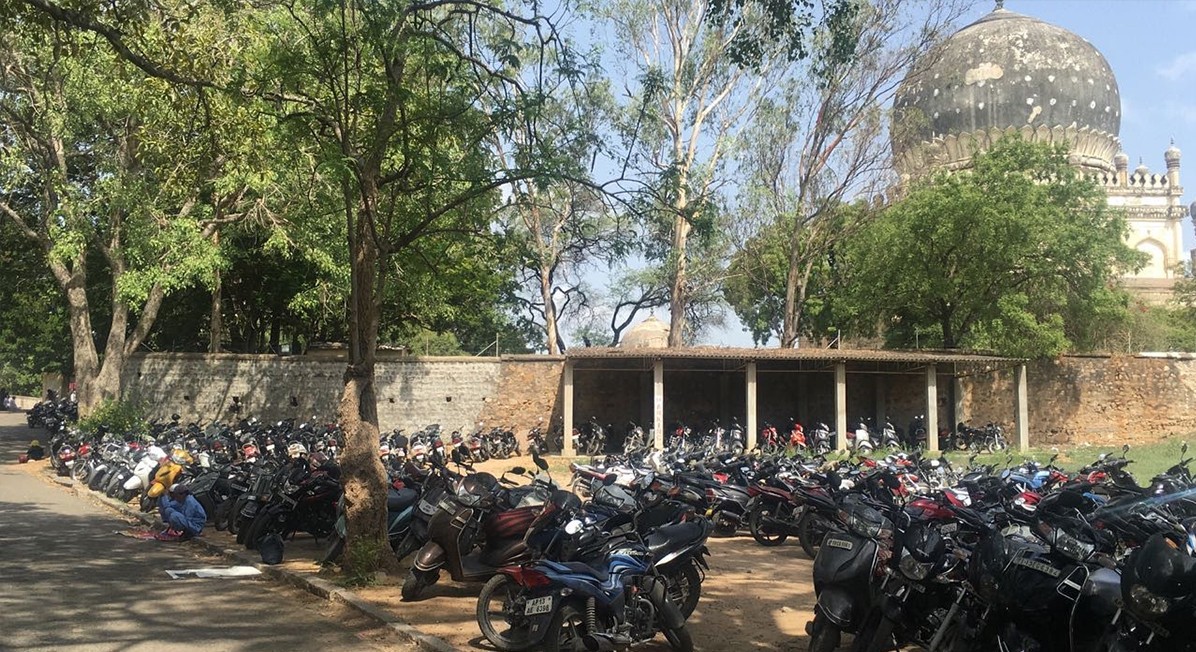
Area near Abdullah Qutb Shah was being used as parking

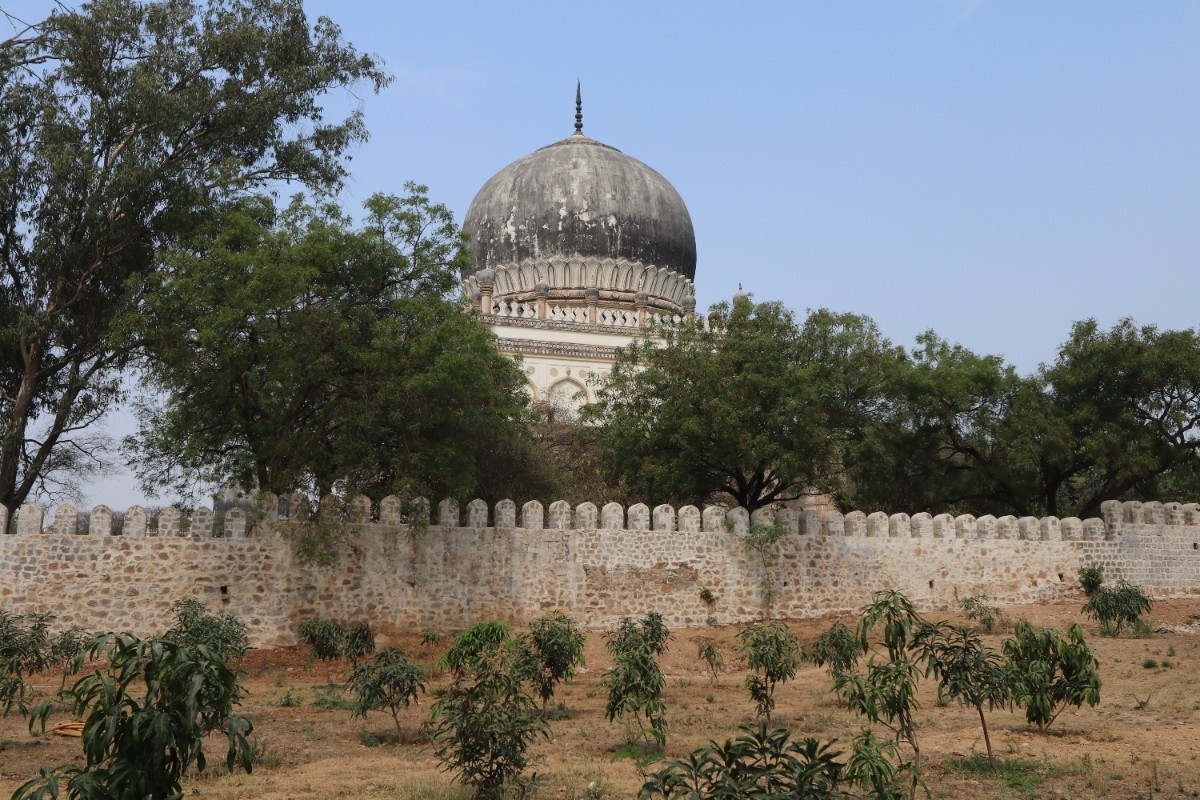
Since the landscape restoration of the area surrounding the tomb, it has become a tourist attraction

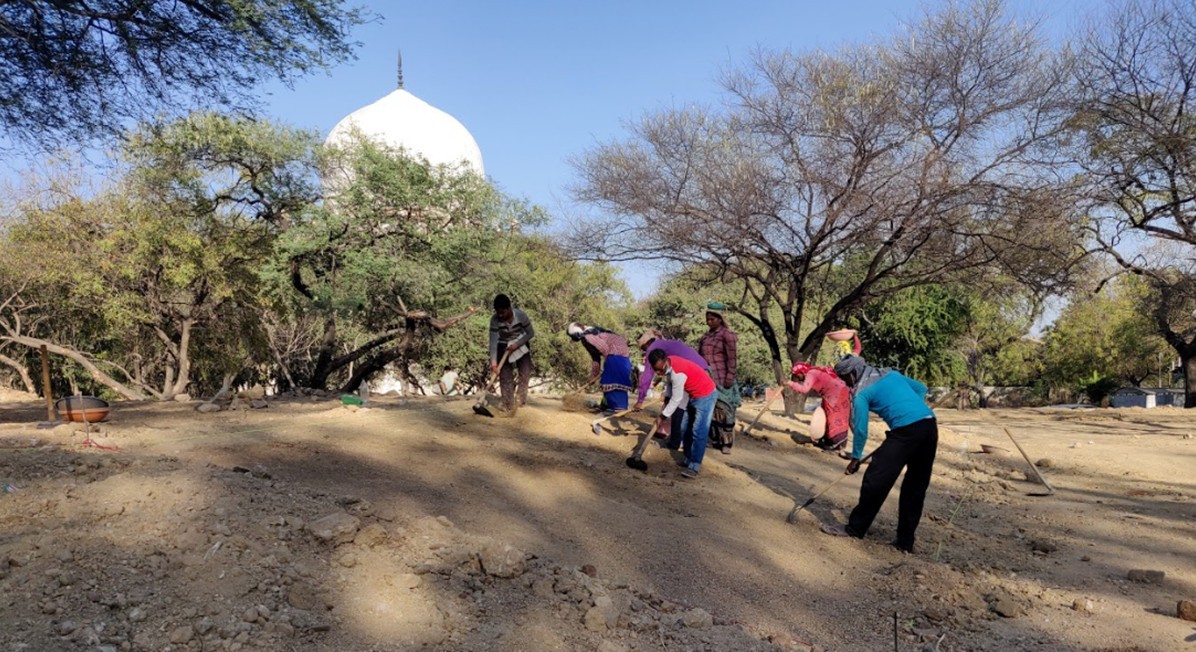
Regrading of earth for plantation

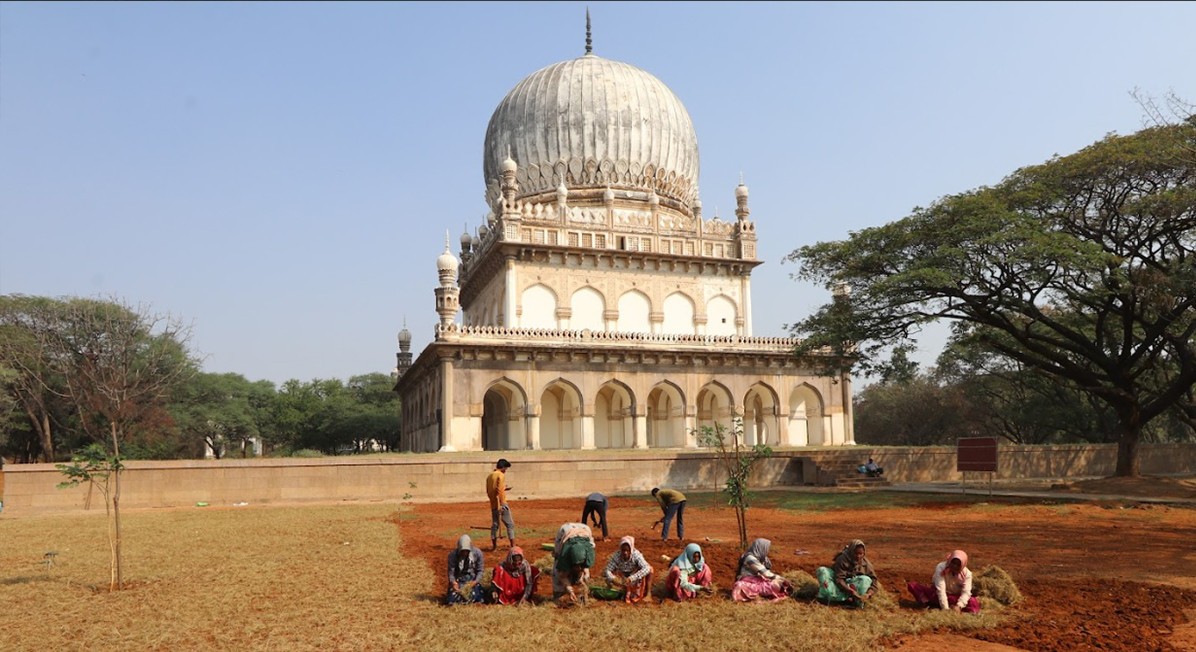
Laying grass in the area surrounding Abdullah Qutb Shah's tomb

The area was regraded, planted, and reclaimed

Next Monument
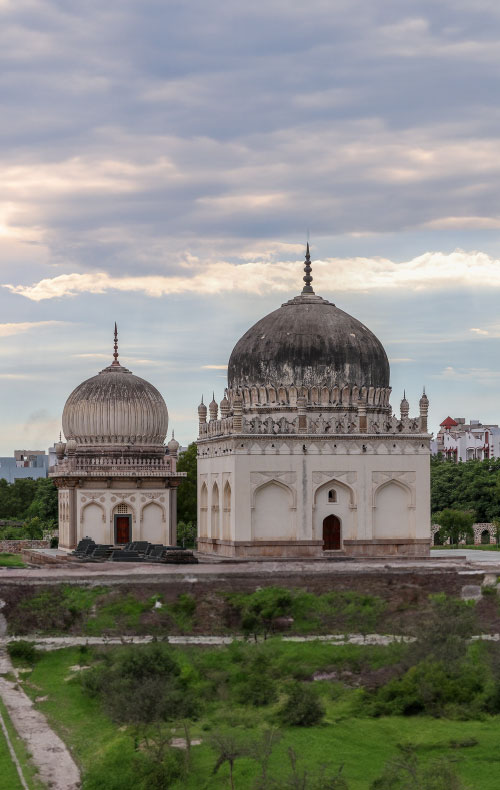
Mausolea of Taramati and Premamati

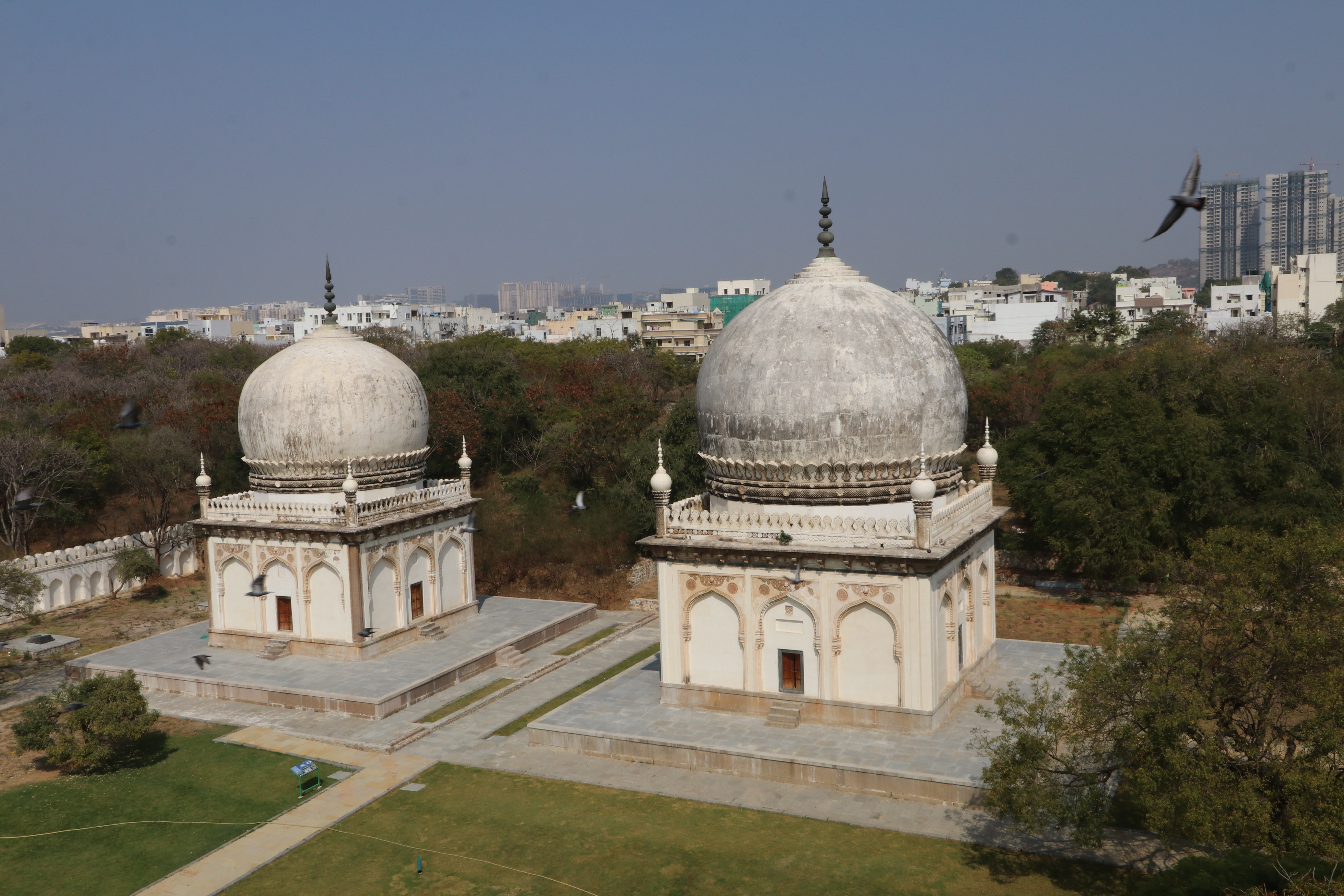
The twin mausoleums of Taramati and Premamati, renowned singers and courtesans from the Qutb Shahi era, were restored in 2019. Conservation efforts focused on rebuilding collapsed plinths, restoring intricate stucco patterns, and repairing copper finials.