Open Daily 9:30 am – 5:30 pm
- Fort Rd, Toli Chowki, Hyderabad, Telangana, 500008, India
- Visit


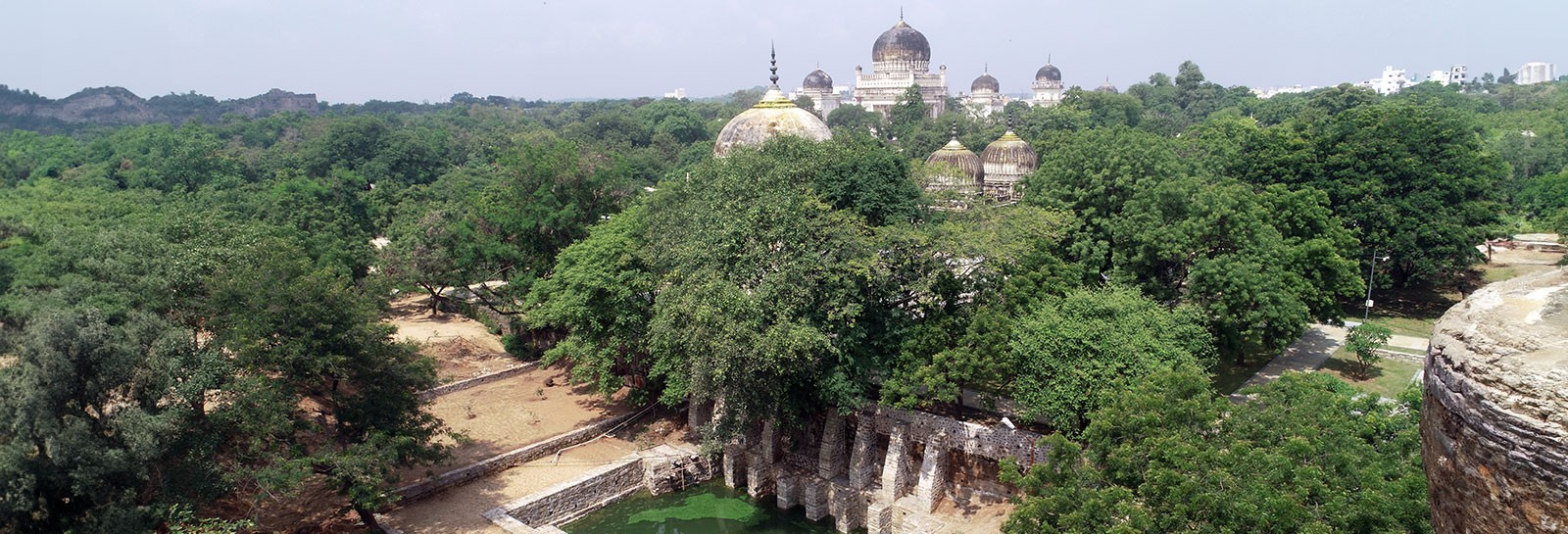
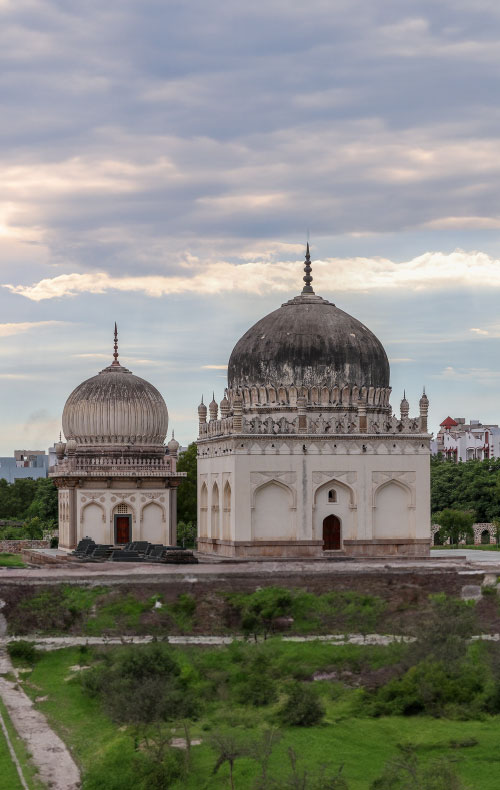
The mausoleums in the Qutb Shahi Heritage Park all stand within enclosed gardens. Each of these enclosed gardens is connected with a Baoli or stepwell. In 2020, remnants of a stepwell, so called the Eastern Baoli, were discovered at the eastern edge of this enclosed garden of Sultan Muhammad Qutb Shah’s mausoleum.
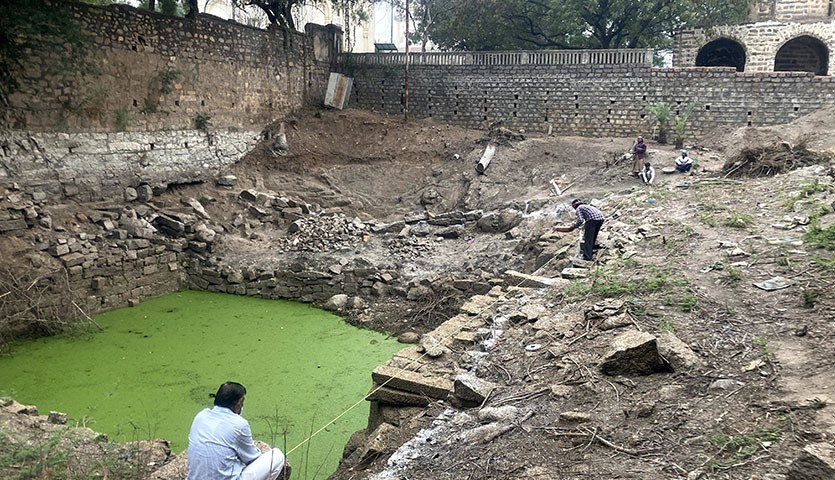
Once buried under a mound of earth and overgrown with vegetation, this 10-meter-deep structure was in poor condition, with collapsed walls and filled with debris.
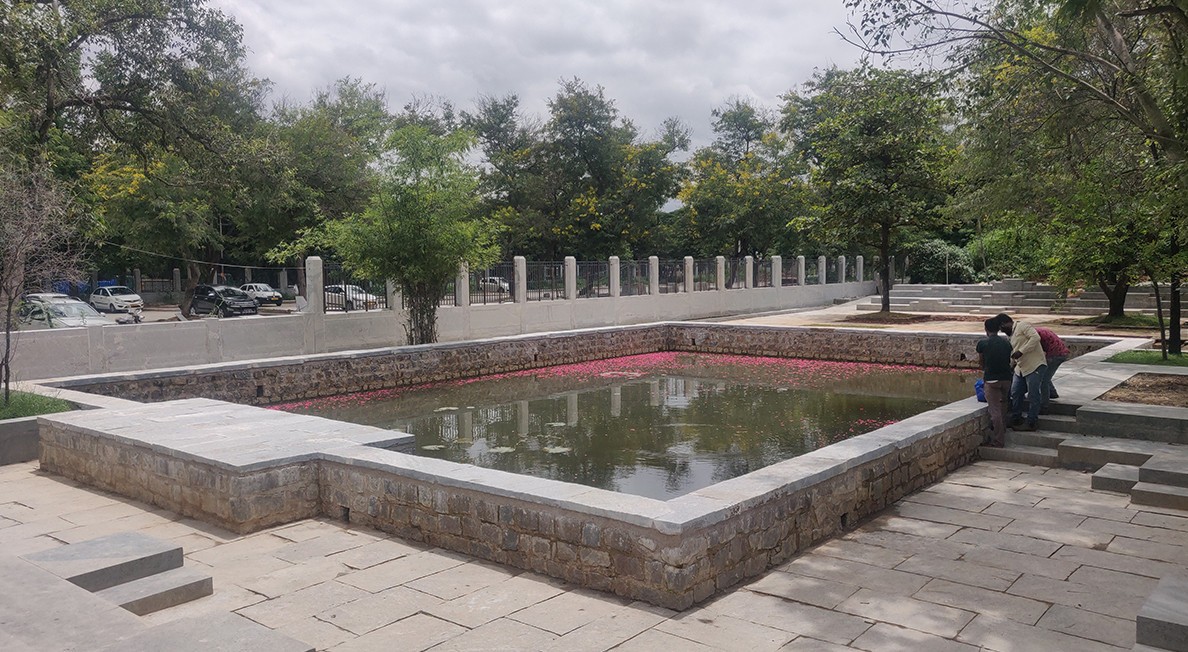
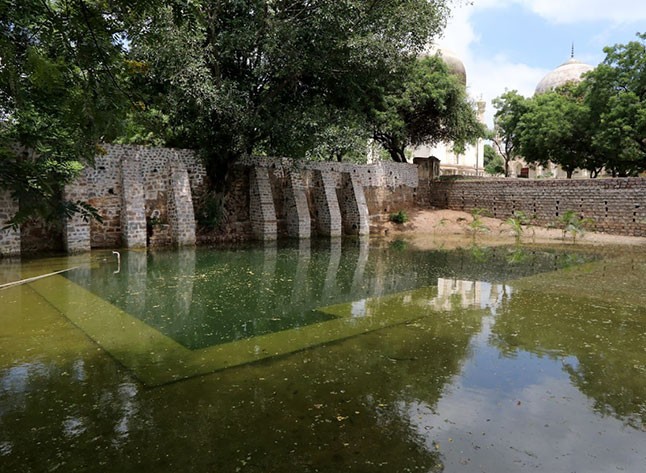
The conservation of the Eastern Baoli has transformed a once forgotten and overgrown site into a beautifully restored and functional historical structure. Before its conservation, the stepwell was barely discernible, marked only by a minor depression in the ground. Through detailed documentation and a careful building archaeology study, the team was able to determine the original extent and profile of the stepwell, which allowed for the significant reconstruction of the retaining and terrace walls, as well as the buttresses.
Today, the Eastern Baoli, with a water capacity of 2.5 million liters, plays a vital role in the local ecosystem. It collects rainwater from the surrounding mausoleum garden enclosures, supporting the irrigation and maintenance of green spaces around the Mausoleum of Abdullah Qutb Shah, the tomb of Mirza Nizamuddin Ahmad, and the tomb of Fatima Khanum. Additionally, the Baoli has become a popular gathering spot for visitors to enjoy picnics, transforming from a site on the brink of oblivion into a vibrant, functional space that celebrates its historical significance.
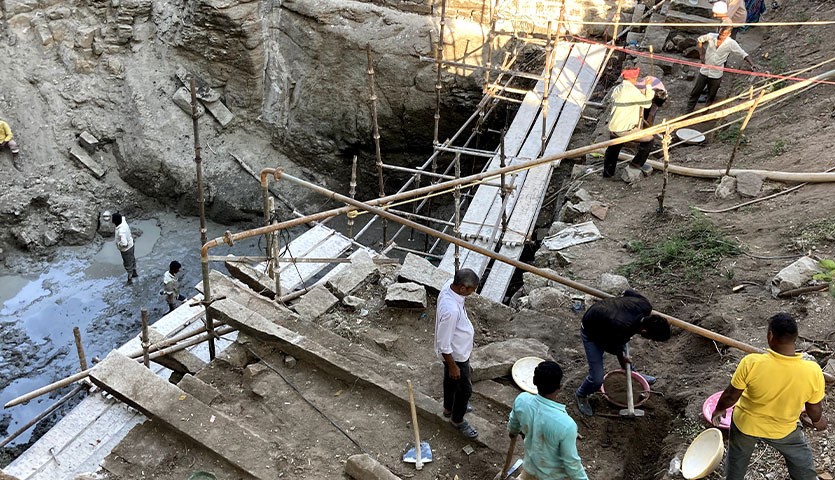
Exposing the original water channels
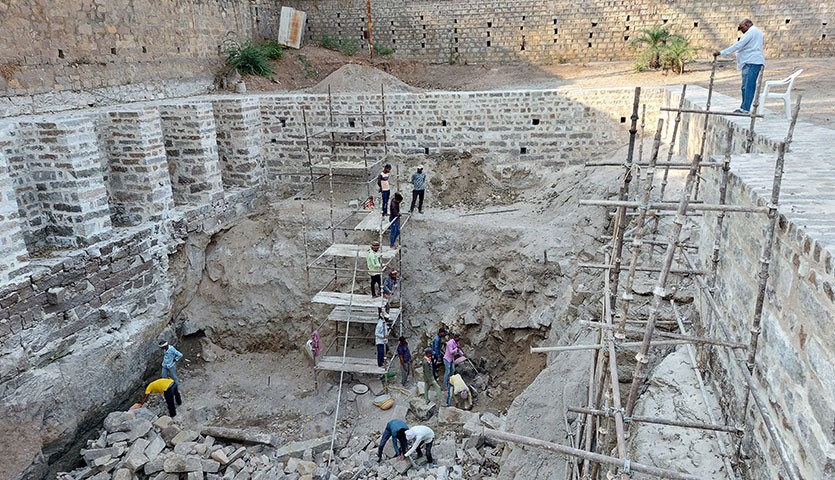
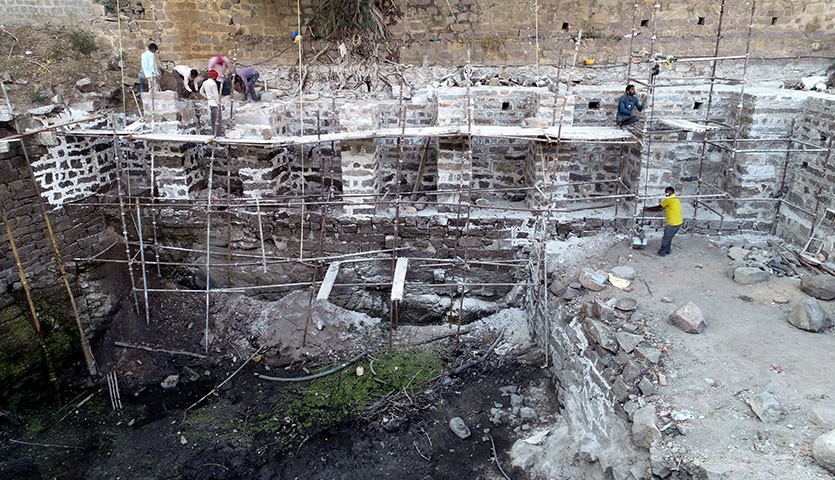
Reconstruction of northern wall based on historic evidence
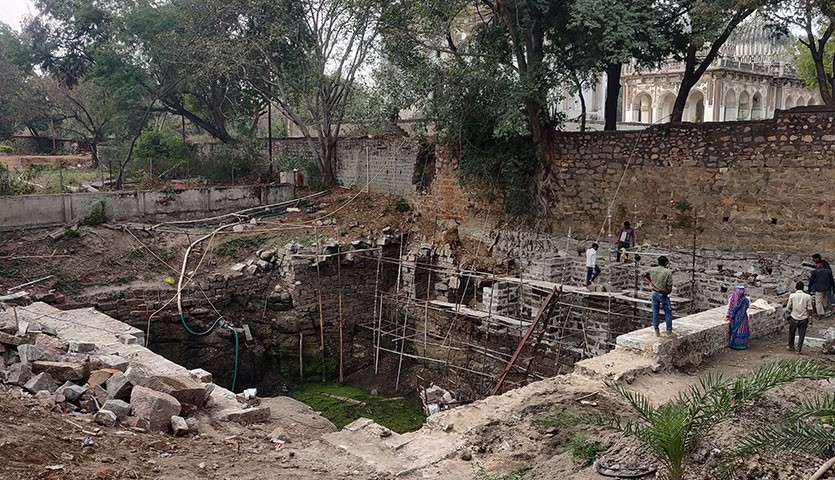
The restoration of the Eastern Baoli involved careful excavations to manually unearth extents of the retaining walls. Clearing the site of vegetation and accumulated debris, revealed portions of the collapsed walls. The northern wall, in particular, was so badly damaged that it had to be dismantled and reconstructed from its foundations.
After clearing the area, the original structure was documented to guide the restoration, which utilized stones excavated from the site. A team of conservation architects and engineers studied the original profile of the dilapidated buttresses on the western wall, following which its restoration was carried out matching the historic masonry. As the western wall was several meters higher than the stepwell, it was provided with additional buttresses for structural stability. The reconstructed walls were provided with weep holes.
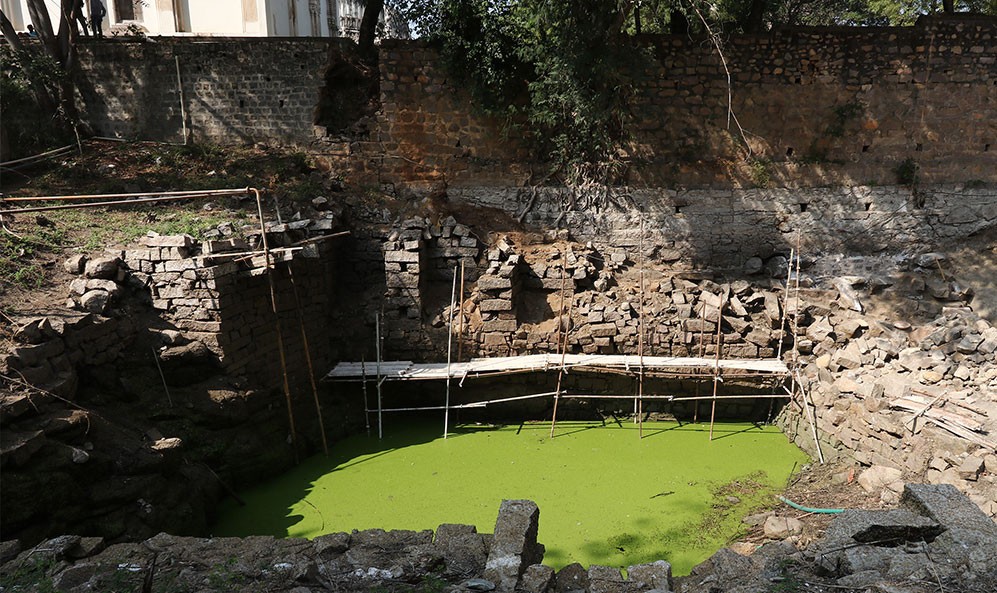
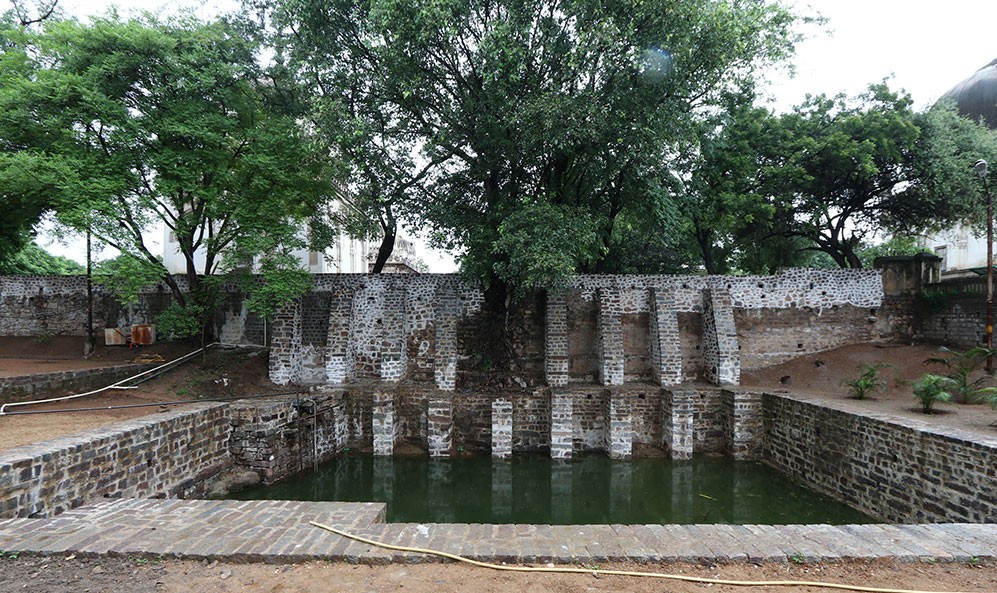
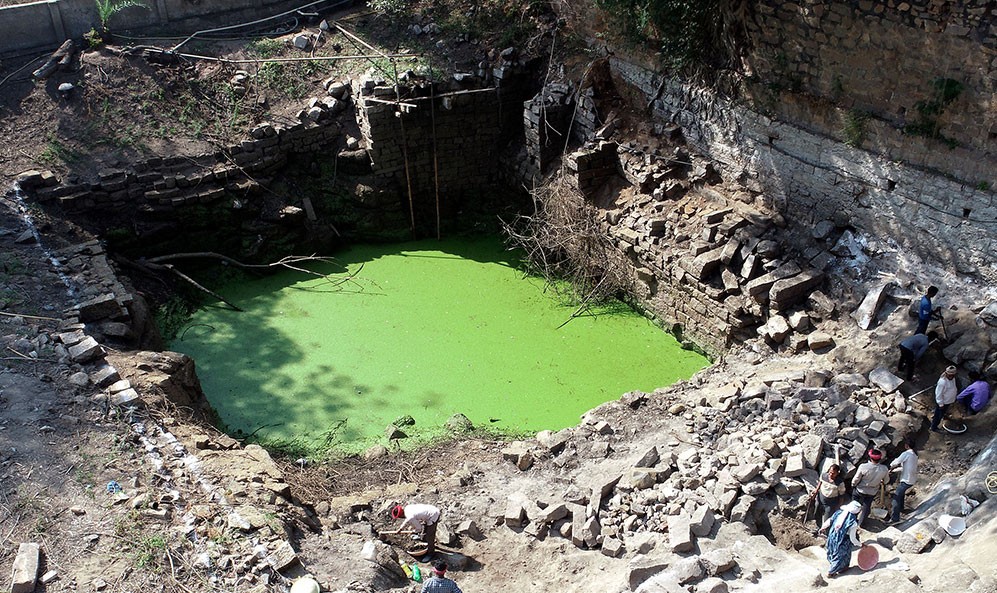
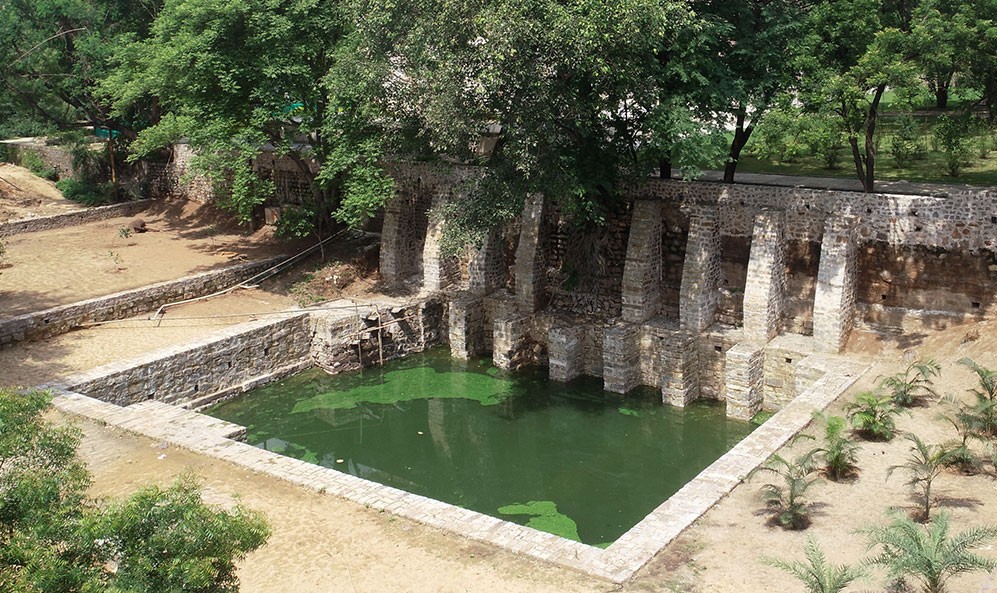
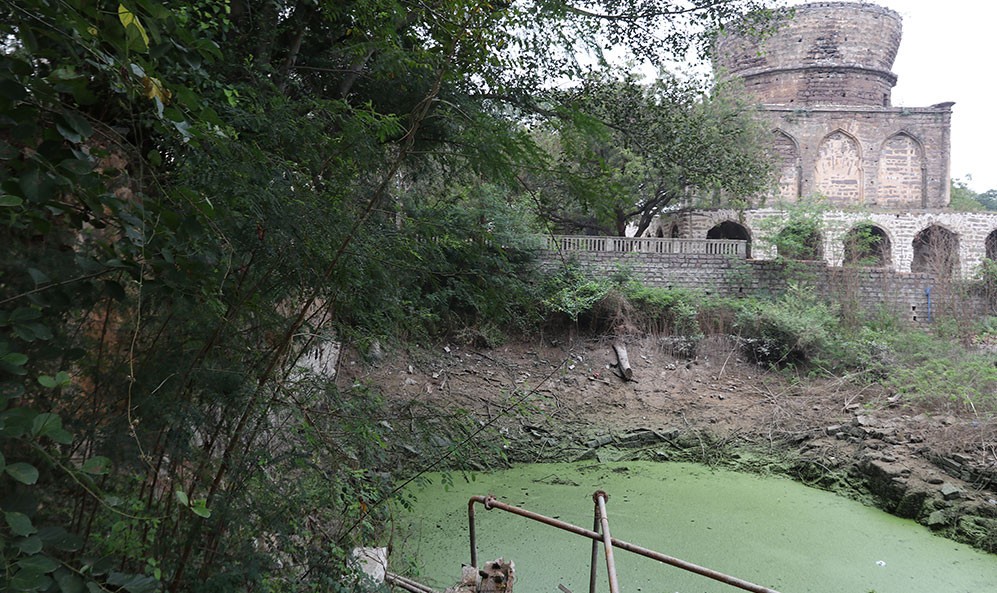
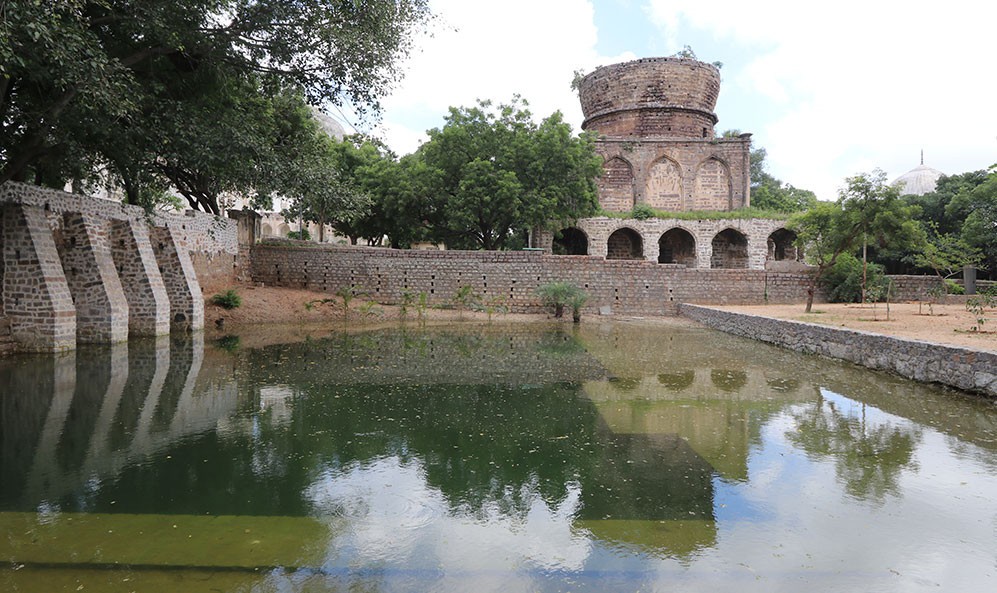
The Bagh Baoli, standing on the eastern edge of the Qutb Shahi Heritage Park, on a route that leads to the adjoining Golconda fortifications, would have been a stopping point for travelers. Recent conservation efforts have excavated the retaining walls, revealing, and reconstructing significant portions of the masonry. The conservation effort was followed by the creation of a garden, of a style traditional for stepwells, which will allow visitors to sit and rest here and hold performances and events.