Open Daily 9:30 am – 6:00 pm
  • Fort Rd, Toli Chowki, Hyderabad, Telangana, 500008, India
  • Visit
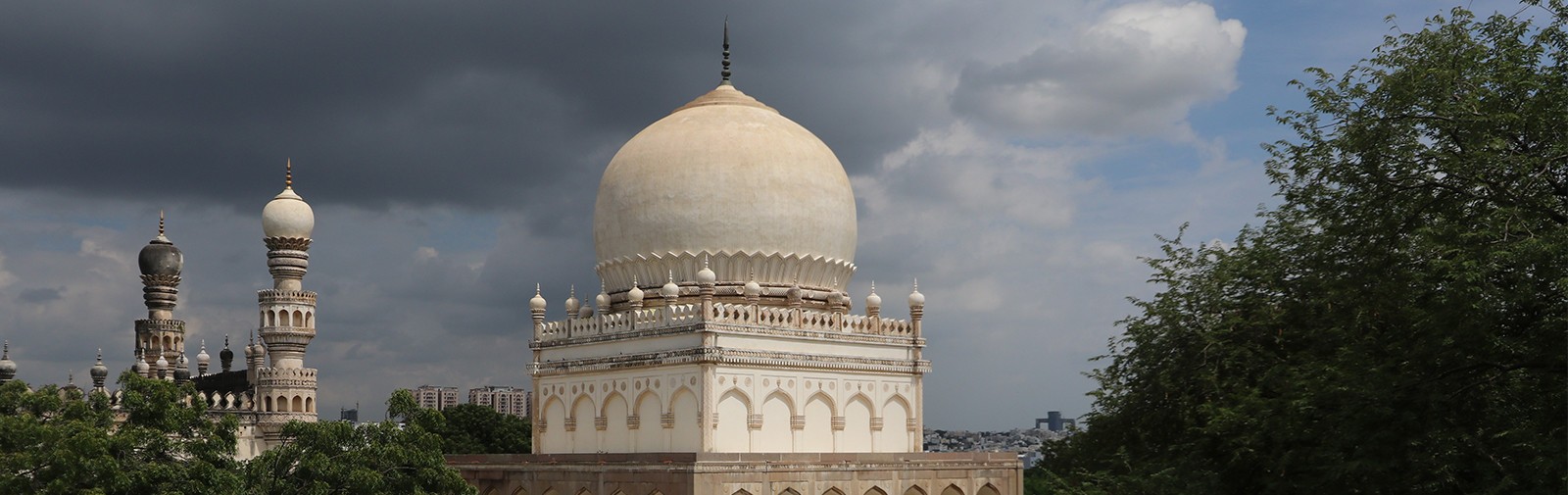
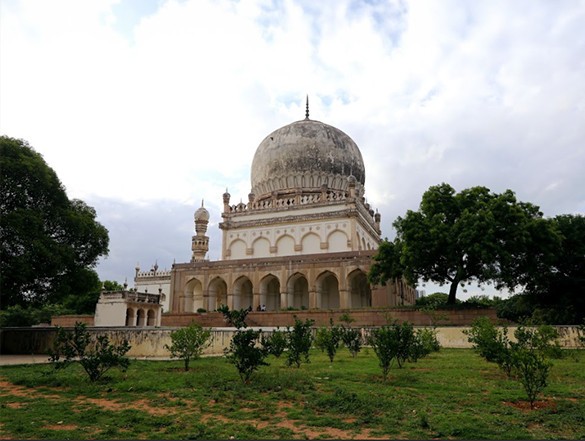
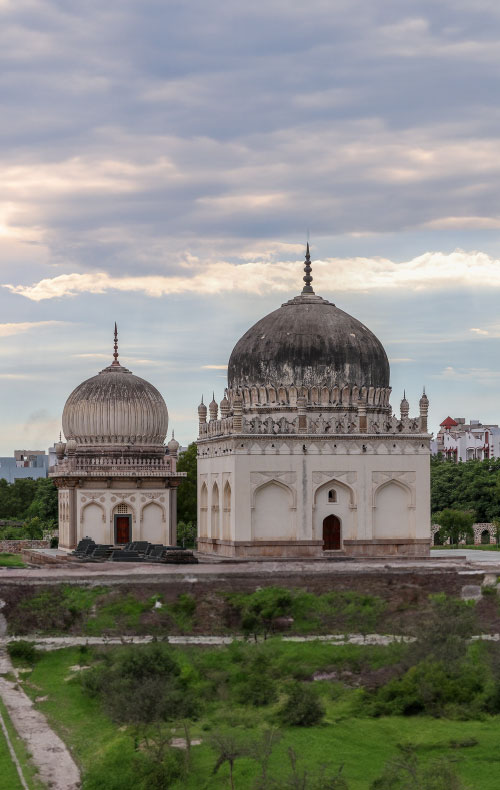
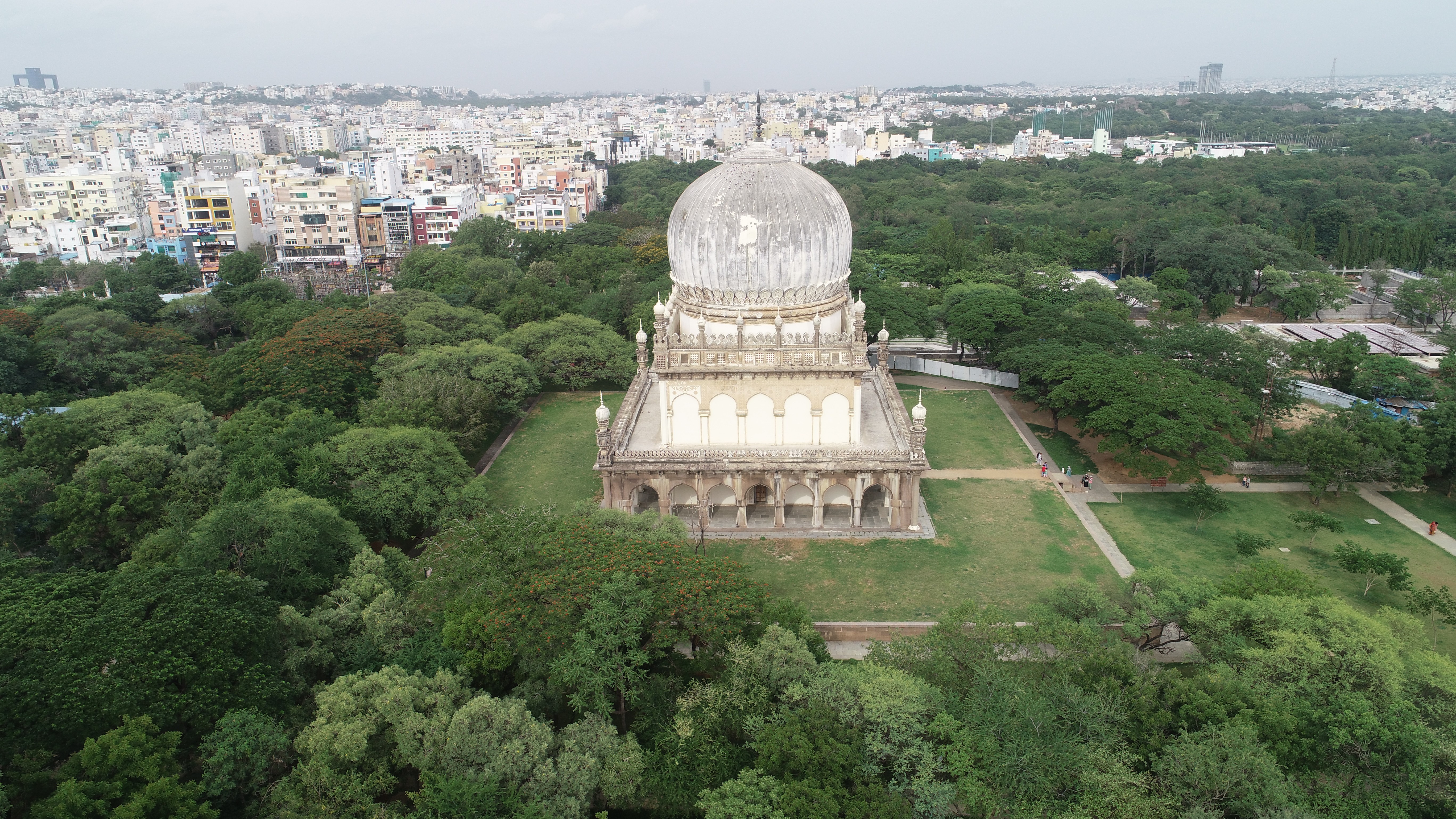
Hayat Baksh Begum’s Mausoleum
1591 - 1667
1591 - 1667
HAYAT BAKSH BEGUM

Hayat Baksh Begum, also known as Ma Saheba, was a pivotal figure in the Qutb Shahi dynasty. Daughter of a Sultan (Muhammad Quli Qutb Shah), wife of another (Sultan Muhammad Qutb Shah), and mother of a third (Sultan Abdullah Qutb Shah), she wielded significant influence.

Acting as Queen Regent during her son’s youth, she demonstrated exceptional diplomatic skills, safeguarding the throne of Golconda.  Her legacy lives on in the various structures and tanks that she commissioned all around Hyderabad.

Hayat Baksh Begum’s Mausoleum
Conservation

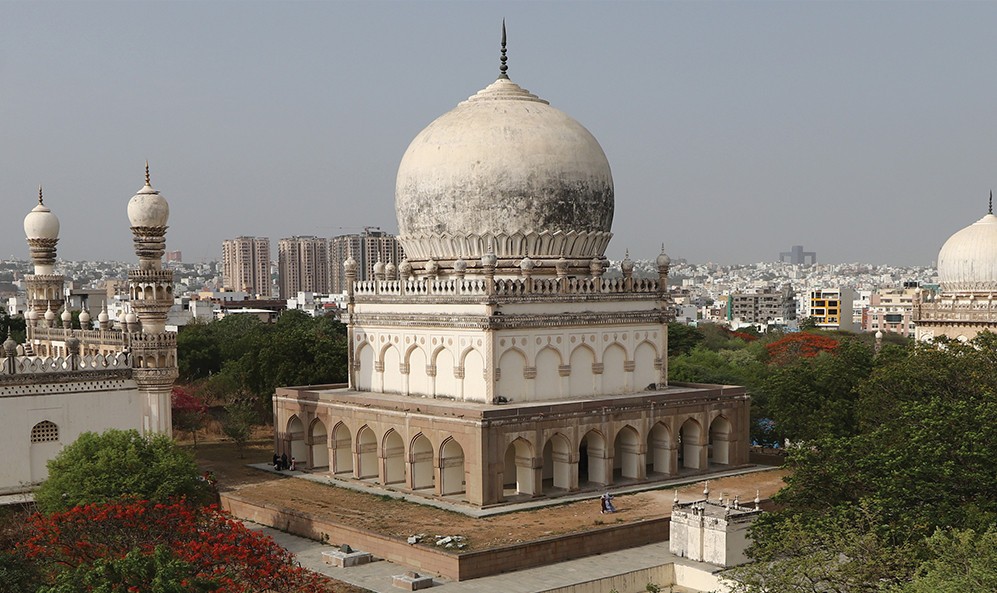
Hayat Baksh Begum's mausoleum underwent extensive conservation to restore its former glory.
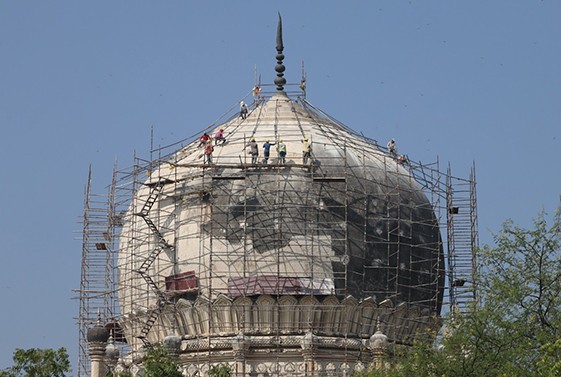
Dome

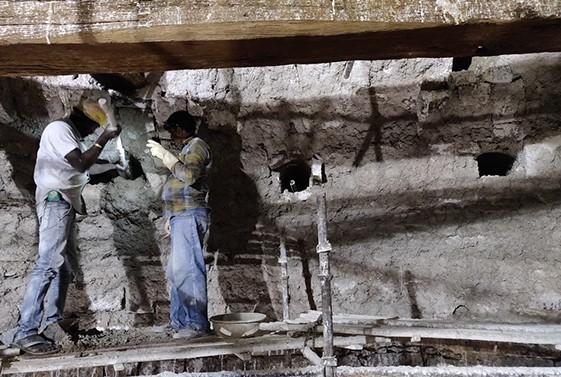
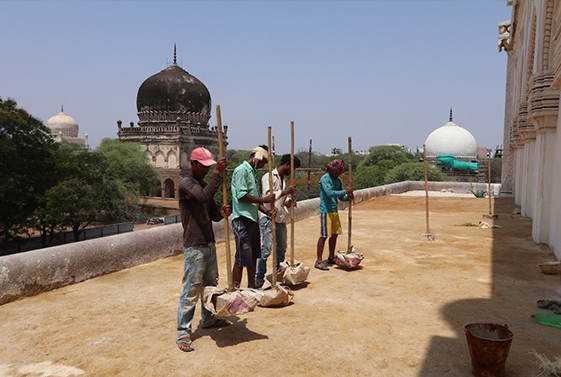
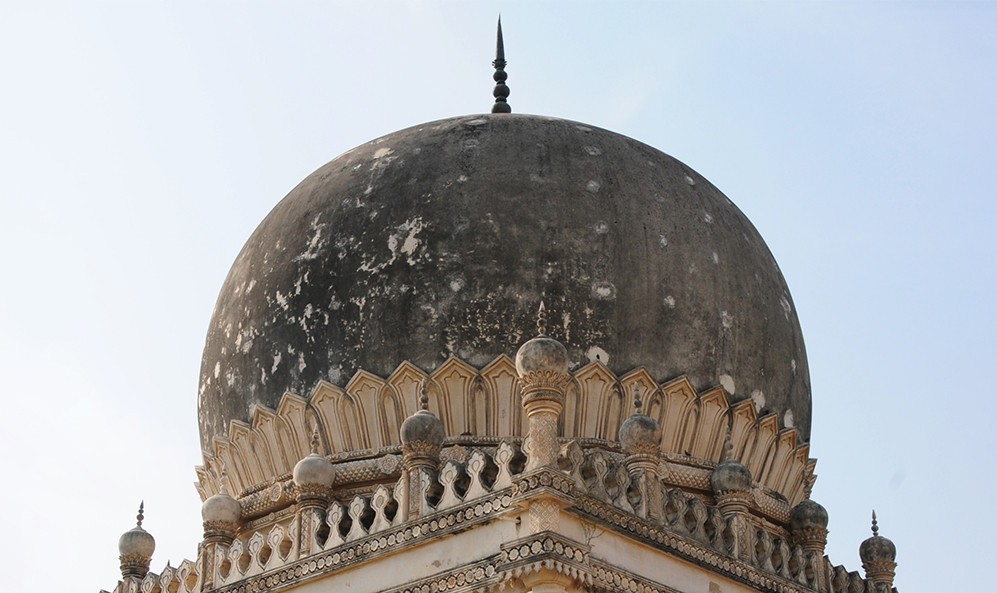
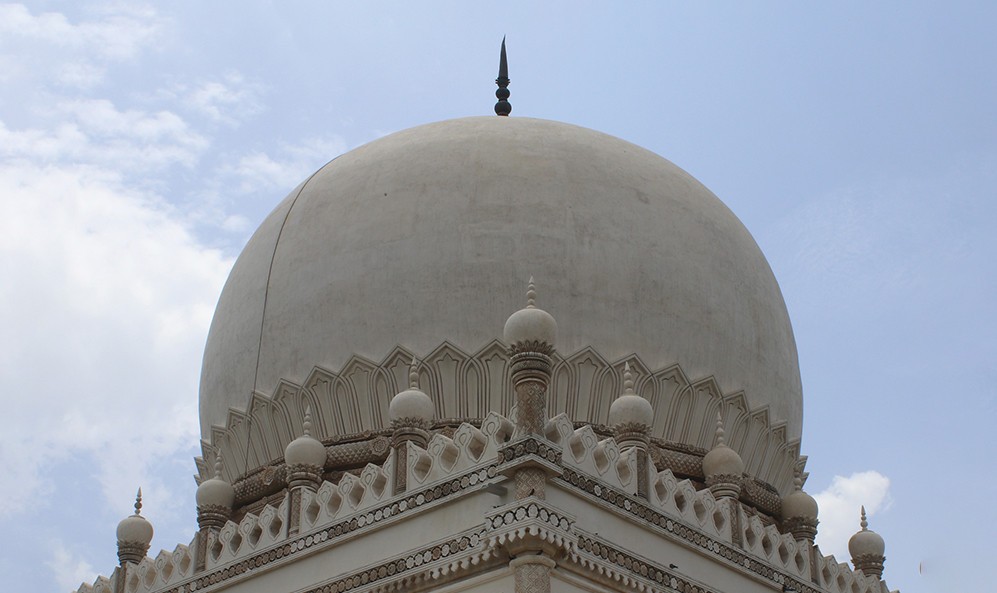
The modern cement plaster covering the dome was meticulously removed, uncovering over 200 holes—remnants of scaffolding from the 20th century repairs—some up to 10 feet deep. These holes were filled with rubble stone and lime mortar to prevent water ingress. The dome's surface was then re-plastered using traditional lime mortar, finished with a 1 mm thick layer of lime punning.

Internal Dome

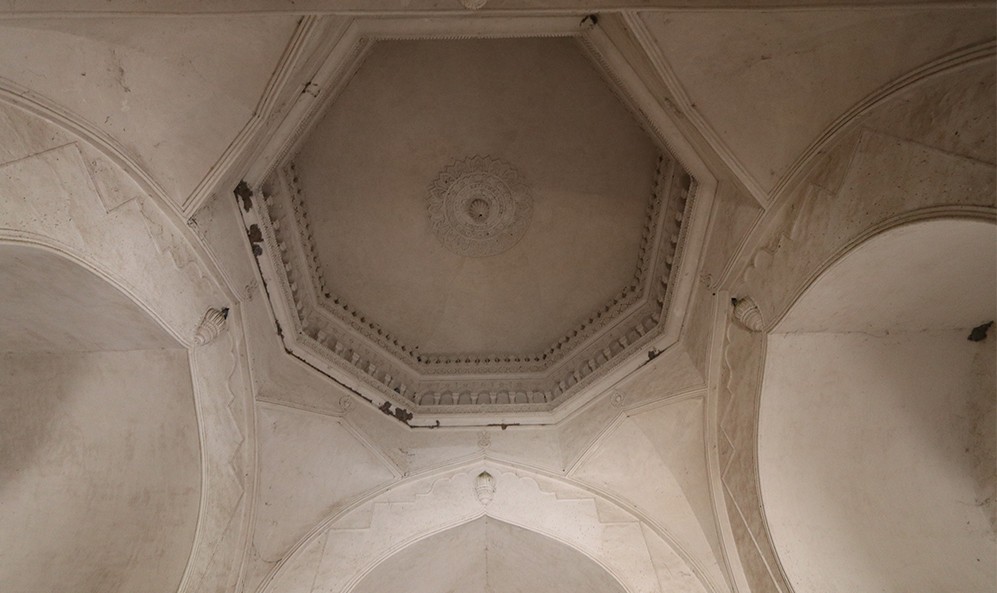
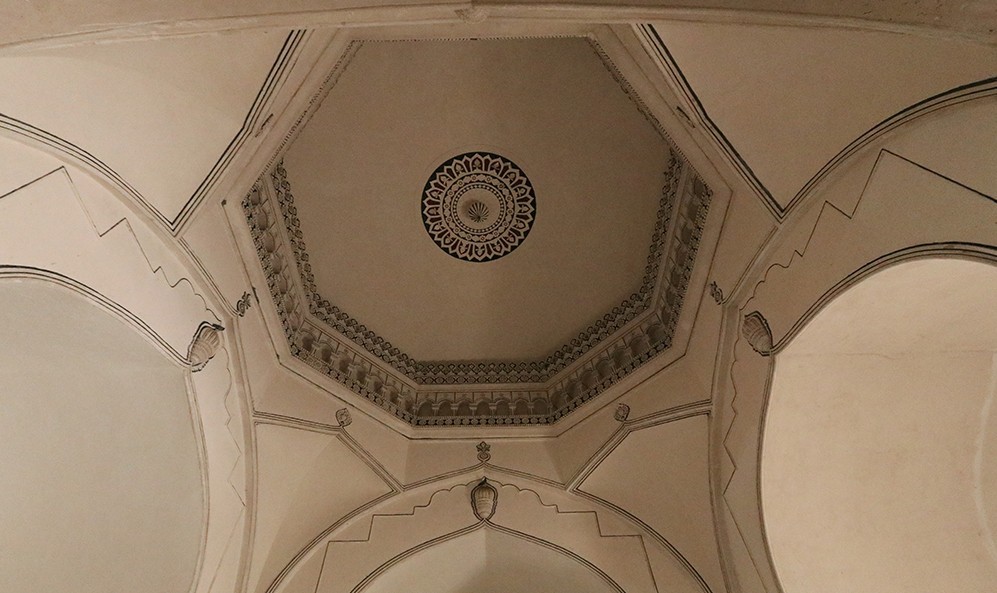
With the deep holes, the internal dome had signs of deterioration with cracks on the surface causing water ingress and vegetation growth. Plaster was restored on the internal dome surface.

Internal surfaces

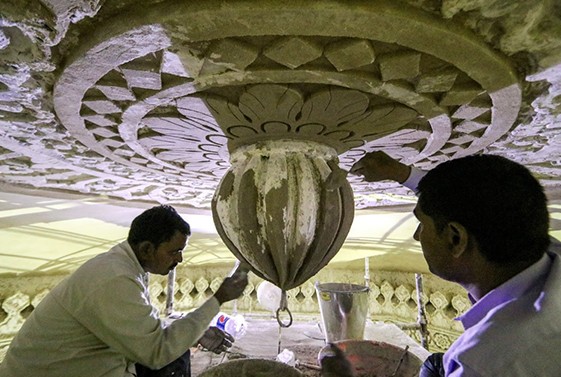
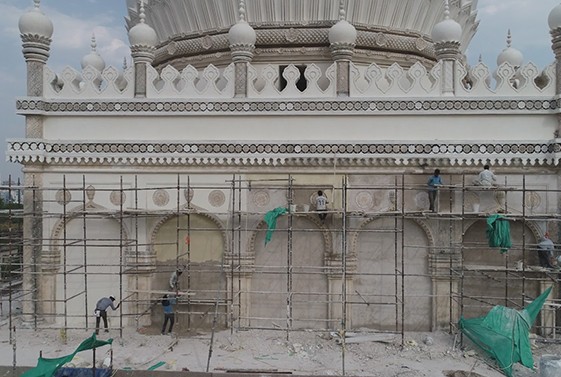
Repairs on the blind arches situated below the internal dome were carried out using traditional lime mortar. 20th century cement and white-wash layers were carefully removed to reveal the original appearance. Ornamental details, moulding bands, arch crowns and original lattice screens were repaired by master craftspeople. Traces of original color were also revealed on the ceiling medallion, where found missing, the color was then restored based on the existing evidence. 

Terrace and Parapet

20th-century cement concrete on the middle terrace, causing rainwater seepage and structural strain, was replaced with traditional lime concrete in an appropriate slope, ensuring proper drainage. 

The middle level parapet of Hayat Baksh Begum’s tomb comprises thick hand chiselled granite blocks covering a length of 135 m. Over time, the stone joints developed gaps and had vegetation growth within the joints. After removing thick plant roots, all stone blocks were manually reset by skilled stone masons. Seventeen metal waterspouts were installed in existing openings to effectively drain rainwater away from the structure. 

Facade

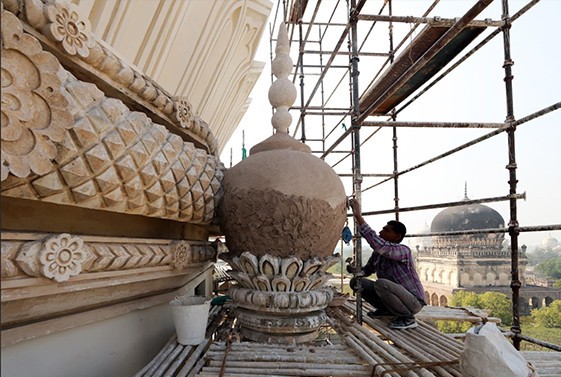
Repairs and restoration works were carried out on the upper portion of the external façade of the mausoleum where broken, damaged, or missing stucco details, merlons, medallions, and floral bands were restored using traditional lime plaster and finished with a coat of lime punning as per the in-situ evidence.

Minarets and battlements

Cement layers were removed from the corner minarets and replaced with lime plaster. Missing and damaged details were restored, and finials were re-installed. Similarly, the damaged portions of the battlements were also repaired.

arrow-long-svg
Hayat Baksh Begum's Mausoleum
Restoring a Queen’s Legacy

The removal of modern cement layers and repairs to the dome and façade have revealed the original splendour of the monument, allowing the monument to regain its historical character. 
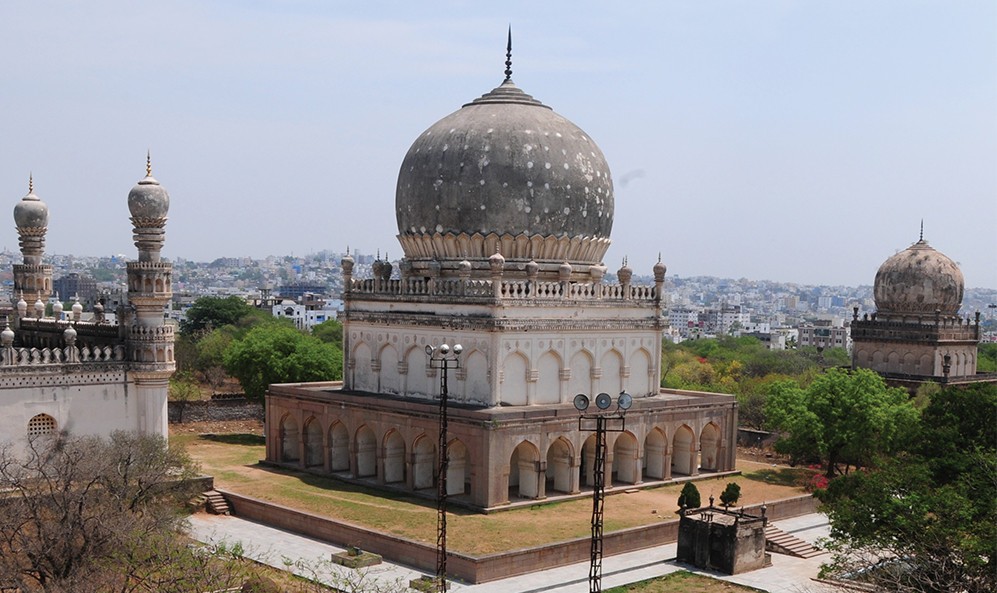
After
Before
After
Before
After
Before
arrow-svg
Next Monument
Abdullah Qutb Shah's Mausoleum

The mausoleum of Sultan Abdullah Qutb Shah stands as a magnificent testament to the grandeur of Qutb Shahi architecture. Built during his reign in the 1660s, the tomb is renowned for its intricate design, which includes ornate lattice screens, minarets, floral motifs, and distinctive pineapple motifs above the western doorway. Rising over 45 meters in height, the tomb features a ribbed dome that enhances its architectural splendor. Notably, it is one of the few Qutb Shahi tombs to retain remnants of its original glazed tiles.